
How To Build Early Reading Habits: Simple Ways To Help Your Toddler Love Books
Dr Meghna Singhal
Want to nurture a love of books in your toddler? Discover practical, research-backed ways to build early reading habits, create enjoyable story-time routines, and make books a natural part of your child's everyday life
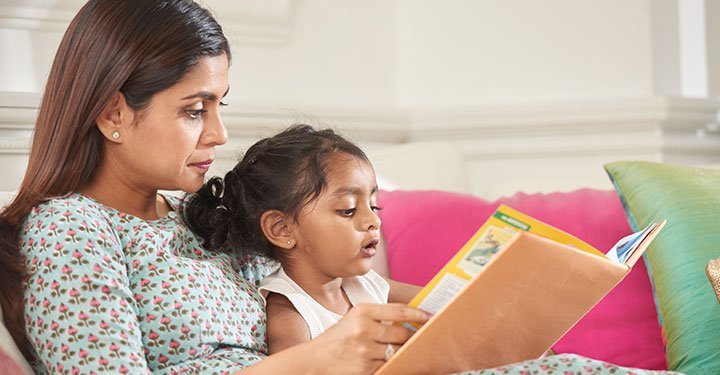
On a particularly breezy Saturday morning, my two-year-old and I reached the hospital early for our scheduled paediatric visit. As we settled in to wait, I looked around. A few children were sleeping, a couple were crying, and one was running around. What about the others? No prizes for guessing. They were hunched over a mobile device, lost in the world of fast animation and digital sound.
Undeterred, I went about my routine. I fished out a few of my son's favourite books from his diaper bag - 'Blueberries for Sal', 'My Mother's Sari', 'The Tiger who came to Tea', and his all-time favourite 'The Magic Rolling Pin'. I saw his eyes light up.
As I started reading to him, complete with exaggerated hand movements and funny sing-song voices, a few children looked up. Curious, a few others came and sat next to my son. In no time, the paediatric waiting room was transformed into a magical kingdom, with reindeer, tigers, ghosts, and unicorns leaping about. When I glanced at my watch, I was not surprised that thirty minutes had gone by just like that, and it was our turn to go in.
That's when I realized that children are naturally drawn to stories.
Early literacy does not mean teaching toddlers to read words. Instead, it involves helping them:
|
Why reading aloud matters for toddlers
Reading aloud to toddlers does much more than entertain them. Research shows that reading strengthens language development, builds vocabulary, supports early brain development, and prepares children for reading success in school. Besides, sitting together with a book creates conversation that strengthens your relationship with your child.
You can encourage your toddler to enjoy books with these simple strategies:
How to build a daily reading habit
Start early
Introduce your child to books as early as possible. You can start as early as three months!
Babies may not understand the story, but they respond to your voice, facial expressions, rhythm, and repeated language. These interactions support brain and language development.
Choose books based on your child's interests
Children are naturally drawn to themes that fascinate them: trains, animals, dinosaurs, construction vehicles, or fairy tales. Relate stories to your child's everyday experiences to help them understand and enjoy the book.
Nishtha Sharma Pareek, mother of a 16-month-old from Mumbai, says:
"I regularly show my son pictures of everyday objects and animals in books. Later, when he sees the same things around him, he immediately recognises them. That connection makes him even more interested in books."
Toddlers enjoy books that invite exploration.
Introduce different types of books, such as:
- Cloth books for younger toddlers
- Board books for older toddlers
- Books with large, colourful pictures
- Lift-the-flap and pop-up books
- Touch-and-feel books with different textures
- Sound books
- Sticker books
These books not only make reading enjoyable but also support sensory development and curiosity.
Create a reading-friendly routine
Read every day
Set aside a regular time each day when your toddler is alert and relaxed. You can read together at bedtime, while travelling, or during quiet moments at home. The best reading routine is the one you can follow consistently.
Make books easy to reach
Keep books where your toddler can see and access them. Surround your child with books so that they become a natural part of their day. You could join a library or borrow pre-loved books from friends. You could visit local book fairs and book swaps to build a small collection at home.
Create a cosy reading space
Many parents enjoy setting up a small reading corner at home. All it takes is a rug, some cushions, or a comfortable bolster. However, more than a perfect reading corner, children need your attention and a good story. Any comfortable place is good enough for story time.
Make story time fun and interactive
Read with expression, talk about pictures
Read slowly, change your voice for different characters, sing repetitive phrases, and use gestures or facial expressions to bring the story alive. Encourage your toddler to copy your expressions and actions. Interactive experiences become more memorable.
Pause occasionally to talk about the pictures and ask simple questions such as, "Where is the puppy?" or "What do you think happens next?" These conversations help build vocabulary, observation skills, and imagination.
Keep stories short
Toddlers have short attention spans. Choose books with simple language and short stories. Don't expect your child to sit still throughout the reading session. They may wander around or play with a toy while you read. Many children continue to listen even while moving around.
Let your child take the lead
Toddlers enjoy making their own choices. Offer your child three or four books and let them pick one. Let them turn the pages forward and back, point to pictures, and decide which pages they want to spend more time exploring.
This sense of independence keeps them actively involved in reading.
Be a reading role model
Children learn by watching the adults around them.
When your toddler regularly sees you reading a newspaper, magazine, cookbook, or novel, they begin to understand that grown-ups enjoy reading, too. This may be your child's strongest motivation.
Quick checklist: Building your toddler's reading habit
- Read together every day, even if only for 10 minutes.
- Let your toddler choose between a few books.
- Use expressions, gestures, and funny voices.
- Ask simple questions about the pictures.
- Don't worry if your child doesn't sit still.
- Read their favorite books again and again.
- Keep books within your toddler's reach.
- Let your child turn the pages.
- Read wherever you are, at home, while travelling, or at the doctor's clinic.
- Enjoy the experience instead of focusing on finishing the story.
Related reading: If you've started reading with your toddler but are facing challenges such as short attention spans or repeated requests for the same story, read 'Common Toddler Reading Challenges: How To Make Story Time Fun Every Day.'
Dr Meghna Singhal is a Clinical Psychologist from NIMHANS Bengaluru, with postdoctoral training in positive parenting at the University of Queensland. She works extensively with children and families.
Last updated on June 29, 2026
Also read: How to raise a reader
Discover the comprehensive Dot language and communication program for kindergarten that cultivates essential listening and communication skills through fun activities.































Comments
Edit
Comment Flag
Cancel Update