
A Comprehensive Guide On How To Effectively Raise A Lifelong Reader
Aarthi Arun
Here is a fun and rewarding activity that not only boosts your child's intelligence and development, but also allows you both to spend quality time and bond. Wondering what it is? It's reading!
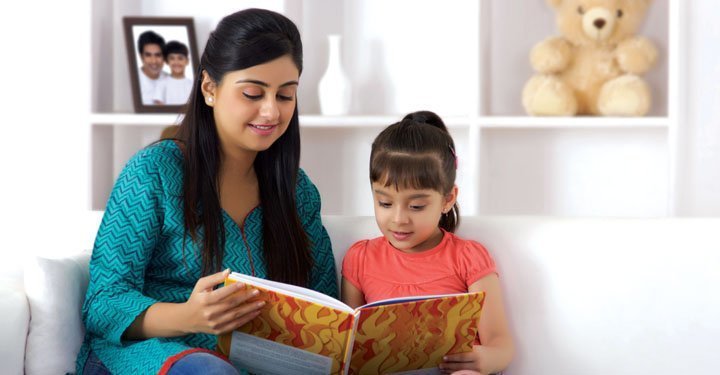
"The more that you read, the more things you will know. The more that you learn, the more places you'll go!" - Dr Seuss
When my son turned 4, I took him to a bookstore to buy his first 'chapter' book. I stood in the shop watching rows and rows of colourful books, and asked him, "Which book should I pick for you?" "Journey to the Centre of the Earth!", my son responded thoughtfully. With both shock and amazement, I asked my son how he knew about the book. To my utter surprise, he 'picked it up' from me.
Almost a year ago, I was reading this very book on my e-reader. That evening, after my usual bedtime reading, my son was cranky and wouldn't sleep. So, I started reading the book aloud to pacify him. The volcanoes and dinosaurs got him hooked, and the name of the book stuck with him. He remembers it to the day. Amazing, isn't it. Did you see how my son got interested in a book without any extra effort on my part? If you too are looking for ways to create a similar impact on your child, you're at the right place.
In the era of visual overload through TVs, mobile phones and tablets, it is no surprise that books have taken a back seat. But, as they say, there is no 'app' to replace your lap. The time-tested way of reading from a book has its large share of benefits for your child. It sets the stage for your child's literary and academic success, and boosts intelligence. It instils empathy and a love for learning in your child. Here's how you can get your child into the 'reading habit':
Catch 'em Young!
Start reading to your child as early as possible. In fact, you can even start reading to your newborn. Read books that have lots of colourful illustrations, which will enthuse your toddler. If required, sing, dance and act out the story to make it funny, lively and interesting. If your toddler is always on the move, don't force her to concentrate, but continue doing your antics until she eventually gets interested. Buy books with textures, flaps, sounds, etc., to capture your child's attention.
The science behind it:
Language development is the most obvious and tangible benefit of reading to your child. By hearing stories, your baby learns new sounds and words, and eventually develop language skills. A study published in Pediatrics Journal in April 2000, by Rhode Island Hospital in the US has found that 8-month-old babies who were read to regularly understood 40 per cent more words by the time they were 18 months old. On the other hand, babies from non-reading homes understood only 16 percent more words. It has also been found that as children grow up, sounds, words, language and comprehension form the building blocks for academic success.
What worked for us:
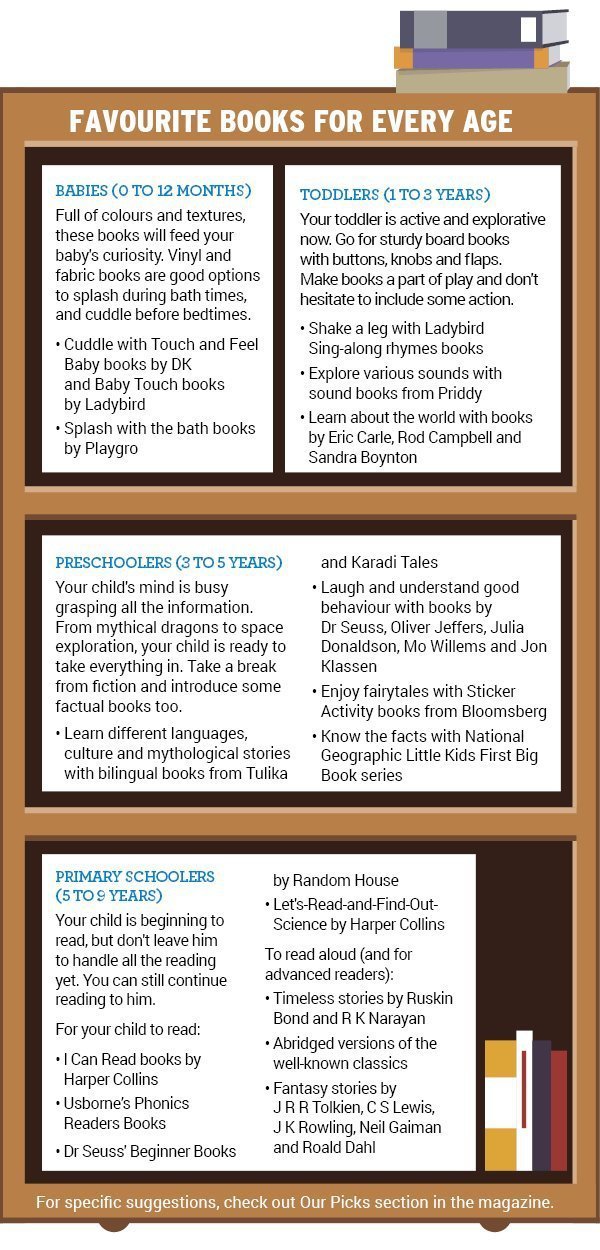
We enjoyed (and still enjoy) textured books from DK. Also Noisy Farm by Usborne was a hit with my son and was loved by all the neighbourhood children. My son still enjoys bilingual books from Tulika.
Read, Read, Repeat...
Read regularly to your child so it becomes a part of their daily routine. Winding down the day with a bedtime story will help your child relax. The best news is it will easily fit into your everyday schedule. At the same time, don't wait for bedtime to read a story; morning, noon or night, read whenever possible. After all, reading is a great way to spend quality time and bond with your child.
The science behind it:
A research presented on April 25, 2015, at the Pediatric Academic Societies (PAS) annual meeting in San Diego, published by American Academy of Pediatrics, says that when preschoolers listen to stories, there is a buzz of activity in their left (logical) brain, which is responsible for understanding, reasoning and storing information in the memory. In another study titled, What reading does for the mind, published in 1998, Anne E. Cunningham, Associate Professor at the University of California, Berkeley Campus, says that reading enhances thinking and intelligence. She adds that children who start reading early tend to develop the habit of reading, and as a result, develop better thinking skills. Reading and listening to stories also improve concentration.
What worked for us:
To beat boredom, we sing the stories. Try 'We are Going on a Bear Hunt' by Michael Rosen. You can check videos online for inspiration. We always try to do an activity based on the book. The map we created to find the above said bear still adorns our bedroom wall.
Mimic, Feel, Express...
It is not enough if you just read a story to your child, you have to get under the character's skin and be as expressive as possible. Changing your voice for the different characters or using silly sounds while reading will get your child engaged in the story. Point to the different characters in the book and explain their feelings to your child.
The science behind it
When you discuss the story and its characters with your child, they will understand and name the emotions the characters go through. This is the first step in helping them regulate their emotions. It will help them learn to empathise with others. According to a research published by Purdue University in the April 2011 edition of Early Child Development and Care, preschoolers who are interested in books are more likely to behave positively and not engage in disruptive behaviour.
What worked for us
We pick books that reinforce good behaviour with subtle humour. It helps my son put things in perspective and understand himself better. For example, in the book Knuffle Bunny by Mo Willems, Trixie, the lead character goes limp and refuses to move during a tantrum. Inspired by that, my son always warns us that he is going to go 'boneless' before a tantrum. I'm happy he is now using his words to tell us about his emotions instead of acting it out.
"He that loves reading has everything within his reach." - William Godwin
Let your child lead the way...
Allow your child to choose books - even if you're reading the same book for the millionth time. Picking a book of your child's choice will kindle their interest in the story. If you're thrusting your own choices, they may soon lose motivation. When you're reading a book, before turning the page, ask your child what will happen next. This ignites their curiosity, imagination, and makes them think creatively.
The science behind it:
Curiosity and imagination are two key factors that help children get creative. A study titled Early childhood curiosity and kindergarten reading and math academic achievement published in the journal Pediatric Research in April 2018, explains that curiosity in children is directly linked to academic success. Stories take your child to faraway lands and allow them to meet interesting and strange characters. They open your child's eyes to the things they have never seen before.
This will urge them to question the norm. Moreover, as your child grows and reads books without pictures, they will also master the art of visualising the story in their mind through imagination.
What worked for us:
From fairytales to non-fiction, we buy books from various genre for my son. He also looks forward to receiving his subscription copies of Highlights and National Geographic Kids every month.
Walk the Talk!
It goes without saying - you can't preach something that you don't practise. The proven way to raise a reader is to be a reader yourself. Reading doesn't always have to include volumes of heavy-bound books or the latest bestsellers; reading your morning newspaper or your favourite magazine also counts. The aim is to give your child a chance to watch you reading. Visiting libraries often will also positively influence your child.
The science behind it:
In a study titled Aspects of home literacy environments supporting hypotheses about the structure of printed words published in the Journal of Early Childhood Research in August 2013, the researchers found that parents' reading habits enhance language skills in 4 and 5-year-old children. The study suggests that a home with access to many different written materials is the key to children's school readiness and learning potential.
What worked for us:
I am a natural lover of books, and my son has inherited the value from me. Books are an integral part of our home. I also share funny anecdotes and interesting things from books or magazines with him. He couldn't stop giggling after reading the title, The Hundred-Year-Old Man Who Climbed Out of the Window and Disappeared.
And, as for the Journey to the Centre of the Earth, I did manage to get an illustrated and abridged version of it, which my son enjoyed thoroughly. Since then, we have gone Around the World in 80 days, dived 20,000 Leagues under the Sea and visited The Mysterious Island. Next up? From the Earth to the Moon! After all, this is what reading books is all about, isn't it? To go places.
Parent speak:
I love books, but when I looked to buy children's books they were too expensive! Luckily, I found preloved book stores on social network sites and, boom! we had boxes of books arriving at our door every month. My daughter is 2.5 years old and has 'read' at least 100 books so far and loves them all! It reminds me of my childhood when my dad used to take me to Sunday markets to purchase books at low cost. That's how I fell in love with books.
- Prem, Bengaluru
15 'tried and tested' Tips for Raising a Reader
- Start reading to your baby
- Buy books made of different materials, and include them in your baby's play
- Read a bedtime story every night. Make it a family routine
- Let your child choose the books
- Keep the books in a place your child can easily access
- Take your child to a library every month
- Attend storytelling sessions in your neighbourhood
- When you go shopping for books, take your child along
- Try an online lending library to get access to more books
- Offer different genres like fiction, non-fiction, poetry, etc.
- Set up a cosy space for reading with comfortable chairs or plush cushions
- Subscribe to age-appropriate magazines
- Make books, magazines and newspapers an integral part of your home
- Even if your child can read, continue to read aloud advanced books
- Read yourself, and pass on the love and joy of reading to your child




















Comments
Jayanthan Jay Apr 8, 2020
Edit
Comment Flag
Cancel Update