
Want to make learning more fun for your child? Bring home some cool science kits!
Ashwin Dewan
Did you know that science kits can enhance your child’s curiosity and help develop their critical thinking and analytical skills?

A child’s growing-up years are critical for their development and learning. Seen in this context, science kits play a major role in laying the platform for a lifetime of learning.
It’s no secret that science is everywhere around us, present in the most basic of everyday things we do. Introducing science to children early on can assist in their brain development. Science activities can help children understand the environment around them better and develop analytical thinking and problem-solving skills.
Science experiments help children:
- observe and learn more!
- approach everyday things with a different view
- consistently look for new ways to answer a question
But what is a science experiment?
The Brittanica Dictionary defines an experiment as “a scientific test in which you perform a series of actions and carefully observe their effects in order to learn about something.”
In simple terms, science experiments refer to a set or more than one set of observations that have been generated to understand and explore the workings of the world.
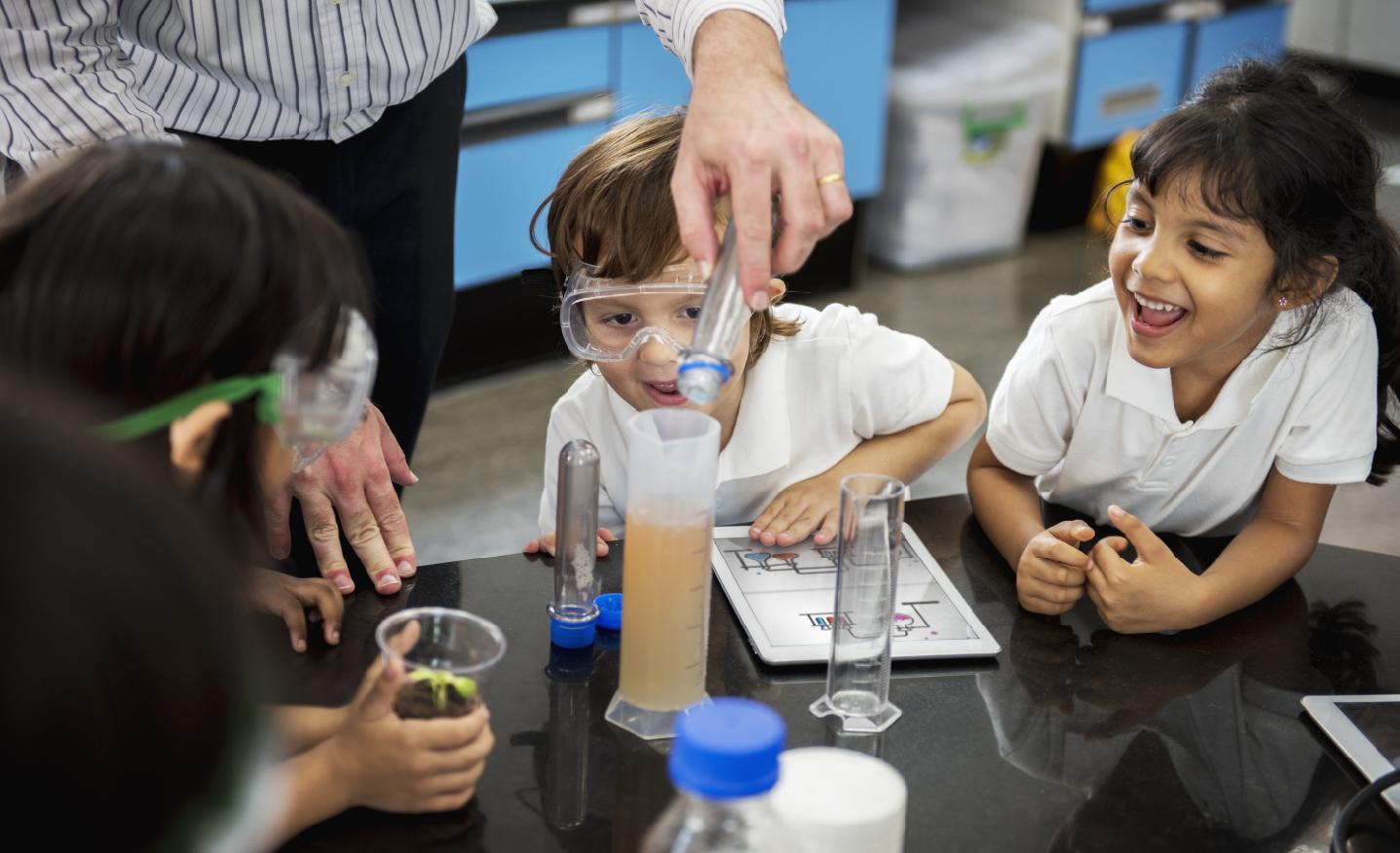
An example of a science experiment would be leaving a glass of juice outdoors when the weather is hot or when the weather is cold to observe the changes taking place a) due to the temperature and/or b) due to the time elapsed.
Benefits of science experiments for kids
- Boost children’s creativity: Children are by nature very curious. Science experiments fuel children’s curiosity and egg them on to ask multiple questions such as why, where, and how. This, in turn, promotes a thirst for learning.
- Aid learning and improve problem-solving skills: When children are engaged in experiments and exposed to diverse subjects, they are on course to learn through hands-on experimentation. As they experiment, they learn to approach a particular problem from different perspectives and encounter different scenarios that require a solution and, as a result, their problem-solving skills are improved.
- Promote observation skills: During an experiment, children learn to observe multiple things. This, in turn, improves their ability to observe, analyze and process information.
- Improve hand-eye coordination: While participating in different science experiments, children are exposed to different scenarios that involve observing with their eyes and executing with their hands. Over time, this boosts hand-eye coordination.
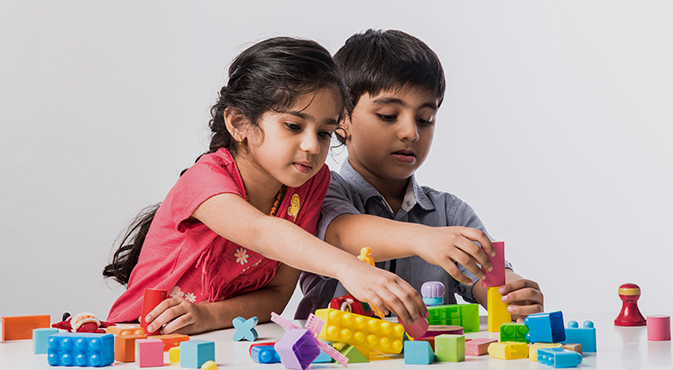
- Better social skills: While taking part in science experiments, many a time, there are tasks that require more than one pair of hands. For example, one person can mix the solution while the other can write down notes. This not only develops a sense of teamwork but also better social skills as participants in an experiment talk and discuss with each other.
- Increasing self-confidence: While continually engaging in experiments, children discover their hidden talents, leading to an increase in their self-confidence.
How science kits help
Science kits provide a great opportunity for kids, as they get a chance to perform experiments by themselves and put into practice what they have learned in books at school. From trying out experiments that involve changing colors to making magic potions to understanding the many wonders that life has to offer, STEM (science, technology, engineering, and math) kits will not only engage children for hours on end but will also make sure they learn a lot during the process. Also, with clear instructions, these kits are ideal for children.
Einstein Box Ultimate Science KitBy now, we are sure that you are raring to help your child engage in science experiments. We have got the pick of the lot for you when it comes to experiment kits. Take a look at the Einstein Box Ultimate Science Kit for kids with over 100 amazing experiments ranging from changing colors and glowing water to setting up underwater volcanoes, making magic potions, and many more. This STEM kit, specifically targeted at 8–14-year-olds, can be a great learning experience for your child. These experiments also come with clear step-by-step instructions for each experiment and can be a wonderful way to foster parent and child bonding. So go ahead and get one for your little one today, and watch them discover a magical world! Get your science kit here |
Different types of science experiments
- Lab: As the name suggests, experiments are conducted in a lab setting where the results are analyzed by scientists.
- Exploratory: This type of experiment is carried out with the objective to test out new ideas about how things work. In most cases, such experiments are just for testing purposes.
- Practical: This is a kind of science experiment that involves the observation of changes that take place when alterations (such as to the existing temperature) are made.
- Fieldwork: These are experiments that take place outside the laboratory. Since they are held in natural surroundings, animals and plants must be tracked.
Science kits are a unique and practical way for your child to learn about the world around them. These kits are ideal for gifting and can be an outlet for your child’s creativity, making them an invaluable toy to get for your child.
What are you waiting for? Introduce your little one to science kits and watch your budding scientist in action!
Enhance your child's cognitive skills and scientific thinking skills with The Dot Me and My World program for kindergarten. It provides a solid foundation in science through sensory explorations and engaging experiments.

























Comments
Edit
Comment Flag
Cancel Update