
Everyday Learning: Simple, Engaging Science Activities Preteens Can Do At Home
Kerina De Floras Felix
author parentcircle author parentcircle author parentcircle author parentcircle author parentcircle author parentcircle author parentcircle author parentcircle author parentcircle author parentcircle author parentcircle author parentcircle
Are you wondering how you can help your preteen develop an interest in science? Here are a few simple activities that will do the trick

Science is not just about the properties of objects, the laws that govern them, or a list of chemical equations. It is a dynamic subject that helps us understand how the world works. Preteens love to explore and question what they see around them. This is an essential part of learning and understanding concepts in science from real-world situations. You can introduce them to different resources and tools to help them explore. Preteens love to measure, record, and experiment as they learn new things. In this article, we take a look at how you can help your preteen have an enriched learning experience through simple science activities they can do at home.
Everyday activities to promote love for science
You don’t have to be an expert to help your child’s science learning. You can help your preteen explore and learn science concepts through simple activities. Here are a few that you can do with them at home.
Measure with tools

Introduce them to tools—measuring tape, screwdriver, wrench, magnifying glass, measuring cups, stopwatch, food thermometer—and talk to them about where the tool can be used. Let them use the tools under your supervision when required. For example, when you bake a batch of cookies, let them help you measure the ingredients for the batter.
Talk to them on the go

As you go about your day, talk to them about different things—how a car works, what causes the seasons to change, what helps plants thrive and so on. Talking about science on the go can help your preteen develop curiosity, pay more attention and learn better. Take a walk with them in your neighborhood and ask them to observe what they see around them. Ask them about the science lessons in school and see if you can relate the topic with any previous knowledge they may have on the topic.
Help them think like a scientist
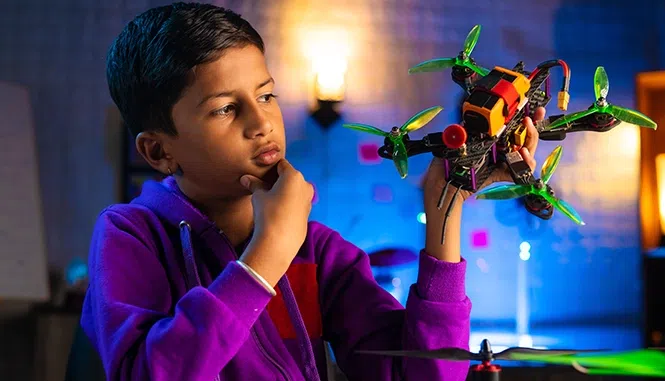
Present everyday problems you face and ask your preteen for help: How do we make sure the clothes dry on time during the rainy season? What can we do if we can’t remember where we kept the car keys? Explain the problem to them and let them think about probable causes and workable solutions. For example, we can put up a clothesline indoors and turn on the fan to make clothes dry faster.
Urge them to explore the properties of objects

Preteens are learning about different objects around them and their properties—color, texture, shape, weight, and size. They understand that the properties of an object can make them useful. For example, plastic raincoats and umbrellas for the rainy season and woolen sweaters for winter. You can enhance this knowledge with a simple example—water. Show them how water transitions to its different states—water, ice, and steam. Ask them questions like, “Why does water take the shape of a vessel it is poured into, but ice does not?” or “How can we walk on ice but not on water?” This will help them think critically and come up with theories. Discuss the theories together and dive into the concepts behind them.
Play with shadows
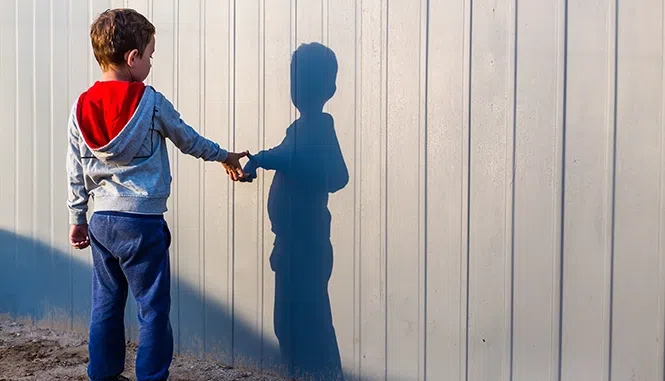
Another simple activity that will enhance your child’s interest in the science of how things work is observing shadows. Ask your preteen to observe their shadow when you go for a walk. Does it move with them? Now ask them to look at the shadows of stationary objects. Then ask them to step out at various times during the day and see how their shadow changes. You can use this simple activity to talk about how the earth’s rotation causes the shadows to change, what causes day and night, and more. You can further explain how seasons change with the earth’s revolution around the sun or what causes ocean waves.
Make a rainbow
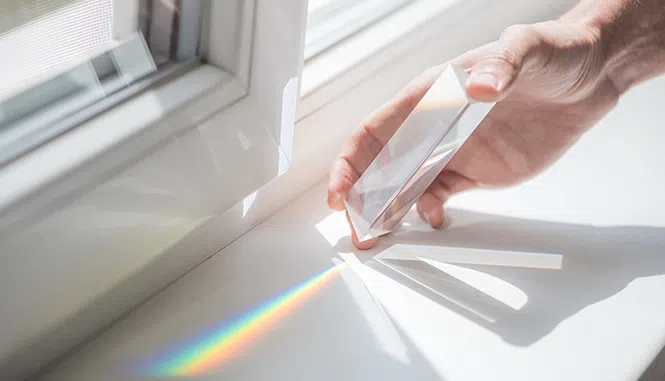
Children love experimenting with water and light. How about showing them how to make a rainbow at home? In a dimly lit room, place a glass of water on a white paper. Then ask your child to shine a flashlight directly through the water near the surface. You will be able to see a spectrum of colors on the paper. Talk to them about it. Where else have they seen a rainbow? Then add food coloring to the water and ask them to shine the flashlight through it again. What do they see now? Does the spectrum of colors change? Use this opportunity to talk to them about the reflection and refraction of light.
Check out these easy DIY science activity kits, which will let your preteen delve into science through fun experiments. Einstein Box Slime Science Kit Butterfly Edufields Class Science Project Kit |
Depending on your preteen’s interests, keep introducing them to different science concepts through everyday activities. The more they experiment, observe, and make theories, the stronger their foundation of science is going to be.
Enhance your child's cognitive skills and scientific thinking skills with The Dot Me and My World program for kindergarten. It provides a solid foundation in science through sensory explorations and engaging experiments.































Comments
Edit
Comment Flag
Cancel Update