
5 Reasons Why Boys Should Read Books About Girls To Break Gender Stereotypes Today
Aruna Raghuram
When boys read stories about girls, they learn about empathy and respect, and begin to see the world through different perspectives. Reading about girls is not about taking anything away from boys. It’s about widening their worldview and nurturing confidence, compassion, and healthy relationships from an early age
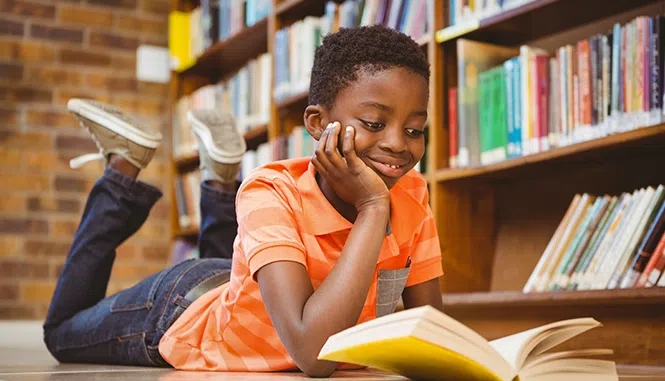
Who can forget American novelist Louisa May Alcott’s books, Little Women and Good Wives, written in the 19th century? The protagonists of these evocative classics are four sisters. Growing up, while I read these books more than once, none of my male cousins read them. These books were considered “girly” in those days, so boys were not interested in reading them.
But most girls have grown up reading books about boys and men—The Adventures of Tom Sawyer, Treasure Island, the Hardy Boys mystery series, Around the World in Eighty Days, and so on. And girls and women alike have devoured the Harry Potter books! It’s quite unlikely that a girl would refuse to read the Harry Potter series just because the protagonist is a boy, right? Then why don’t most boys read books with women protagonists?
Rethinking how we choose books for boys
“Gender stereotypes extend to reading. Most parents tend to buy adventure books, science fiction, and space-related books for boys. Take the Enid Blyton books, for instance. Most boys read adventure and mystery books, but not the Malory Towers and St Clare’s books, based on life in boarding schools for girls. Boys have to realize that girls and boys don’t inhabit different worlds or orbits,” says Dr. Indira Nityanandam, an academician and author based in Ahmedabad.
Dr. Atula Ahuja ran a popular reading center for children (aged 4 to 15) called ‘Reading Rainbow’ in Ahmedabad for 10 years. “I believe that what children read is not determined by biology but by social constructs. If children are exposed to all genres of books from a young age, they will continue to be interested in a variety of books as they grow up. That’s what I would do at my center,” she explains.
5 reasons why boys should read books about girls
Boys not reading books about girls could be a learned behavior, not an innate behavior. There are five major reasons why boys must read books with female protagonists:
1. Learning to respect girls
Encourage your boy to read books with strong and dynamic girl characters. If boys only read books where male characters are central and female characters are weak and peripheral, they may not learn to respect girls. Take, for instance, fairy tales like ‘Cinderella’ and ‘Rapunzel.’ All these stories are about beautiful princesses being rescued by brave princes. The message of such tales is that boys are strong, brave, and risk-taking, while girls are helpless, dependent, and waiting to be rescued by boys.
How far from reality these tales are! Today, a girl can pretty much do everything a boy can. What better way of reinforcing this belief than through books featuring powerful and inspiring female characters? Such books will help boys respect girls, as they learn that girls can be brave and resilient, and can become achievers just like boys.
Also, the assumption that boys will not be interested in reading books about girls is harmful, as it suggests that girls’ experiences are less interesting and that girls lack admirable attributes.
2. “Girly” books are a window to half the world
Why should young male readers be deprived of knowing about the aspirations and adventures of half the world?
“When boys read books about girls, they develop a sensitivity toward a different way of looking at things. Girls and boys are biologically and psychologically different. Boys need to understand that while the girls and women in their lives may look at things differently, there is nothing wrong with that perspective,” says Dr. Nityanandam.
3. Boys must develop empathy
Reading is known to promote empathy, as the reader puts themselves in the shoes of the central characters and feels for them. Many authors write about strong female characters to empower not only girls and women but also boys and men.
But if boys don't read these books, half the impact is lost. Caroline Paul, author of the New York Times bestseller, 'The Gutsy Girl: Escapades for Your Life of Epic Adventure,' was not allowed to discuss her book with children at a school, as it would exclude boys! Outraged at this attitude, she wrote: “We read to experience a panoply of perspectives. We read to learn of people and situations outside and beyond ourselves so we can deepen our connection and understanding. We read to prepare for life. It follows, then, that we are raising our boys to dismiss other people’s experiences, and to see their needs and concerns as the center of things. We are raising our boys to lack empathy.”
4. Boys will become sensitive to gender attitudes
Reading about and empathizing with female characters may make boys more gender-sensitive in their attitudes and behaviors. They may grow up to be adults who treat women with dignity and support gender equality.
“When boys read books about girls, they become more sensitive to the problems faced by girls and women. At my center, I would have all kinds of reading material, and we would have group discussions on the content. This way, boys would not look at the world through a ‘gendered lens,’” says Dr Ahuja.
5. All books have lessons for both boys and girls
There are many lessons to be learned from books, whether they are primarily about boys or girls. Moreover, one lesson boys who read books about girls learn is how to bond better with girls, as they gain insights into how girls and women think, feel, and behave. This understanding improves their relationship skills.
Boys grow up appreciating diversity if they are exposed to all kinds of books at a young age. In fact, children should be encouraged to read books that expose them not just to different genders but also to different religions, cultures, family types, and physical and mental ability levels. This will help broaden their perspectives and worldview.
It’s time to shun “gendered” reading and stop categorizing books as “girly” books and “boy” books. As parents, we play a big role in breaking these gender stereotypes. The trend now is to buy gender-neutral toys for children, like building blocks, musical toys, art supplies, and board games. Why not extend this to books as well?
Books about girls that every boy can enjoy
So the next time you browse for a book for your boy, why not consider Anne of Green Gables, the 1908 novel by Canadian author Lucy Maud Montgomery, which is also a series on a streaming platform? Or Matilda, the British writer Roald Dahl’s popular book, published in 1988, about a little girl with telekinetic powers? Another excellent option is The World is Not a Rectangle (2017) by Jeanette Winter, which is about the life of architect Zaha Hadid, who overcame obstacles to achieve her dreams.
This article was featured in the January 25, 2026, edition of The Free Press Journal
Last updated on: January 07, 2025























Comments
Edit
Comment Flag
Cancel Update