
Raising Children Without Gender Stereotypes: Practical Ways Parents Can Make A Difference
Dr Sulata Shenoy
author parentcircle author parentcircle author parentcircle author parentcircle author parentcircle author parentcircle
Gender stereotypes shape how children think, behave, and see themselves. Learn how parents can raise children without bias and support healthy gender identity development
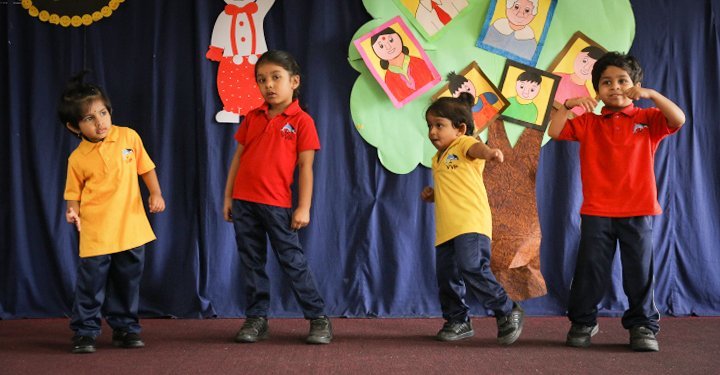
Gender stereotypes begin influencing children as early as age three, often through language, toys, media, and adult behaviour at home. Parents play a critical role in challenging these biases early.
Most of us have grown up being exposed to stereotypical examples of gender. So, it is not surprising that we tend to generalize. But we must change our perceptions and challenge these stereotypes to allow our children's personalities to develop and flourish. As our children grow, they should build their own independent sense of self, which also includes their gender identity.
Why gender stereotypes still influence children
Let us examine the seemingly harmless ways gender biases are promoted.
Language and literature
Historically, in literature, the use of masculine pronouns in place of gender-neutral ones was regarded as non-sexist. The pronoun 'he' was predominant, and 'she' was rarely used. Keep in mind that books influence how children understand what is expected of women and men, and shape their own place in the world.
Media, movies, and television
Today, in movies and TV shows, children are depicted in ways that affect what they are willing to learn, do, and say, as well as how they respond.
Gendered roles and professions
Traditional references to roles and professions such as policeman, actor, poet, stewardess, chairman, and homemaker are another way sexism creeps into our collective psyche. Invariably, the 'policeman' is thought of as a 'man' and the 'homemaker' is a 'woman', and not a 'person' of either gender.
Who is affected by gender stereotyping
It is widely believed that gender stereotyping only affects girls, but this is not true. It applies equally to boys.
How stereotypes harm boys
Quite often, we hear of boys being told not to cry like a girl or face their fears like a man. Boys are discouraged from experimenting with makeup or dressing. And, if a boy does go ahead and does so, he is ridiculed - forcing him to conform to the 'usual' norms. Parents also try to 'correct' the boy to protect him from adverse comments.
Why raising children without gender bias matters
It has been well-established that gender stereotyping can have an overwhelmingly negative impact on young children. It causes young boys and girls to behave differently.
Raising your child without gender stereotyping
Here are some tips to help you:
Support your child's choices
- Do not discourage your children from playing with toys they prefer and or engaging in activities they want to.
- Let them do what interests them. At the same time, if your children show a natural preference for activities typically associated with their gender, that's alright. For example, a girl who loves to bake and a boy who loves motor vehicles need not be given 'different' things to diversify and prove that they are gender-neutral.
- Ensure that you also offer them several cross-gender alternatives. Take care not to influence your children in a manner that reinforces gender stereotypes when it comes to choosing toys, clothes, activities, friends, subjects at school, or a career.
- Help them evaluate their abilities and talents, and encourage and respect their choices.
Teach children to resist peer pressure
Many children make choices in school and beyond, based on what their friends are choosing, even if it is something they don't want. They follow others to get 'accepted' and become a part of the social circle. You can help your children remain true to themselves instead of doing things to please others.
Encourage positive traits in all children
Regardless of your children's gender, encourage positive traits such as fearlessness and nurturing ability. Remember, some boys are nurturing, and some girls are good at mathematics and outdoor activities.
Be mindful of clothes and colours
Just because your child is a girl, you shouldn't make her wear skirts or similar clothes all the time. You can also allow her to wear shorts or trousers when the situation demands. For your boy, dress him up in all colors, including the so-called feminine colors.
Avoid toys that reinforce sexism
Toys have a huge impact on how children understand and perceive the world. So, avoid buying toys for your child that promote sexist notions. You can also use your presence on social media to influence advertisers to include children of both genders equally.
Parents’ role in breaking gender stereotypes
To conclude, as parents and caretakers, we need to remind ourselves that our children look up to us to show them the right path. Therefore, take the lead and be proactive in removing centuries-old prejudices to empower future generations.
A quick parent checklist
Use this simple checklist to start breaking gender stereotypes at home, one small step at a time:
Observe your language: Replace gendered terms like policeman or chairman with gender-neutral words like police officer or chairperson.
Check your reactions: Notice how you respond when your child chooses toys, clothes, or activities that challenge stereotypes.
Offer choices, not limits: Provide a wide range of toys, books, games, and activities—without labelling them “for boys” or “for girls.”
Talk it out: When your child repeats a gender stereotype, gently ask, “Why do you think that?” and discuss alternatives.
Model equality at home: Share household responsibilities and decision-making visibly, so children see equality in action.
Challenge media messages: Watch shows or read stories together and talk about how boys and girls are portrayed.
Encourage individuality: Remind your child that interests, talents, emotions, and dreams are not decided by gender.
Every conversation, choice, and reaction helps your child grow into a confident individual, free to be themselves, without labels.
Last updated on: December 30, 2025
































Comments
Edit
Comment Flag
Cancel Update