
5 Lord Ganesha Stories For Children And The Values They Can Learn From Them
Amrita Gracias
Share these five popular Lord Ganesha stories with your child and explore simple lessons in wisdom, kindness, honesty, empathy, and respect
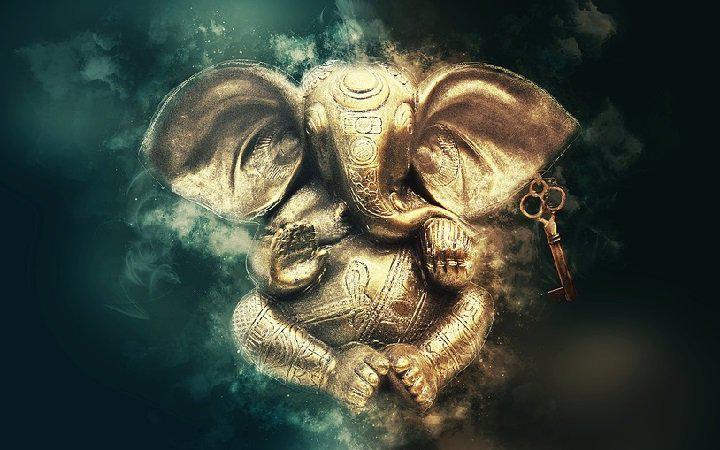
Lord Ganesha is one of the most popular Hindu gods, and Ganesh Chaturthi is celebrated with pomp and enthusiasm all over the country. Children are especially fond of the large-bellied Elephant God, known for his love for laddoos and modaks and his trusty vehicle, a tiny mouse!
Ganesha's stories are just as popular with children. They are filled with adventure, humour, and wisdom, and wonderful opportunities for parents to talk about values such as kindness, honesty, empathy, and creative thinking.
Here are five popular stories about Lord Ganesha you can share with your child.
1. Ganesha and the fruit: Thinking differently
Lord Ganesha and his brother, Lord Kartikeya, often argued and competed. One day, they came across a special fruit. When they reached Mount Kailash, their father, Lord Shiva, told them that the fruit would bestow immortality and knowledge.
Both brothers wanted the fruit. Shiva then gave them a challenge: whoever could go around the universe three times and return to Mount Kailash first would get it.
Kartikeya quickly mounted his peacock and set off around the universe. Ganesha realised that his little mouse could not travel as quickly. So, instead of trying to compete with Kartikeya, he thought of another way to complete the challenge.
He walked around his parents, Lord Shiva and Goddess Parvati, three times and then told them, “You are my universe.”
Impressed by Ganesha's wit and wisdom, Lord Shiva gave him the fruit.
Takeaway: When a problem seems difficult, pause and think of a creative solution.
Talk about the story:
Ask your child, “What do you think Ganesha did differently from Kartikeya?” You could also talk about a time when your child found a different way to solve a problem.
2. Ganesha and Kubera: Why humility matters
Kubera, the God of wealth, was known for his enormous riches. Once, he invited Lord Shiva and Goddess Parvati to a grand feast. Instead of attending themselves, they sent Ganesha.
Ganesha began eating, and he did not seem to get full! He ate all the food at the feast and then started eating the vessels and furniture. Kubera became worried and ran to Mount Kailash to ask Lord Shiva for help.
Shiva advised Kubera to set aside his pride and humbly offer Ganesha a simple bowl of food. When Kubera did so, Ganesha's hunger was finally satisfied.
Kubera understood that his wealth did not make him better than others and that his pride had made him lose sight of what truly mattered.
Takeaway: Having more does not make someone better than others. Humility and gratitude matter more than wealth.
Talk about the story:
Ask your child, “Why do you think Kubera had to let go of his pride?” You could also talk about the difference between being proud of something you have achieved and feeling superior to others.
3. Ganesha and the Moon: Learning to be kind
One day, after eating too many sweets, Lord Ganesha's stomach became very big. As he tried to walk, he stumbled and fell.
The Moon, who was watching him, laughed. Angered, Ganesha cursed the Moon and made it invisible. The Moon realised that he had hurt Ganesha and asked for forgiveness.
Ganesha could not completely take back his curse, but he changed it. According to the traditional story, the Moon would grow bigger for part of the month and then become smaller again.
This story is traditionally associated with the moon's changing appearance. Scientifically, however, the Moon's phases occur because, as the Moon orbits Earth, we see different portions of its sunlit side.
Takeaway: Laughing at someone's difficulty is hurtful. But kindness and empathy matter.
Talk about the story:
Ask your child, “How do you think Ganesha felt when the Moon laughed at him?” Then ask, “What could the Moon have done instead?”
You can also step outside together and look at the Moon. See if your child can notice whether it is waxing, waning, full, or crescent.
4. Ganesha and the kheer: Sharing and honesty
A popular folk tale about Ganesha tells of a poor old woman who lived in a small hut. One day, little Ganesha came to her village carrying some rice and milk and asked if she could make him some kheer.
The woman welcomed him into her home. She put the rice and milk into a pot to cook and then fell asleep, while Ganesha went out to play.
When she woke up, the kheer was ready and smelled delicious. She was hungry and wanted to eat some, but before doing so, she placed a bowl of kheer before an idol of Lord Ganesha.
She ate some of the kheer, but the pot never seemed to become empty. When Ganesha returned, she honestly told him that she had eaten some because she was hungry.
Ganesha told her that he, too, had eaten the kheer when she offered it before his idol. He appreciated her honesty and blessed her with health and prosperity.
Takeaway: Sharing what we have and being honest can bring joy to ourselves and others.
Talk about the story:
Ask your child, “Why do you think the old woman offered the kheer before eating it herself?” You could also talk about how we can share with others even when we do not have very much.
5. Ganesha and the cat: Understanding empathy
Lord Ganesha was a playful and mischievous child. One day, while playing, he saw a cat nearby. He caught the cat and teased it by pulling its tail. The cat cried out in pain.
After playing with the cat, Ganesha returned to Mount Kailash. There, he saw his mother, Goddess Parvati, looking hurt and in pain.
Ganesha rushed to her and asked what had happened. Parvati told him that he had caused her pain. Ganesha was confused until she explained that she had taken the form of the cat he had teased.
Ganesha realised that his actions had caused pain to another living being. He understood his mistake and promised never to hurt an animal again.
Takeaway: Animals feel pain too. Treat them gently and with care.
Talk about the story:
Ask your child, “How do you think the cat felt when Ganesha pulled its tail?” You can also talk about simple ways your family can be gentle and caring towards animals.
Make Ganesha stories more meaningful for your child
Stories can open up conversations about values without turning them into lectures. As you share Ganesha's stories with your child:
- Choose a story that matches your child's age and interests.
- Let your child tell you the story in their own words.
- Ask what they think Ganesha could have done differently.
- Connect the story to something your child has experienced.
- Encourage your child to ask questions about the story and its meaning.
- Explore the science behind mythological explanations when appropriate.
- Focus on the value in the story rather than simply telling your child what to learn.
A simple Ganesh Chaturthi activity
Pick one Ganesha story and read it together. When you finish, ask your child:
“What do you think this story teaches us?”
There is no need for the 'right' answer. Listen to their interpretation and share your own. You may be surprised by what they notice.
The takeaway for parents
Ganesha's stories can be much more than festive tales. They can give parents and children simple opportunities to talk about wisdom, kindness, honesty, humility, and empathy.
This Ganesh Chaturthi, choose a story, read it together, and give your child the space to think about what it means. Sometimes, a story can start a conversation that stays with a child long after the festival is over.
Last updated on: September 11, 2026





























Comments
Edit
Comment Flag
Cancel Update