
The Story Of Dhanteras: These Interesting Legends Behind The Festival Will Amaze You
Ashwin Dewan
Dussehra has only recently concluded, and preparations are in full swing to celebrate Dhanteras, also known as Dhanatrayodashi. But where did these traditions and rituals that we observe with fervor come from? Let’s find out
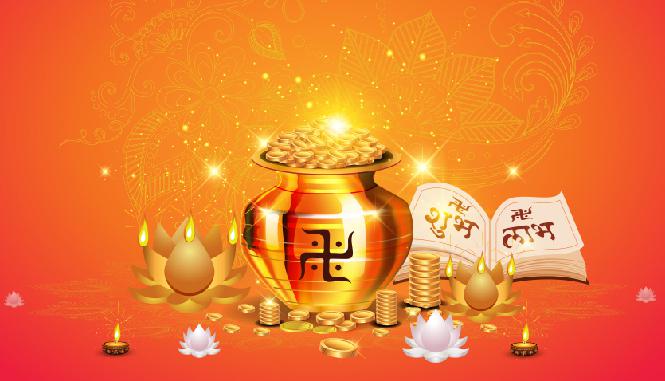
As people all over the world get ready to welcome Diwali, the festival of lights, there’s another significant event that’s celebrated with equal pomp and splendor around this time. An occasion that sees many people flock to buy jewelry and utensils. We are talking about Dhanteras, which is celebrated on the thirteenth day of the month of Ashwin, two days before Diwali.
The term Dhanteras is a combination of two words: “Dhan” means wealth, while “Teras” is the thirteenth day of the waning phase of the moon. Dhanteras is a time when people pray for prosperity. It’s widely believed that buying anything on this day will result in great benefits for the buyer. Hence crowds throng shops to buy gold/silver jewelry, pick up utensils and even purchase a broom—many believe that buying a broom will help remove all financial difficulties from the household.
Dhanteras sets the tone for Diwali celebrations. In most Indian households, Dhanteras is marked by conducting a puja in the evening. Devotees decorate the temple inside their homes with flowers and offer sweets to the gods, and in certain parts of the country, footprints made with vermilion are designed at the entrance of the house. This is to symbolize the arrival of Goddess Lakshmi. Gold and silver items are taken out, cleaned and polished.
As with every other festival, Dhanteras too has its fair share of interesting legends. Wouldn’t you like to know about them? Read on.
The story of King Hima and his son
Once upon a time, there lived a fair and just king called Hima, who deeply loved his 16-year-old son. One day, one of his astrologers came to the king with the prince’s horoscope that said the prince would pass away on the fourth day following his marriage, because of a snake bite. The worried king began to think of several ways to save his son, and on the advice of an esteemed astrologer, King Hima married his son to a girl with a lucky horoscope. As the fourth day of the marriage arrived, everyone waited with bated breath to see if the “terrible” prophecy would come true.
On the fateful day, the dutiful wife began lighting several lamps all over the house and placed gold and silver coins, along with ornaments, in front of the master bedroom. She then began singing songs to her husband and advised him against sleeping.
Finally, when the God of Death, Lord Yama, in the form of a serpent, came to claim the boy’s life, he was bedazzled by the numerous lamps and coins and ornaments. What’s more, he spent the whole night mesmerized by the sweet songs that were being sung by the bride and left in the morning without taking the prince’s life, as the time to take the life of the prince had already passed.
Thus began the legend of Dhanteras. In many parts of India, Dhanteras is also known as Yamadeepdaan (gifting of lamps to the God of Death).
Dhanvantari and the jar of elixir
There’s another interesting legend behind Dhanteras. Centuries ago, the gods and the demons were engaged in a fierce struggle for supremacy.
During one such instance, when both sides were churning the ocean for amrit (nectar), the physician of the gods, Dhanvantari (who was also an incarnation of Lord Vishnu), emerged with a jar of amrit on the day of Dhanteras. He gave the jar to the gods, and this is why Dhanvantari is worshipped, along with Goddess Lakshmi, on Dhanteras.

Goddess Lakshmi and the farmer
Yet another fascinating legend behind Dhanteras involves a celestial being. During one of his earthly visits, Lord Vishnu was coaxed by Goddess Lakshmi into taking her along. Lord Vishnu agreed on one condition—the southern region was off-limits. However, the goddess broke her promise and started moving toward the south where the sugarcane fields and mustard flowers had captured her attention. In no time, she plucked the flowers and drank sugarcane juice.
An angry Lord Vishnu condemned her to spend the next 12 years on earth, serving the poor famer to whom the fields belonged. In due course, the farmer (helped by Goddess Lakshmi) became rich and when, after 12 years, Lord Vishnu came for Goddess Lakshmi, the farmer refused to relieve her from his service. As a last resort, she revealed her true form to the farmer and promised to visit every year during the night before Diwali.
Every year, the farmer cleaned his house to welcome the goddess and started to light an earthen lamp before Diwali to appease Goddess Lakshmi. Eventually, people heard about this incident and started to worship Goddess Lakshmi before Diwali as well.
This day came to be known as Dhanteras.
Tips To Decorate The House For Dhanteras
|



























Comments
Edit
Comment Flag
Cancel Update