
What Helicopter Parenting Does To Your Child: Recognizing And Avoiding Parenting Mistakes
Sriram Naganathan
If you’ve ever stepped in a little too quickly or worried that you might be doing too much for your child, take a look at the real effects of helicopter parenting on your child’s confidence, independence, and emotional well-being, and learn how small, realistic shifts can help you avoid common parenting mistakes
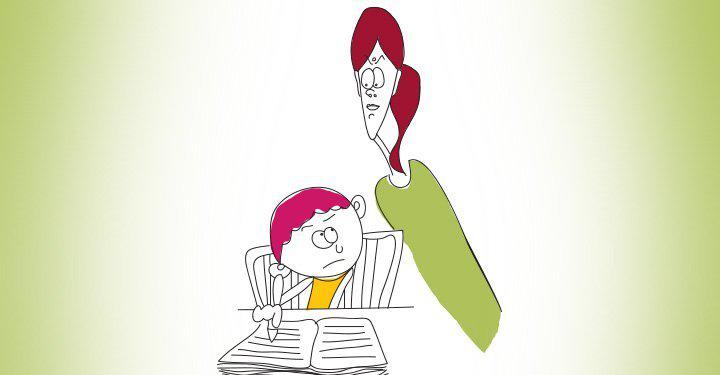
- Are you watching over what your child is doing and not doing every day?
- Do you plan and schedule most of your child's activities?
- Do you not merely help with the homework, but actually do it for your child?
- If your child is at home and you are away, do you call them (or someone who is at home) now and then to check what they are up to?
If your answer to all these questions is Yes, and if you are wondering what could be wrong with your actions, watch out! You could be a 'helicopter parent', causing more harm than good to your child!
What is helicopter parenting?
Where the term ‘helicopter parent’ comes from
Dr. Foster W. Cline and co-author Jim Fay coined the term 'Helicopter Parent' while discussing ineffective parenting styles in their book 'Parenting with Love and Logic: Teaching Children Responsibility.'
Why parents become overprotective
Helicopter parenting may appear to arise from love and affection for the child, but it is actually rooted in a perceived insecurity about the child's future.
Such a parent will not accept the child's failure in anything and hence, will not let the child learn from their own mistakes.
When care turns into over-involvement
Like helicopters, such parents hover closely overhead, rarely out of reach, whether their children need them or not.
How helicopter parenting affects you and your child’s growth
Your intentions are good, but being overprotective can have serious long-term consequences.
How over-involvement impacts a child’s confidence
Experts say that children need to learn to cope with failures to be effective in life. Sadly, this becomes much harder when a parent steps in too often.
The emotional toll on parents
Being an over-involved parent will eventually stress you. Studies have shown that helicopter parents reported more sadness, negative beliefs about themselves, and less joy and contentment, irrespective of whether their children were 'succeeding' or 'failing'.
Signs you might be hovering too much
- Feeling ashamed when your child fails, or fails to meet expectations, either yours or others'.
- Fighting your child's battles for them, such as protesting an unfair grade or test score.
- Taking over your child's projects and homework.
- Preoccupied with the details of your child's activities, practice sessions, schedules, or performances, and talk only about these issues with your spouse.
Parent checklist: Am I hovering too much?Awareness is the first step toward balanced parenting. Reflect honestly on the following signs: Tick what feels true for you.☐ I step in quickly when my child struggles, instead of letting them try first. Several ticks may indicate the effects of helicopter parenting beginning to show for both you and your child. |
Simple ways to step back and empower your child
Expand your circle of care
This should be the first remedial action. Try to include your child's friends: from their class, the neighborhood, or elsewhere, within your 'I care' limit. For example, take them all out on a picnic and be attentive to everyone. Your child is unlikely to complain; the chances are that they will be proud of you.
Encourage problem-solving instead of fixing everything
What if your child already expects you to act on their behalf most of the time? Well, you have a tough job ahead. Ask them to define the problem (in their own words) and come up with solutions, rather than attempting to manage it for them. It could be as simple as seeking the meaning for a word from the dictionary (You are not one! The dictionary is on the shelf and open to all!)
You could even ask your child to draw the problem. This gives a purpose, maybe even a distraction, and something for them to do. Try it a few times, and they may not need your help in sorting out many issues.
A note of caution: You must, of course, know what is best left to the child and what is not, to sort out. Think it through.
Allow children to learn from mistakes
Every parent is tempted to make their child's project the best one ever, but it's more important to let children learn to do things on their own. Rather, if the school overplays the parental role in projects, protest. Offer encouragement but minimal help. A typical helicopter parent worries that if their child does not do well in primary school, they will not do well in life later! There is absolutely no evidence to justify this anxiety.
Children become emotionally stronger when they are trusted to handle manageable challenges on their own.
Build emotional resilience gradually
Limit your curiosity about what happened in school. If your child is not forthcoming about what is going on at school, drop the matter. It's okay. Do not grill them with questions like, "What happened during the second period today?" If you notice worsening behavioral changes in your child yourself, seek a meeting with the class teacher.
Give children age-appropriate independence
Parenting is all about training children to acquire the capabilities to live well when we are not around. And we will certainly be gone one day! So, allow them to learn to take their lives into their own hands. Is your child less dependent on you this year than they were last year? Can you mention a few activities that they do without your help now? What activities do you want them to do on their own next year?
Parenting does not mean stepping away completely. Children still need guidance, emotional support, boundaries, and reassurance. The goal is to gradually prepare children to handle life situations with confidence and responsibility.
Raising confident and capable children without overprotecting them
Remember, the antidote to helicopter parenting is not uninvolved or passive parenting. Parental involvement, in the right measure, always matters. There is a line between need-based, involved parenting and helicopter parenting. You alone can define this line regularly.
Some parenting styles go beyond over-involvement and begin removing every obstacle from a child’s life.
What is worse than helicopter parenting?
Did you know there are worse types of overindulging, overprotective parents? Here are two examples:
Black Hawk parents
Black Hawk parents are those who cross the line from a mere excess of zeal to clearly unethical behaviour, like writing their children's poems or essays, or even drawing a picture for a competition.
In chess tournaments, some parents position themselves strategically so they can clearly see their child's moves and send alerts through SMSes! Of course, the child is made to hide the cellphone and put it in silent mode. These perfectly qualify as Black Hawk parents!
Lawnmower parents
The term lawnmower parents describes parents who seek to mow down all obstacles, real or otherwise, that lie ahead of their children. This attitude makes children totally helpless and overdependent on their parents.
What is authoritative or balanced parenting?
In contrast, authoritative parenting, also called 'balanced parenting', is most recommended by experts.
What balanced parents do differently
- Believe in their child's growing maturity, understand their feelings, and show how to regulate them.
- Avoid solving their children's problems; rather, they help them find appropriate ways to solve problems.
- Allow children to explore options more freely and encourage them to make their own decisions based upon their own reasoning.
- Do not punish the child. Instead, they use extensive conversations to guide their child.
- Use consistent, respectful, non-arbitrary disciplining methods.
- Appreciate and encourage age-appropriate independent thinking in children as a sign of growth.
Every parent steps in too much sometimes. That's why awareness and balance matter.
How balanced parenting helps children thrive
How does it all reflect on children? Experts say that children raised in the authoritative parenting style have higher self-esteem and a lower fear of facing the world. And of course, they retain a healthy relationship with their parents throughout their lives.
Self-check for parents: Am I giving your child enough space to grow?
- Do I allow my child to solve small problems independently?
- Do I step in too quickly when my child struggles?
- Do I allow mistakes to become learning opportunities?
- Do I give my child ample chances to make age-appropriate decisions?
- Do I support my child without controlling every outcome?
- Do I help my child build confidence and resilience gradually?
Last updated on October 24, 2025






























Comments
Edit
Comment Flag
Cancel Update