
10 Habits Of Successful Students: How To Help Your Child Reach Academic Potential
Parama Gupta
Every child can do their best academically with the right support. This article shares practical study habits parents can encourage to help children stay focused, confident, and consistent in learning

Is your child studying hard but not reaching their full potential?
Do you think your child can do far better in academics, but is not actually living up to their potential? Perhaps it's time you help reset their study habits.
Study habits matter more than intelligence. Here are ten habits your child can build to improve and reach their full academic potential:
1. Prepare consistently instead of cramming
Beginning preparations early and systematically is key to academic success. This is a much better strategy than starting to study a few days before an exam. Help your child understand how daily study habits beat the stress of last-minute cramming. Encourage your child to stick to a 'no cramming' policy to help them stay relaxed on the day of the exam.
2. Follow a timetable and build a study routine
A study schedule will help them attend to all the subjects. Following a consistent routine will not only discipline your child but also help them cover the entire syllabus.
Expert insight on consistency, routine, and managing distractions
Students need to be systematic and consistent in their preparation to excel. Distractions come in different forms at different ages. But, good students know how to overcome these distractions. Children need to be taught to become their own masters. Parents can help by cutting out sources of distraction at home and providing a suitable environment for learning. This, they should do in a gentle but firm manner. -Ruth Eunice Anand, Education Consultant, Chennai
3. Don’t avoid difficult subjects
Your child must regularly study subjects they find most difficult and not leave them for the last minute. Successful students leave no gaps in their studies; they clear all their doubts as and when they arise. They seek help from peers and teachers.
Student perspective on balancing academics and extracurricular activities
As a student, I used to actively take part in extra-curricular activities. This helped me excel in my studies as well. A tight schedule helped me become more productive in my academics as I knew I had only so much time to devote to my studies in a day and made sure I didn't waste that time. I used to study for about an hour every day in the morning, and used to break down my study time into short sessions. That I had a support system at home also helped. My parents always encouraged me to follow my chosen path and achieve my potential to the fullest. - Sharanya Gopinath, playback singer, Chennai [Sharanya was a class X topper from CSI Bain Matriculation HSS (2008) and is a multi-talented personality. She is a well-known face in the music industry in Chennai.]
4. Learning from peers
Your child can identify which peers can help them in specific subjects or topics. This will not only help your child learn but also motivate them.
Expert insight on learning and building intrinsic motivation
Parents must try to understand the learning behaviour of their children. Some children learn better through the reading text while others learn better through visual cues. In such cases, parents can make things interesting by complementing learning from textbooks through resources such as videos found online. Also, parents need to refrain from enticing children to study with promises of external rewards. Instead, they should help develop children's inner drive. - Esther Stanley, Freelance Educational Trainer
5. Follow classroom instructions carefully
Paying attention in class and noting down every important instruction provided by the teachers are useful learning tools. Often, teachers share useful tips on how to approach different types of questions and how to answer in ways that support proper evaluation. Students who follow these instructions diligently tend to score better than others.
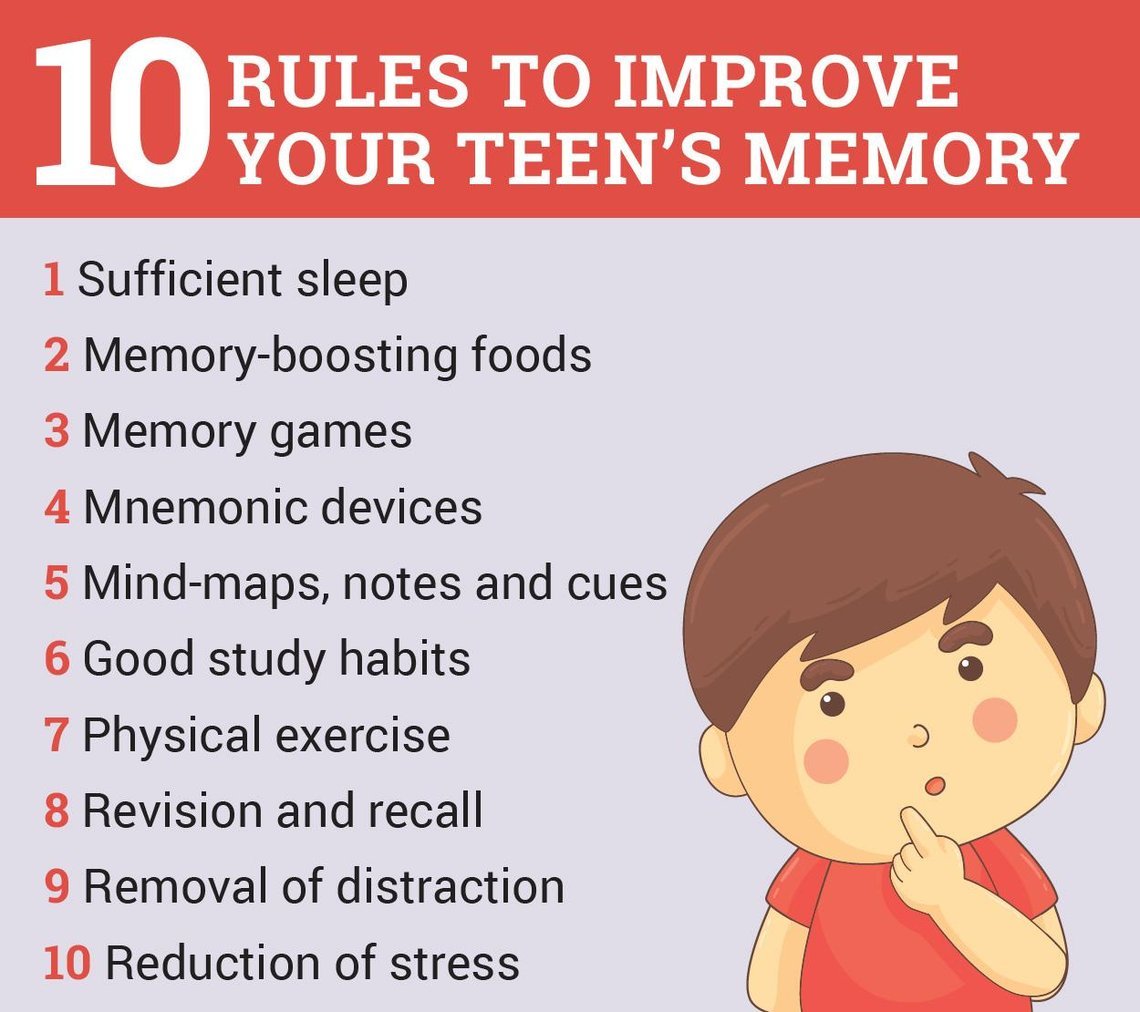
6. Revise regularly to strengthen memory
Your child's study schedule must include periodic revisions. This will reinforce memory and smooth recall.
7. Make personal notes for better understanding
Besides using notes distributed by the teacher, your child can go the extra mile by preparing their own notes. The act of writing things aids memory and recall.
8. Focus on understanding concepts, not rote learning
Check if your child understands concepts and can apply them practically. Discourage rote learning. Explain the crucial difference between memorizing and learning by rote.
Student insight on concept-based learning and healthy study habits
I used to put in a lot of effort to master challenging areas of any subject and try to understand practical and real-life applications of all concepts. I would study not just to get good marks but with the aim of gaining knowledge. I used to take regular breaks during my studies to read the newspaper, watch sports and interact with family members. Also, it helped to keep myself physically fit by exercising regularly. - Rakesh Ramakrishnan, Senior Systems Engineer, Syntax Coreservices, Mumbai [Rakesh was a consistent top ranker throughout his school days and stood third in the Class X board exams (2004) in his school - Mahila Samiti English High School.]
9. Test knowledge to identify learning gaps
Once your child has covered and revised the entire syllabus, they can test their learning by answering questions in textbooks, question banks, and previous year's question papers. While your child may be able to answer most questions, they may also face a few challenging ones. This will help them identify and bridge the gaps in their preparation.
10. Take mock tests to improve time management
To do this, you can either prepare your own set of question papers or use copies of previous years' test papers. When your child sits down to write and test their level of preparedness, instruct them to finish the paper within the stipulated time. This will help them learn how to manage time while writing an exam.
Helping your child inculcate all these habits may prove to be challenging. However, doing so will bring great rewards in the long run.
Support your child’s well-being with effective ways to cope with academic stress. Explore the guide.
Last updated on: December 18, 2025
At Dot Learning Circle, our health and safety program for kindergarten students is designed to instill healthy habits from a young age. Through engaging activities and interactive lessons, children learn the importance of maintaining good hygiene, staying active, and making healthy choices.































Comments
Edit
Comment Flag
Cancel Update