
Parenting Story On Children’s Education And Exam Success: Lessons From A Mother’s Journey
Arathi Vishwanath
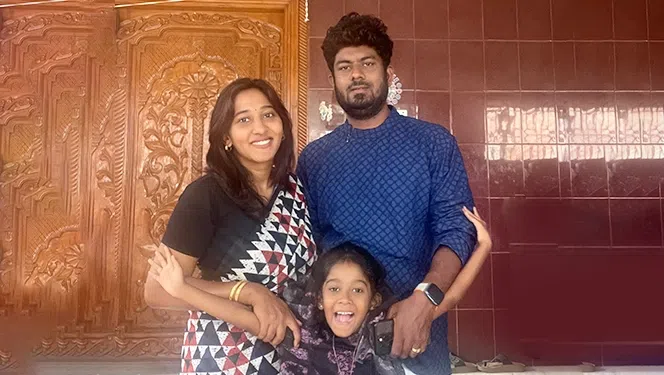
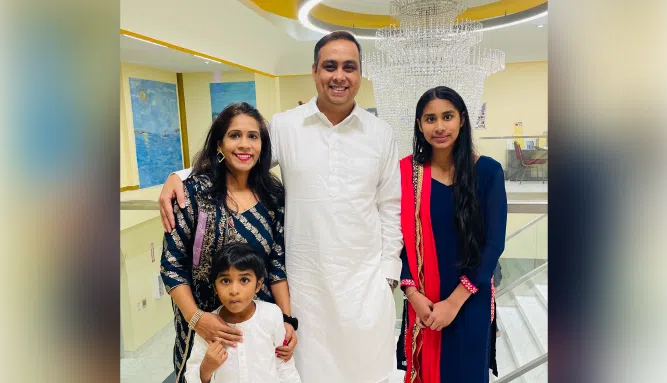
I am Arathi Vishwanath, a mother of two beautiful daughters. My elder daughter is now studying medicine in a government college, and my younger one is in Grade 10. Here are a few lessons I learned while guiding my children through their educational years. These experiences shaped my approach and may help other parents in helping their children prepare and support them for the board exams in a balanced, encouraging, and consistent manner

Learning from mistakes
My journey as a parent has taught me that encouraging our children is far more effective than just focusing on their faults.
Whenever I go to parent-teacher meetings, I have made it a habit to never scold my children if they score lower marks, because it would make them feel inferior. Instead, I insist that they go through the mistakes thoroughly so they won’t repeat them. I believe in ‘Learning by making mistakes’ and ‘Practice makes perfect’, and I guide my children the same way.
Understanding concepts, nurturing curiosity
I also believe that understanding concepts is more important than mugging up and getting the marks. So, I guide my children to learn more about the topics they study.
Ever since my children were little, I bought them encyclopedias, and we read them together. This made me realise that such books nurture young children’s curiosity about their everyday world. This same curiosity about the world around us will fuel children’s interest in studies as they tackle difficult subjects in high school and college.
Luck matters, too; complete your syllabus
I also believe that luck plays a great role in every child’s future. During exams, children get different sets of question papers—some easy and some difficult. Although children are capable of doing well, if they get a difficult set of question papers, they may get tense and fail to perform to their full potential.
Also, often in board exams, results are influenced by factors such as evaluators. Some evaluators may correct the paper liberally, while others may be strict. It is all up to our children’s luck as to which type of evaluator corrects their paper. So, I guide my children not to worry about the result, but rather to concentrate on studying the entire syllabus without neglecting anything. I have, however, scolded them whenever they take their studies lightly and are overconfident.
Practice leads to confidence and time management
It was the year my elder daughter was writing her board exam. I remember her always making minute mistakes in math and losing marks, which used to make her feel bad. I guided her to solve as many problems as possible, and by solving many worksheets, she gained confidence. Also, I suggested she stay calm and not get tense if she didn’t know the answer.
I was surprised to see her result. She got 100 marks in math in her board exam, which was the result of her continuous practice. Her regularity in solving different papers and practicing (solving many problems) helped her to achieve her goal.
Later, when she was preparing for NEET (National Eligibility-cum-Entrance Test), attending mock exams at her coaching center helped a lot. I never allowed her to skip practice exams. Attending many exams gave her more confidence and improved her time management skills as well!
Say goodbye to tension with meditation
“Mom, I am very tense … I’m sure I won’t be able to write my exam well tomorrow.”
Whenever my daughters told me this, I would reassure them by saying, “Don’t panic! You are not writing any board exam, so relax.” This helped them calm down.
Meditation was another strategy I recommended to my children. In fact, meditating for some time every day helped my elder daughter not to get tense during competitive exams. Tension is something that every student must overcome, and I feel that, as parents, we should motivate our children’s efforts.
Study regularly
We should guide our children to avoid last-minute studying. They should be well-prepared the day before the exam, and on the day itself, they need to stay calm and arrive on time.
Co-curricular activities crucial for well-rounded education
I have seen many parents who won’t allow their children to spend time on co-curricular activities during their school years. Many children who excelled academically in school failed to achieve similar levels of success after college. Those who spent their schooldays enjoying a variety of activities and then studied diligently after college are more successful at building their future. Their knowledge is not restricted to academics— they are also equipped to navigate career-related challenges.
Creativity is an essential skill that students need to thrive in a fast-changing world. Co-curricular activities like art, music, dance, drama, and sports foster creativity in children. So, I encourage my daughters to participate in all kinds of co-curricular activities.
Bountiful career opportunities today
What I’ve observed recently is that while competition has intensified, opportunities are also emerging in many areas. As a result, children nowadays can choose from a wide array of courses based on their aptitude.
I strongly believe that exams and marks alone don’t decide a child’s ability. Instead, it is their knowledge that shapes their future and career.
Worried about board exams? Learn proven strategies for Getting Your Child Ready For The Board Exams—from planning study schedules to managing exam anxiety.






























Comments
Edit
Comment Flag
Cancel Update