
Competitive Mom: How Mompetition Affects Children And Tips To Avoid Parenting Pressure
Aruna Raghuram
Every child thrives when parenting is about love, not comparison. Learn how mompetition impacts children’s emotional well-being and how you can let go of the race and embrace balance

Welcome to the world of Mompetition, a ‘competitive’ world most moms get sucked into knowingly or inadvertently, without realizing the devastating impact it can have on their child.
I was recently part of a Mommy Group of my child’s school, and I must tell you, I have never witnessed such ‘heightened competition’ anywhere else.
Understanding the concept of mompetition
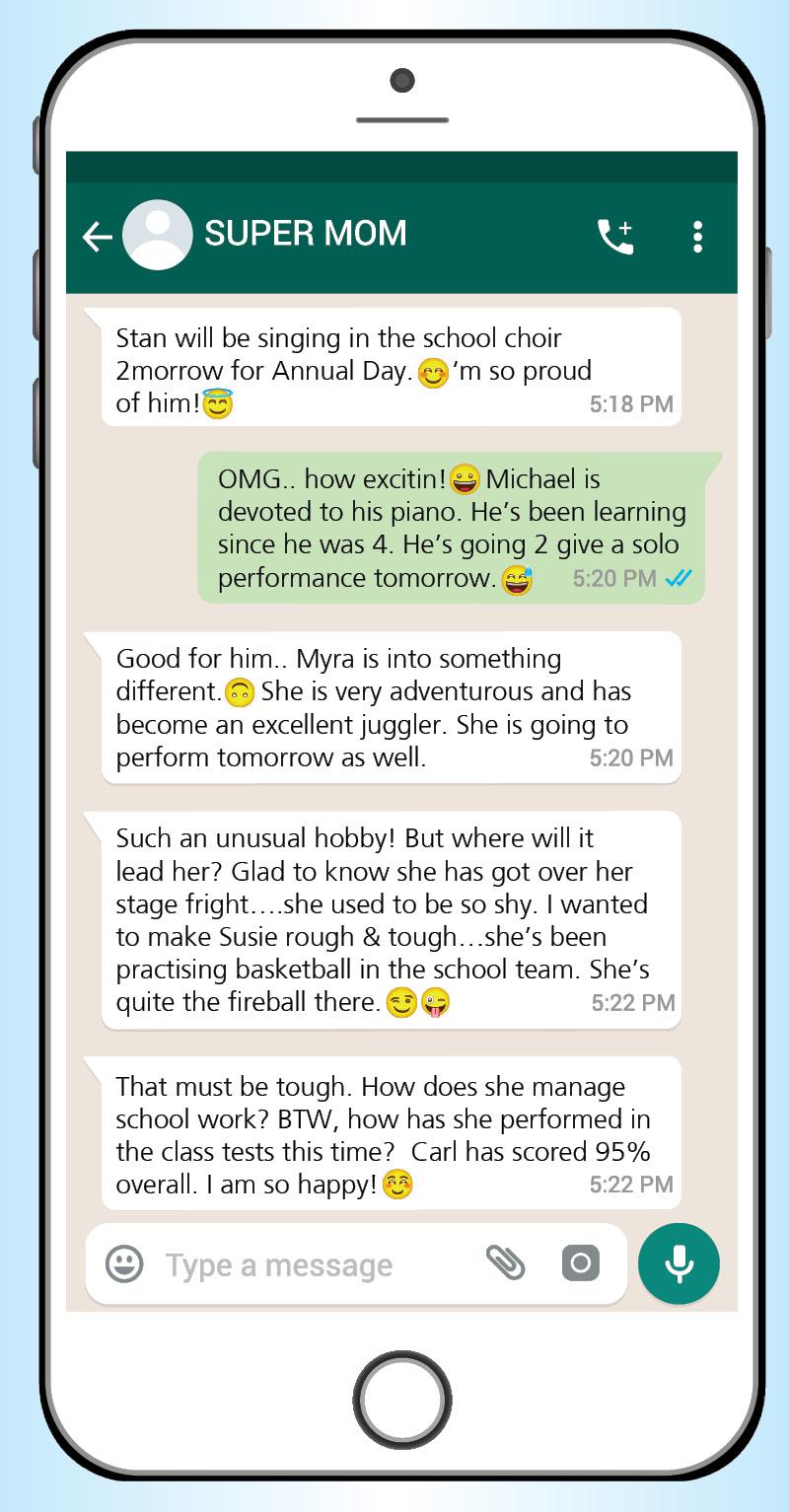
Have you ever felt that being a mother has become less about enjoying your child and more about competing with other mothers? Mompetition can take two forms – it can be about whose child is taller or smarter, or it could be about who is the better mother. So, moms compete with each other through their kids. Whether it is about milestones or marks, sports or artistic abilities, some moms love bragging about their children.
The Urban Dictionary defines mompetition as: “The one-up rivalry that moms play, making their child seem better, smarter, and/or more advanced than yours.” It may involve two or more moms and any number of children, even full-grown.
How moms compete
Almost two decades ago, a study titled ‘Competitive Parenting: The Culture of Teen Mothers’ by Higginson was published in the Journal of Marriage and Family, which found that mothers compete in several areas. These include - the provision of material possessions, the physical and cognitive development of their children, their knowledge of parenting, and their care and leniency in comparison with other parents. Well into the 21st century, if anything, that competition has only gotten more intense.
In fact, ‘Mompetition’ begins even during pregnancy! At that stage, you may look at another pregnant woman and wonder: “Have I put on more weight than her?” Then comes the competition over whether you successfully breastfed your child, and how long it took you to get back in shape. Attitudes on everything from organic food to co-sleeping, using diapers, hygiene, vaccination, and enforcing discipline are also subjects for competition. While it is natural to compare yourself with others on some dimension, it becomes unhealthy competition when:
- You try to put down someone else to prove you are better
- Or you start to feel inadequate because of another person’s so-called achievements
Then come the child comparisons – developmental milestones, academic performance, extracurricular accomplishments, and behavior. You are bombarded with questions to see where your child and you rank on a scale that does not take into account the significance of individual differences. The questions from one mom to another in this regard: Does your child sleep through the night? Have they started reading yet? Do they get ready for school on their own? And so on. It completely throws out of the window the very essence of parenting, where each child is unique and different.
Signs a mom may be slipping into competitive parenting
- Adversarial relationship: What makes women compete as moms? In 'Catfight: Women and Competition,' author Leora Tanenbaum describes how women are conditioned to think of each other as adversaries rather than allies. She explores the intra-gender war as it manifests in dieting, dating, in the boardroom, and during motherhood. Unless women stop seeing each other as rivals, how can they be supportive of one another?
- From self-esteem to mom-esteem: Once she has a child, a good part of a woman’s self-esteem morphs into mom-esteem—feeling good about the choices she makes as a mom. She seeks validation from other moms about these choices. But when she faces a super-competitive mom, her mom-esteem goes down. She feels she has failed her child in some way.
- How they view their kids: Moms who are competitive think of their children as extensions of themselves. They feel their child’s attributes and performances are a direct reflection of their parenting skills. If their child aces the maths test, they bask in the reflected glory and could even be thinking, “Yes, I did a good thing putting them in a tuition class.”
- Identity crisis: For moms who gave up their jobs when they had a child, mompetition is a way of regaining a sense of identity that they had as working women. They want to excel at something, and because they see motherhood as their vocation now, this is the area they want to shine in.
- Sense of insecurity: Mompetition arises out of a sense of insecurity. Parenting is tough business, and women feel they are responsible for every hiccup along the way. They feel all other mothers are doing a better job, and this makes them feel insecure. They seek to impress their peers—other moms—by hiding this insecurity and being brash and boastful. As competitive moms make other moms around them feel anxious and defensive, this triggers a cycle of one-upmanship.
US-based clinical psychologist, Dr Jessica Zucker, explains the cause for mompetition in an interview given to kindredmedia.org, ‘What’s Behind the Need to Compete as Mothers?’ She says, “Motherhood seems to stir profound insecurities for women as they traverse the simultaneously joyous, daunting, rewarding, and vulnerable journey that is parenthood.”
Dr Zucker adds: "Comparing ourselves to one another promotes separation rather than connection. What does this 'insidious cycle' model for our children as they come to learn about connection, self-esteem, and community?"
How mompetition impacts children’s emotional well-being
If they are the victims, Mompetition leaves mothers feeling unhappy, anxious, and insecure. Even if they are not, the joy they derive from being boastful will be short-lived, and eventually, the mom will be left feeling despair. What’s worse is the impact it has on children. Here are some ways children feel the heat of competition:
Undue stress: Judging maternal skill through a child’s behavior and accomplishments puts too much pressure on children, who, in turn, become anxious and stressed. Creating an environment for a child where they are always under pressure to perform is sometimes referred to as ‘hothousing’. It is like putting plants in a hothouse so that they grow faster. A study led by Ciciolla in 2016 and published in the Journal of Youth and Adolescence highlights this very aspect. The study established a direct connection between high achievement expectations and rising levels of stress in adolescents, which leads to reduced well-being. Moreover, the study observes that the risks for children’s maladjustment are magnified when a mother’s high achievement emphasis coincides with harsh and critical parenting.
Poor self-esteem: If a child is not able to perform as expected by their mom, their self-worth plunges. This can lead to depression and even resentment and anger towards their parents. Every child develops at a different pace and has different strengths. Parents need to accept this.
Forced to follow parents’ dreams: Some mothers might want their child to follow in their (successful) footsteps. Other moms may project their unfulfilled dreams on their child. Whatever it is, the child becomes a victim of expectations and is forced to pursue a career even though they may not be interested in that field.
Lose out on other skills: In the drive to succeed and satisfy their competitive moms, children miss out on learning the emotional and social skills that they sorely need, especially during adolescence.
Robbed of choices: Just to keep up with other moms, some moms force their child to take up activities that they don’t enjoy. If one child’s classmate is going for piano class, the other child’s mom could end up thinking my child should go too. The herd mentality comes into play. Sometimes, this is a sign that we want to give our child the best of opportunities, but does the child want to engage in that particular activity?
Impaired parent-child connection: Mompeting moms stop connecting with their child in positive emotional ways. While trying to achieve perfection, they miss out on the emotional intimacy and playful, fun moments with their child.
Focus on external goals: A Belgian study on ‘Raising Trophy Kids’ by Soenens in 2015 observes that mothers who strive to obtain self-worth through their child's accomplishments may highlight the importance of extrinsic goals to their child, which, in turn, may not be good for the overall development of the child.
Stifled creativity: Mothers who compete with each other through their children become more critical and controlling, which prevents their children from thinking creatively and out of the box.
One-upmanship habit: Children of competitive mothers tend to mirror this quality in their interactions with other children (or even their parents). For instance, a six-year-old may surprise you with ‘many ways’ they are better than your child. No prizes for guessing – they have a pushy parent.
Demoralized by constant comparisons by parents: A child always being compared unfavorably to siblings or peers can develop damaged self-esteem. This may have a negative impact even in adulthood. “Look how well your friend is doing at school. Why can’t you be more like him?” Or, “Why can’t you be as responsible as your sister?” Such comparisons make a child feel that they are never good enough.
Why Children Need Support, Not Pressure
CASE STUDYPsychiatrist Dr Darshan Shah presents a case study to explain how he treated a teenager who had a highly competitive mother. I saw Hrudaya Sharma (name changed), a 14-year-old ninth-grade child. She came in with symptoms of extreme low self-esteem, sadness, and suicidal feelings. On inquiry, it came to light that Hrudaya had no independence in making choices. Her mother would make all the decisions for her. She would be constantly compared to her peers and cousins. The comparison would be on every conceivable parameter – appearance, clothes, academic achievement, friends, hobbies, and extra-curricular activities. In fact, the mother would focus less on her own daughter and more on her daughter’s peers and their mothers. She would be constantly asked what her friends and their mothers were doing. Hrudaya had to keep changing how she utilized her time according to the latest insecurity that her mother felt! I counseled the mother, explaining to her how her competitiveness was damaging her child. Gradually, her mother changed her behavior, and Hrudaya started living a life of her own choice. |
EXPERT TAKEParentCircle asked psychologist, speaker, and author of Smart Parenting for Smart Kids, Dr Eileen Kennedy-Moore, about the harm mompetition can do to a child. This is what she said: Competitive parenting (it’s not just moms who do this!) hurts both children and the parents. It makes parents feel anxious, inadequate, and critical of their children. Research shows that when parents feel anxious, they tend to behave in more controlling ways toward kids. It leads children to care more about ‘looking smart’ rather than developing genuine competence. This, in turn, makes them less motivated to learn and try new things. Children who perceive a high level of criticism from parents also report more feelings of depression and anxiety. At its worst, competitive parenting sends a message to kids saying, “You need to succeed to prove that I’m a good parent!” That’s a terrible burden to put on a child’s shoulders! Competitive parenting is contagious. Hearing other parents talk about their kids makes other parents wonder: “Is my kid going to be okay?” and “Am I doing enough as a parent?” But this attitude overestimates how much control parents really have over their children’s future, and it underestimates children’s capacity to grow, learn, and find a path that’s right for them. Rather than trying to push our children, it makes more sense to help them develop their own inner motivation to do well. |
Healthy ways to step back from parenting pressure
According to a 2016 British study, ‘Maternal Competition in Women’, 40% of women are angered or annoyed by boastful comments made by other mothers. Still, less than 5% endorse a direct hostile response. Instead, competitive mothers are conversationally shunned and rejected as friends.
While this may seem an extreme response, there are gentler ways to handle mompetition. Here are some:
Check yourself: Ensure you are not inviting competition by being overcompetitive yourself. The proverbial ‘hockey mom’ is the epitome of competitiveness. Perhaps, we all have a touch of the hockey mom in us. Feeling pride in your child’s achievements is natural, but you should take care that what you say does not make another mother doubt her own child’s abilities or feel less competent.
Bestow praise: When you come across a mom who is bragging about how she potty-trained her child in record time, praise her and express admiration. This will leave her nonplussed, and she may stop the boasting. Or say, to another bragging mom: “Sara was amazing in the elocution competition at school. She is so stage-friendly.”
Change the topic: Talk about something unrelated to kids, like the latest film in the theatres or the ongoing cricket game. You could also seek information, like asking where she buys baby clothes or where she takes her child out to play.
Be understanding: If a mother goes on and on about how tired she feels taking care of her kids, agree with her that she is having a rough time. Then shoot the question: “How do you find time to take care of yourself?”
Quiz her about her other activities: Ask her whether she reads, listens to music, or goes to a yoga class. Also, to escape the perils of mompetition yourself, ensure you get involved in a few activities that are not related to your children, such as joining a book club or a dance class. This will give you other ways to feel fulfilled and bring balance to your life.
Pick your friends wisely: Choose to be with like-minded mom friends who are not competitive. They are the ones who usually feel reasonably confident that they are doing a good job.
Keep your sense of humor alive: If you don’t take yourself or your role as a parent too seriously, you are unlikely to be affected by mompetition. Faced with a competitive mom, you can make light of how moms tend to brag about their kids.
Finally, being a good mother usually involves looking inward (not outward at other moms) to see what you can do given your nature and situation. Also, moms must realize that each child is unique and special in their own way, and there is no ‘right’ way to raise a child. This will give moms confidence in their own parenting skills and prevent them from judging others.
Key Takeaways for Balanced Parenting
In a nutshell
|
What you can do right away
- Recollect all the times you boasted about your child to another mom over the past week/month.
- List out all the things you make your child do because you feel another child/parent is doing better.
- Hug your child because you love them as they are.
Last updated on: September 2, 2025































Comments
Edit
Comment Flag
Cancel Update