Trying to adopt a child can seem like stepping into uncharted waters, as adoption isn't a topic of discussion in most families. Here's all you should know about completing your family through adoption
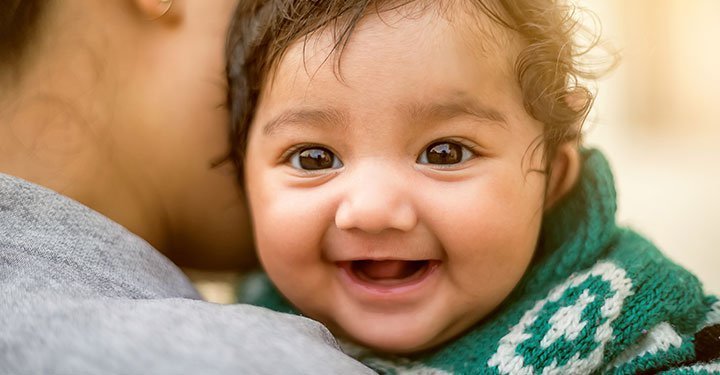
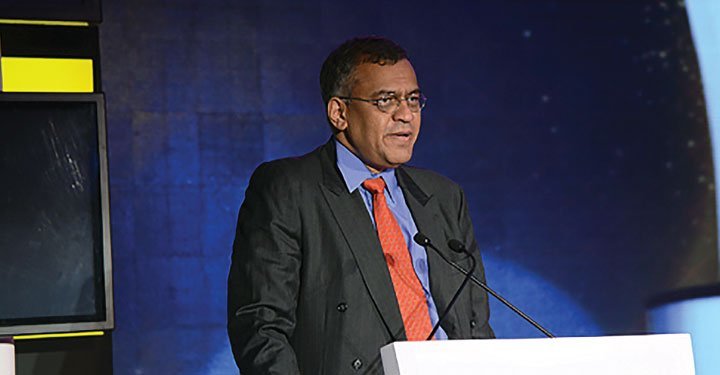
Adopting a child is no more or no less than an alternate way to parenting. As a part of an important nodal body, the Adoptions Coordination Agency, Tamil Nadu, I come across varied perceptions to the idea of adoption. I am constantly in touch with scores of parents waiting in the wings to bring a child into their homes, whom they can call their own.
It is said that a biological child is born from your womb, but an adopted child is born from your heart. The bond between the adoptive parent and adopted child is very, very special. It cannot be expressed in words, but here is an attempt to illustrate this through the stories of some adoptive families.
Bond of love
G Nageswaran and R Revathi are the parents of a lively little six-year-old girl. Srividhya was adopted when she was just 72 days old. When Revathi had some trouble with her pregnancy leading to complications, the couple decided to adopt a child. "What began as a selfish thought, transformed into a need to do something purposeful with our lives," says Nageswaran. "When Srividhya came into our lives, our family dynamics was transformed into something magical. We gave up minor squabbling and strove to make our home a haven of peace for our child. Initially my family wanted us to adopt from within the family, but we went ahead with an unrelated adoption of a child in need. Today she is a favourite with everybody.
Srividhya already knows and has accepted her adoptive status. We are Sai Baba devotees and have told her that she is a gift from God. We have exposed her to people who are economically less fortunate and have explained to her that sometimes, people hope to give their children a better life by giving them up for adoption. She seems to have accepted this reasoning as to why her biological parents may have given her away.
It is important for children to know their adoptive status early in life, as it may come as a shock to them if they come to know of it from sources other than the parents. We have no fear in answering her questions about her adoption. She is very attached to us."
Fourteen-year-old Satish was adopted when he was only six months old. His parents R Deenadayalan and D Kalaichelvi decided to adopt a child after two difficult abortions. "My wife took the initiative, and her parents supported her completely. In turn, I got enthused. When Satish was eight years old, we took him to a Tamil film called Kannathil Muthamittal that was about the adoption of a Srilankan refugee child. My son was very impressed about the idea of adoption. That was when we told him about his adoptive status. After six months we told him that we wanted to adopt a baby girl. We felt that he was lonely and needed a sibling. He was very enthusiastic and we brought home oneand-a-half year old Aishwarya. She had not yet begun speaking and we were worried that she may have missed a milestone.
But once she was in our home, with the love that our son lavished on her, she started talking. Today she is the most talkative child on the block! Brother and sister are inseparable, have their usual squabbles and dote on each other," says Deenadayalan.
Adoption is not necessarily the last resort to building a family. Several families have opted to adopt their second child. Some have adopted even the first out of choice.
Vidya Shankar is an 'old' adoptive parent. Her biological daughter Varsha is 21 years old and adopted son Vishal is 19. The family has long years of experience in parenting and Vidya asserts that there is no difference whatsoever between parenting a biological child or an adopted one. She is a person who likes to give back to society what she has received - in her case, the joy of parenting. Her doors are always open to parents and children who want counsel. In fact her children also help other children who have issues with their parents!
Among the many hats she wears, she is an adoption educator and a Founder Secretary of the adoptive family support group called SuDatta. Vidya feels that positive parenting plays a key role in bringing up today's child. Power play is there in every family, whether the siblings are biological or adopted or a combination of both. Depending on each child's temperament, parents must alter their approach to resolve situations. Only then, will they be equally fair to all their children.
Talking about her adoption experience she says, "My husband Shankar and I decided to have our second child through adoption when our daughter turned two. We started the adoption process in 1992. We were not very welcome those days, as the agencies felt that we could have other biological children.

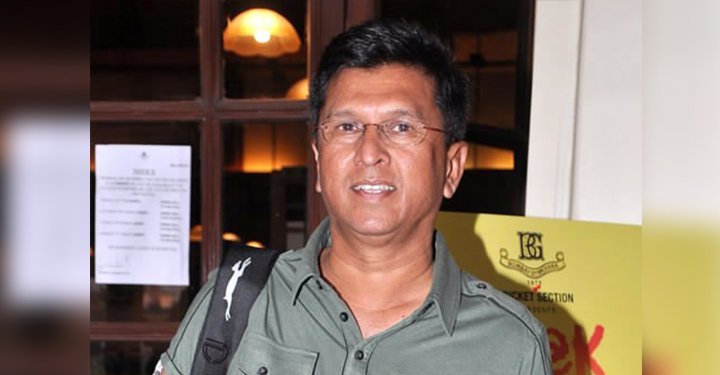
We registered with the VCA (Voluntary Coordinating Agency now known as Adoption Co-ordinating Agency TN) and were finally placed with a sweet little child in a month. We started the Adoptive Families Association in 1995 with the help of the VCA to help handle the legal issues and the delays related to adoption."
Vidya advises other adoptive parents that children can be told about their adopted status when they are two and half years old through the story-telling route; she has also written a book about this.
She also facilitates children to talk naturally about their adoptive status in family gatherings. In SuDatta, some of the older adopted children come forward to help the younger ones understand the concept of adoption. "We have sharing platforms, and it was thrilling to see how the children held on to each other when the topic of 'search' was discussed," she says. Vidya has helped with such 'searches' which happen occasionally, when the adopted child wants to trace her biological parents.
If there have been negative experiences in adoptive parenting, the parents are to blame, Vidya says. "Parents do not wish to understand the natural turbulence caused by the hormonal changes during adolescence and the associated peer pressures. Instead of attributing problems to the source, which is the teen age, they use the adoptive status as a scapegoat.
It is very sad for the children during these times; we counsel them towards acceptance of their parent's attitude and help them cope with it. The age gap between parents and adopted children is usually wider than with biological children and hence the challenge is that much more, to keep up with the times" she says.
Kalaivani Sadagopan, a senior level marketing professional had always wanted to adopt a child. When she thought that the time was right, she went ahead; regardless of the fact that she did not have a partner. She adopted Anjali when the child was just 75 days old.
While applying for adoption, Kalaivani had to answer several unnecessary and awkward questions from officials about her single status and why she wanted a child.
"I registered online for a passport for Anjali and I had several problems, because the father's name is mandatory and the system prints it out as 'not applicable' which is not accepted by the authority. Fortunately for me, a helpful soul in the passport office helped me fill out the manual form in a way that I could circumvent such issues."
"I am a professional in a flourishing career and my world centres around Anjali," says Kalaivani. "I have a lot of family support - my parents, siblings and extended family. Anjali is never alone and has taken her adoptive status and the lack of a father in her stride," she adds.
Today, Anjali is an energetic six-year-old with a lot of questions. She has been told of her adoption story according to her growing comprehension levels, right from the time she was two and a half years old. She began having questions about 'birthing' when she noticed pregnant family members and the resultant babies. When school mates ask her "What is your father's name, she says that she does not have one, without any embarrassment," says her mother. "She asks me everything straight out and I am always open and honest with my answers. She loves to hear the story of my going to a 'place' to pick her up."
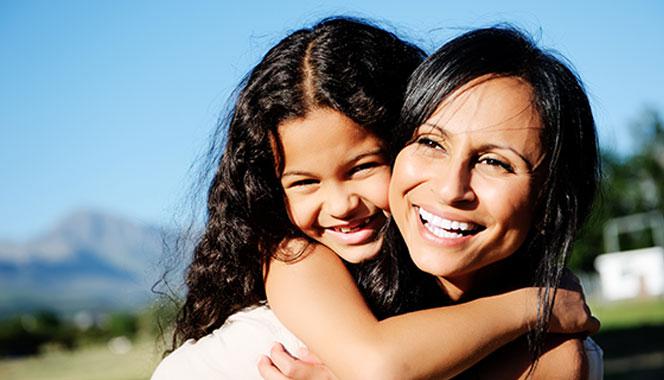
The adoption process in India, though fairly regulated is not easy. Due to lack of awareness, malpractices and bureaucratic inefficiencies, many children in need of nurturing families and several families desperate to adopt, miss out on each other. However with proper documentation and some patience, it is possible to adopt a child.
The long wait list of prospective adoptive parents and an equally long list of destitute children without any hope of being embraced by a family, only goes to show that there is a wide procedural gap in bringing these two groups together. As members of the public we can raise awareness about legal adoptions and the need to deinstitutionalise children (move them from orphanages into families). To do this you can:
CARA with the help of state governments, functions as the nodal body for adoption of Indian children and is mandated to monitor and regulate in-country and inter-country adoptions.
Prospective parents are encouraged to adopt twins or siblings together. Domestic adoptions are encouraged more than oversees adoptions. All the stakeholders in the adoption programme are trained and sensitised in the process.
If you are considering adoption browse CARA's website http://www.adoptionindia.nic.in which has all the information required. You can also apply online to register for adopting a child.
Foundling homes that are licensed to give children in adoption are either RIPAs or LAPAs. RIPA stands for 'Recognised Indian Placement Agency'. They are recognised by CARA and are allowed to place children in inter-country adoption. LAPA stands for 'Licensed Adoption Placement Agency'. They are recognised by their respective states. These agencies are private and are only allowed to handle domestic adoptions. They do not receive any kind of government funding.
Tamil Nadu and Pondicherry for instance, have about 15 RIPAs and 14 LAPAs. Other orphanages and homes are not allowed to give children in adoption but can route adoptions through the licensed agencies.
Adopting through legal means from these agencies is safer than going in for adoption from within 'known' circles or illegally through dubious agents or hospitals because the documentation process is rigorous. This ensures that there will be no future uncertainty or legal hassle about the adoptive status of the child.
According to the law, a child can be given in adoption:
Additional eligibility criteria:
The most important thing to remember is that the bond you can have with an adoptive child is no less real than the bond you'd have with a biological one.

See also: Looking To Adopt A Baby Girl? Here's What I Learnt
Looking for expert tips and interesting articles on parenting? Subscribe now to our magazine. Connect with us on Facebook | Twitter | Instagram | YouTube
Comments
Edit
Comment Flag
Cancel Update