
Signs of Family Stress: 7 Warning Signals Your Home Is Under Too Much Pressure
Sahana Charan
Every family goes through stressful phases. This article helps parents understand family stress, how it affects children’s health and behaviour, and what you can do to build a calmer, more supportive home

A morning of chaos: A common scene in many homes
It is morning. The parents and children are caught up in the rituals of getting ready for work and school. Chaos seems to reign as nothing is going according to routine. There is yelling and frazzled nerves; the children are feeling weighed down by the nagging and arguments, while the adults struggle to finish their chores. The frustration and anxiety finally result in at least one family member having an emotional meltdown. Not only has everyone started the day on a bad note, but the stress is too much to handle.
When daily stress becomes the norm at home
If this is a rare occurrence, there is no need for alarm. But if this is the norm at home, then it can raise the stress levels of all family members.
How high family stress affects children’s health
According to research, high stress in the family can harm children's immune systems. A study by researchers at the School of Health Sciences at Jönköping University and the Faculty of Health Sciences at Linköping University, published in the Journal of Immunology, found that children from highly stressed families had high levels of cortisol, a biological marker of stress. The stress also negatively affected the children's immune systems, making them vulnerable to infections.
Common causes of long-term family stress
We all face some measure of stress in our daily lives, be it at work, school, or home. We usually develop our own mechanisms to deal with regular stressful situations and can work out a solution to address the cause of the stress. But long-term stress is different. The causes for it may include:
- Ongoing financial crisis at home
- Disharmony between parents
- Adults in the family are caught in a tough situation
- A family member has a long-term illness
- Death of a loved one
- Adults having problems at the workplace
- Having a special needs family member
Warning signs that a family is under stress
These will vary for every individual and depend on how one can cope with difficult circumstances. Here are some warning signs to look out for:
- There may be increased arguments at home, with family members shouting at one another or blaming each other for mundane things. Angry outbursts and frustration become the norm.
- Members of the household may not have much fun together and spend less time with each other as a family, be it at dinnertime or just going for an outing.
- Both parents and children may struggle to concentrate on their everyday tasks, including household chores, studies, and work commitments. Moreover, there could be forgetfulness and a lack of interest.
- Stress can also manifest in physical symptoms. Family members are prone to sleeplessness, fever, cough and cold, headaches, stomach ache, and so on.
- When the family is stressed, communication gets affected. Considering the tense situation at home, conversations become minimal. Children may not communicate, fearing extreme reactions from parents, while adults keep their thoughts and feelings to themselves.
- Ongoing stress impacts children’s emotions and learning. When there is constant tension at home, children may slowly withdraw from activities they once enjoyed. Academic performance may suffer as they lose concentration on day-to-day learning. It is a vicious circle, as this again causes stress for both the parents and the child.
- It is disturbing for a child to see an anxious parent. Because their anxious responses are expressed in extreme emotions, the child is unable to understand why the parent's behavior. As a result, the child may either withdraw into a shell or become extremely aggressive. Children may also experience confusion, sadness, worry, and irritation as they cannot deal with a parent's anxiety.
How children of different ages respond to stress
"Children often mirror the behavior patterns they see in their parents. Very young children, in particular, learn through imitation and may copy how adults react when stressed. With teenagers, the response is quite different. They tend to develop their own ways of handling stress—sometimes by expressing themselves verbally, showing aggression, or rebelling. These challenging behaviors can, in turn, create additional stress for parents," says Arundhati Swamy, counselor and Head of Parent Engagement Programs at ParentCircle.
How stress disrupts family relationships and daily functioning
"Family members are unable to function at their full potential. Stress begins to interfere with their relationships and their ability to manage everyday tasks. Priorities become blurred, leading to significant emotional strain," says Arundhati.
Addressing the root causes of family stress
"Attend to the root cause of stress rather than just the symptoms. For example, during a financial crisis, the symptoms may show up as health problems, strained communication, anger, anxiety, or relationship issues. These are temporary and situational. Instead of focusing on these outward signs, it helps to sit down with your children and have a frank talk about the financial challenge. Acknowledge that there is a crunch, explain the strategies the family will use to manage it, and show how everyone’s efforts can help the family pull through together," explains Arundhati.
Practical ways to reduce stress in the family
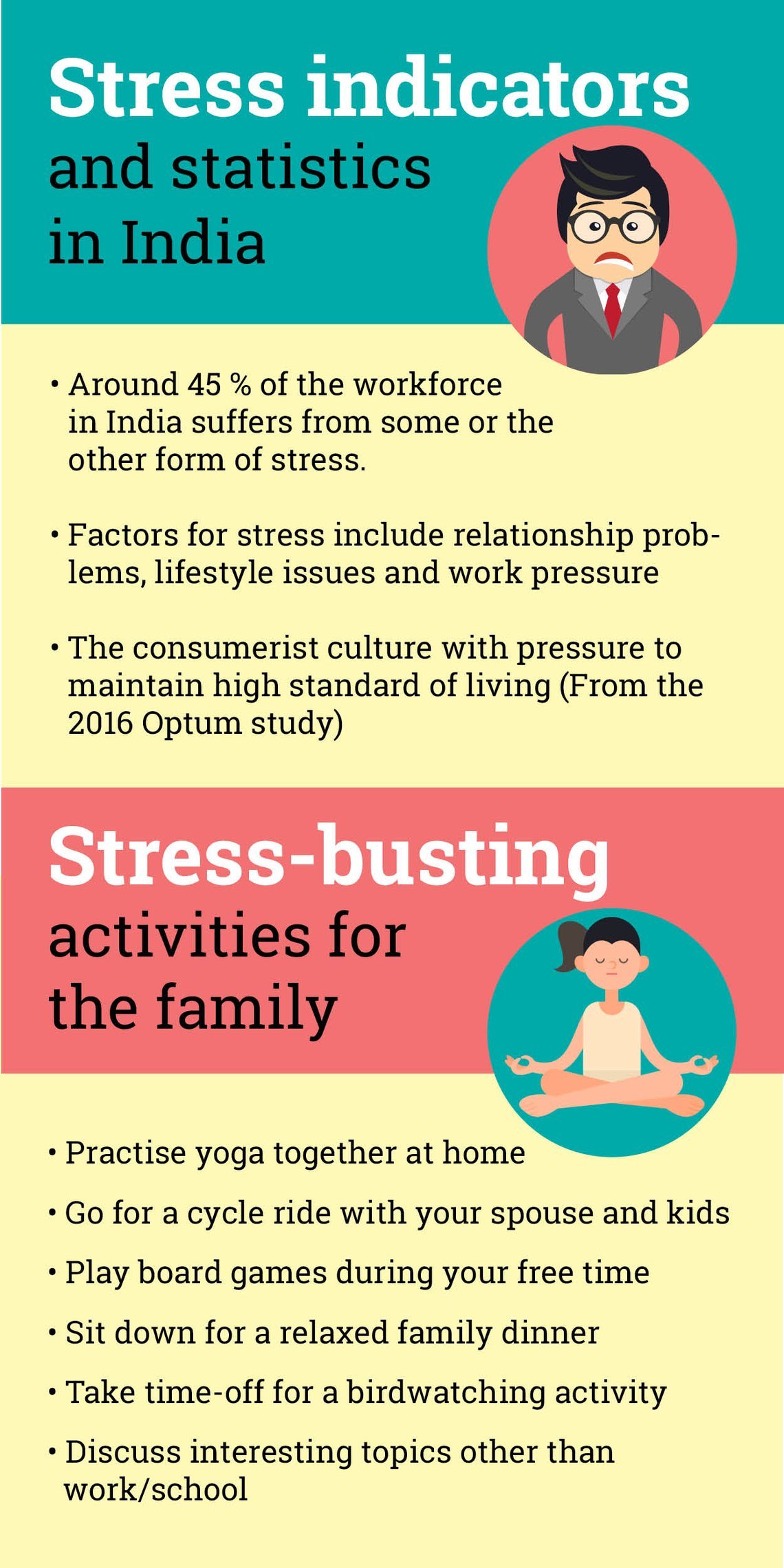
- Have frank conversations with your children. Open communication is important.
- Adopt healthy habits for the whole family. Try taking long walks, practicing yoga, and meditation.
- Establish healthy eating and sleeping habits so that you can cope with the anxiety better.
- Spend quality time together as a family and seek fun in the little things in life.
- Confide in a trusted friend or relative, who may give you neutral advice without being judgmental.
- Seek professional help. When everyone in the family is stressed, they can't support each other.
- Try to achieve a better work-life balance and help your child set and reach achievable goals.
Discover calming family yoga poses for stress—start your peaceful routine today!
Last updated on: December 17, 2025




























Comments
Edit
Comment Flag
Cancel Update