
Types Of Mental Illnesses In Children You Must Know About As Parents
Aarthi Arun
Understanding the types of mental illnesses in children helps parents recognize early signs and offer timely support. This guide explains common conditions with warmth and clarity, so you can help your child thrive
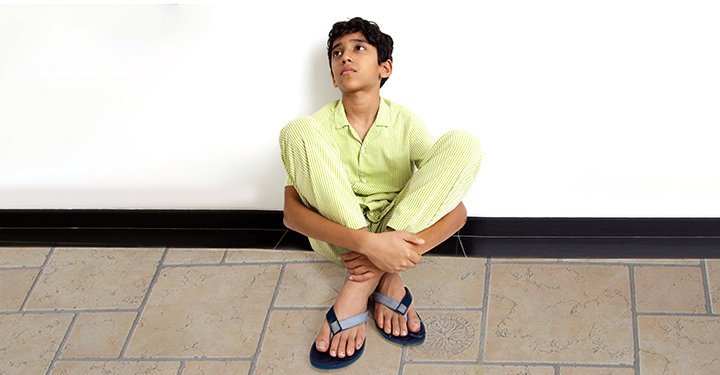
We often focus on our child’s physical health but may overlook their emotional and mental well-being. Mental illnesses can begin in childhood and affect how children think, feel, and interact with the world. By learning about the types of mental illnesses in children, you can spot early signs, respond with understanding, and give your child the support they truly need.
Why parents need to understand childhood mental illnesses
According to the World Health Organization (WHO), 10-20 per cent of children and adolescents worldwide are diagnosed with mental disorders. Both genetics and environmental factors can play a role in their manifestation. It may be difficult for parents to come to terms with their child's mental illness, but their love, care, and attention can play a key role in improving a child's mental health. If not treated on time, mental illness can negatively impact the life of a child.
Here is what you should know about mental illness in children:
Recognizing early signs and symptoms in kids
Mental illness in children often goes undetected, as parents may perceive certain symptoms, such as sadness and aggression, to be a part of growing up. For instance, a child suffering from depression may act out instead of shutting himself up. The parent may dismiss it as a tantrum rather than linking it to depression. Also, young children don't know how to express what they are going through. Another important factor is that the stigma associated with mental illnesses discourages many parents from reporting the condition to their paediatrician.
"It is difficult to say the exact incidence of mental illness in children, because many times they are under-reported. But, they are not uncommon," says Dr Pallavi Joshi.
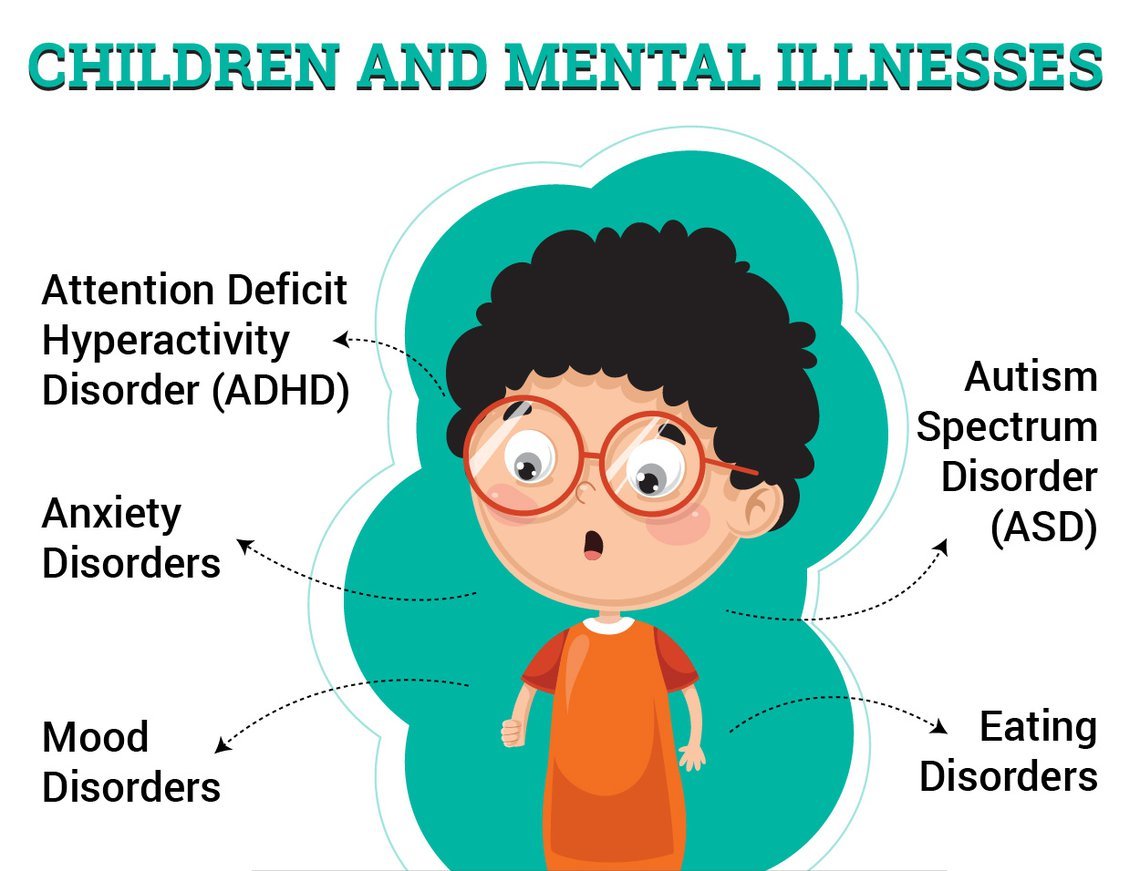
Types of mental illnesses in children
1. Attention Deficit Hyperactivity Disorder (ADHD): This is a common disorder found in children. Those with ADHD suffer from attention issues, impulsive behaviour, and hyperactivity. Difficulty sitting in one place, excessive fidgeting, and restlessness are some of the other common symptoms. A child may act without thinking about the consequences and cause potential harm to others. Others may find him intrusive and interrupting.
"Although the outcome for every child is different, many children with ADHD respond well to behavioural therapies and medication. Only about a third of children with ADHD carry it to their teenage and adulthood," says Dr Pallavi.
2. Autism Spectrum Disorder (ASD): This is a developmental disorder that affects children's ability to communicate and socialise with others. Children with ASD have repetitive behaviours like flapping their hands or rocking. They follow a very strict routine and will be upset if there is any disruption. Their play may lack imagination. For example, they may arrange the toy cars in a line, instead of playing with them. ASD can usually be identified before the age of three.
"Children diagnosed with autism can improve, once they go to schools and get different therapies like sensory integration and play therapy, and inputs from their special educators. In some cases, they may need medication for their behavioural issues."
3. Anxiety Disorders: Obsessive-compulsive disorder (OCD), post-traumatic stress disorder (PTSD), and generalised anxiety disorder are some of the illnesses that are categorised as anxiety disorders. Often, patients find that their anxiety levels are interfering with their day-to-day activities. Persistent worrying causes sweating, rapid heartbeat, sleeplessness, and tummy troubles. Cognitive behavioural therapy (CBT) can be very effective in treating children with anxiety. CBT teaches a child how her thoughts and actions impact her feelings. This therapy helps the child identify and control her anxiety levels.
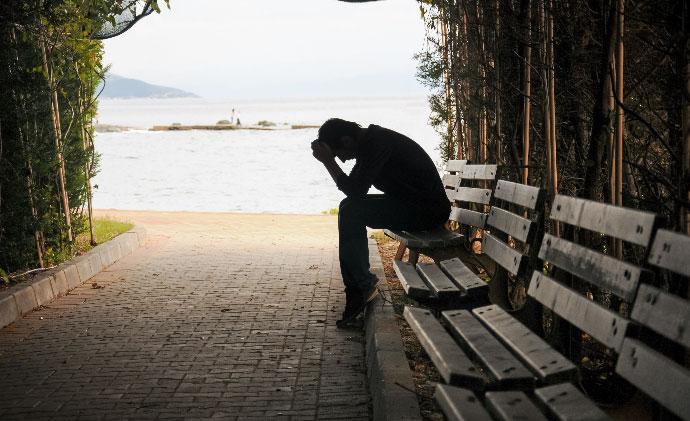
4. Mood Disorders: These include depression and bipolar disorder. Depression can cause persistent sadness and feelings of worthlessness and helplessness in children. With bipolar disorder, a child can be prone to extreme mood swings. A child diagnosed with a mood disorder may suddenly stop enjoying usual activities, start avoiding friends and family, and engage in self-harm. Therapy can be effective for children with mood disorders.
5. Eating Disorders: Due to peer pressure and unhealthy role models, children are also becoming victims of eating disorders like anorexia and bulimia. Such children have an unhealthy attitude towards food and weight.
6. Schizophrenia: This is a psychiatric condition in which the child is not able to distinguish between imagination and reality. It is characterised by hallucinations, confusion, and disorganised thoughts.
Supporting your child’s mental health at home and school
"If your child is diagnosed with mental illness, don't be judgemental towards him; try to understand that it's the mental illness that compels him to behave in a particular way," insists Dr Pallavi.
- Avoid comparing your child with other children.
- Do not criticise the child directly. Say, "I don't like the way you spoke," instead of saying, "You are bad."
- When the child is already battling with mental illness, encourage and praise him for every small activity and achievement. It helps build his self-esteem.
- Don't overindulge your child. First, see how much support they need and understand when to draw the line.
The increase in behavioural and mood disorders in children is alarming. With the hereditary factor playing only a small part, you can certainly influence your child's mental health. Ensure you spend quality time connecting with your child. And, watch out for any inappropriate behaviour or gloomy feelings.
Unstable mental health can impact not only a child's day-to-day functioning but can interfere with their overall health and development. Parents must remember that they have an important part to play in shaping their children's mental health.
Dr Pallavi Joshi is a psychiatrist from Bengaluru and is a member of the Indian Psychiatric Society.
In this video, Dr Nandini Mundkur discusses the 5 keys to promoting mental health in children.
Last updated on: September 12, 2025
























Comments
Edit
Comment Flag
Cancel Update