
Teen Cliques: What makes them click
Chitra Satyavasan
Teenage is an age where many children prefer forming groups. Thus, as a parent, you need to understand their group dynamics to keep up with them. Here's some help!
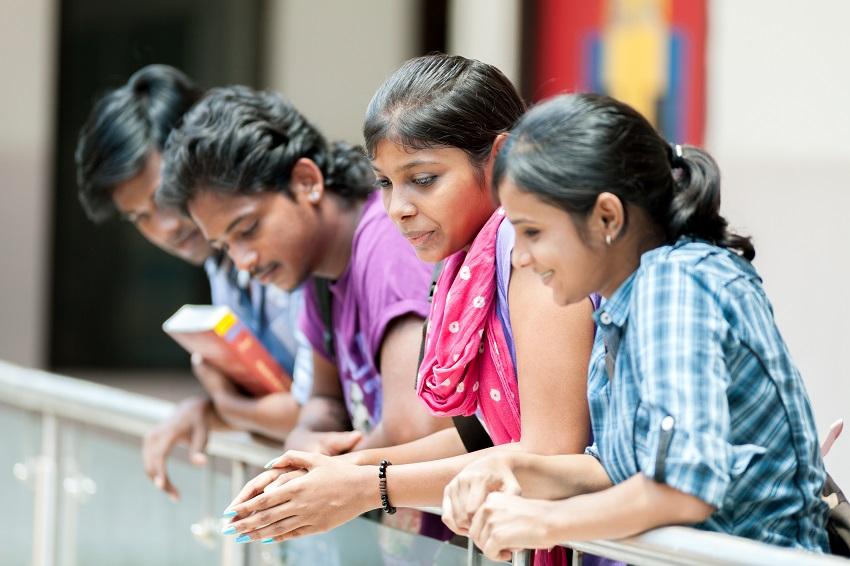
Have you ever tried to invite your daughter's classmate to a birthday party, only to be told sternly by your teen - 'She doesn't belong to my group!' Take our quiz to find out how group dynamics works, and how you can control cliques
1. Groups are just a teen thing. Agree?
? No, even adults form groups.
?Yes, groupism is a typical teen behaviour.
? I'm not sure.
Reality: Like wolves, we love belonging to a pack. And like us, teens also form groups or cliques. "We all prefer to spend time people whom we consider our friends, people with whom we share lifestyles, politics, likes and dislikes," says Dr Michael Thompson, a US-based clinical psychologist.
It's the same with our children. "In my class, there are three boys who call themselves 'The Gang'. They raise their shirt collars, and walk on the corridors with a slouch. But when a teacher crosses their path, they quickly fold the collars and walk straight," says G Shreya, a 14-year-old student in Chennai.
In a school's social circuit, 'cliques give teens a sense of belonging. But such friendships are conditional, and members consider themselves a cut above the rest,' explains Karthik Lakshmanan, a Chennai-based counselling psychologist.
2. Do you think cliques are harmless?
? No, cliques are a bad idea.
? Yes, they are harmless.
? Both are correct.
Reality: Truth is cliques can be both good and nasty. "Groups make children feel less lonely, it makes them feel more confident and for teenagers, it gives them what Ron Taffel calls 'the second family'. Most importantly, it helps teenagers to develop their identities. They think, 'I know who I am because I am like the people in my group' ", says Dr Thompson.
However, not all's well with groups. "The demerits of teen groups are the same as that of exclusive groups at any age: gossip, exclusivity, snobbery, and contempt for others," he adds.
At 16, Deepti Swaminathan, another Chennai-based student, effortlessly navigates the world of cliques. In her class, there are two cliques - the Northies and the Southies. The Northies poke fun at the Southies, simply because the Southies often speak Tamil instead of English at school!
"They are dubbed 'uncool' because they speak English with a Tamil accent!" she says. Deepti admits that though she doesn't like the attitude of her Northies group, she enjoys being part of it as her group protects its members from being ragged by others.
Sometimes, cliques can cultivate a certain attitude that may stay for life. Lakshmanan remembers a student who interned at a reputed IT company with a group of affluent girls. At the new city, they had to share a flat. "Though the students were friendly at the beginning, soon the clique began making the girl conscious of her less privileged background. She was hurt by the experience, but with counselling, she regained her confidence," he says.
3. Why do children defend cliques?
? They'll defend anything if you are the accusing party.
? That's because they consider the members as their friends.
? I can't really say.
Reality: When your child is part of a clique, you may want to confront him, sometimes to no avail.
"When you accuse teens of forming cliques, they resent the implication that they have created something negative. They reply that the kids in the group are their 'friend', and that is almost always true. What adults resent about teen 'cliques' is that their loyalty to each other is stronger than their loyalty to adults. That undermines our power and influence," explains Dr Thompson.
4. Can teachers prevent cliques?
? No, I don't think so.
? I think they can.
? I feel clueless.
Reality: With the right initiatives, teachers can do a world of good. "In our school, I encourage our teachers to ensure that students from different groups form teams to work on a school project or participate in activities like quiz. It's important that they understand the benefits of cooperation early in life," says R Poornachandran, Principal of Soundararaja Vidyalaya, Dindigul.
"Plus, I encourage them to consider others not as competitors but as friends. So when there's a group of children who consider themselves too brilliant and won't mingle with others, I ensure that they share their knowledge with their friends. Every one gains this way," he adds.
Generally, cliques have a short life span. According to Dr Thompson, late teens 'recognize that cliques based on popularity are simple-minded; so they prefer groups of friends who share their skills and interests.'
So take heart - the cliques may just slowly disappear as your child discovers there's a whole world of real friends waiting for him!
Want to minimize cliques? Dr Thompson and Lakshmanan tell you how:
- Respect your child: Never ridicule your child's desire to be liked and included. But do find out if he is being manipulated into behaving in a certain way. And, never succumb to the temptation of buying expensive toys or designer clothes and holding fancy parties to buy a clique's acceptance of your child.
- Celebrate individuality: Your child's temperament, interests and skills make her unique. Remind her that she need not conform to the wishes of a group if it makes her uncomfortable.
- Support friendships: Support your child's friendships. Forget about trying to get him into a clique. Having one friend can save your child from loneliness; he doesn't need a mob. So invite your child's friend over to the house, and take him on weekend trips.
- Widen your child's social circle: Allow your child to befriend children from different strata with diverse interests. Various groups will bring different perspectives, and your child will have a balanced outlook towards life.
- Be a role model: You should model generosity and inclusivity to your neighbours, friends and colleagues. If you gossip in nasty ways, your child will also gossip in nasty ways.


























Comments
Edit
Comment Flag
Cancel Update