
Shilpi Chakraborty: This is how I raise my children to rise beyond gender stereotypes
Monali Bordoloi
Do you let your teen son cry his heart out? This parent does. Shilpi Chakraborty, mother of two, tells us how she is walking the fine line of gender-neutral parenting

As part of our #ParentsOfIndia initiative, we recently published a mother's account about how her husband lets their teenage son cry to express his fears and frustration. This touched the hearts of parents all across and many of them expressed interest in knowing more about how Shilpi and Raja Chakraborty raise their son (15) and daughter (8) without any gender stereotypes.
So, here's Shilpi telling us in her own words how she fights gender stereotypes at home and creates a gender-neutral environment for her children.
Busting gender stereotypes at home
 In the Chakraborty household, children are encouraged to express their emotions My husband and I have been trying our best to make our children see beyond gender stereotypes from a young age as we don't want them to conform to societal norms of what girls and boys should do. I often see boys being asked to man up, to keep their emotions all wrapped up as crying is considered a sign of weakness. But I have always told my son that it is okay to cry when he feels overwhelmed. I remind him that crying is not a sign of weakness but a natural way of expressing his sadness, anxiety or frustration.
Similarly, once, my daughter told me that she wants to be a firefighter. I didn't discourage her by saying that it's a man's job or that it's too risky for a woman. I strongly believe that these little things we say and do as parents make a big difference in our children's lives.
Creating a gender-neutral environment at home
 Wearing pink is normal in our home
When my son was around eight years old, he wanted to make bracelets, and he asked me if I could buy a kit for him. I happily went and bought it for him, not once mentioning that he is supposed to play with cars and Lego sets and not make bracelets.
As parents, we have made it clear that they can grow up to become whoever they want to be and their gender won't be a hindrance.
Letting children blossom as individuals

I'd like to share one specific incident. When my son was 7, he decided to grow his hair. We didn't say anything. But many people told him that it makes him look like a girl and that he should think of cutting it short.
One day, he asked us, 'Do I really look like a girl?' We asked him what he wanted to do keep it long or cut it? He said he liked his hair long. And that was it. The idea that girls should have long hair, and boys should keep it short is so old-fashioned, and a stereotype we didn't want him to conform to.
After a year or so, he himself insisted on cutting his hair short. It was his choice. Now, he is 15 and is again sporting long hair. He is a confident young man and negative comments targeting his looks don't bother him anymore. It is like water off a duck's back.
Raising boys who respect women
I absolutely believe in catching them young. Boys should be taught to respect women right from a young age. And this must start at home. Children learn by watching. We, as parents, should model the behavior we want to see in our children. This is what we try to do in our home.
 Fathers, set an example, your son is watching!
According to me, when it comes to treating women with respect, the father should set an example. If boys see their fathers treating the women around them – be it the wife, mother, sister or colleagues – with respect, they will model this behavior.
Facing stereotypes while growing up
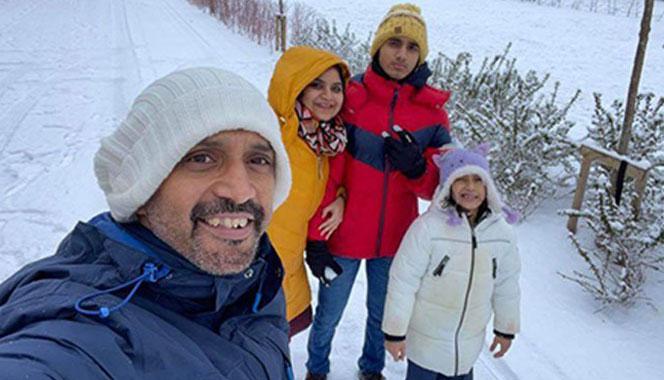 Gender-neutral parenting is a full-time, conscious effort As a girl, growing up in a traditional household, I had to face many stereotypes. We girls were given specific instructions on how to act, speak, behave, dress. Our assertiveness was deemed aggressive – it was a trait that was okay for boys but undesirable in girls. We were expected to be polite, accommodating and nurturing. We could be ambitious but not too ambitious, we could desire to be successful but not too successful. And we were taught that no matter what, we should not try to be more successful than our men as it may emasculate or threaten them.
So, now we want to raise our son and daughter to grow up without being enslaved by these gender-specific roles.
Don't we all face everyday situations where we have to take a stand to break gender stereotypes? Tell us how you define gender roles in your home, share your experiences with us at parentsofindia@parentcircle.com. We would like to feature your views on our #ParentsOfIndia initiative.






























Comments
Arundhati Swamy Feb 6, 2021
Edit
Comment Flag
Cancel Update