
Why I Chose Adoption: A Mother’s Twice The Love Journey Into Parenthood Beyond Biology
Vidya Shankar
Parentcircle author......................................................
This deeply personal adoption story explores how one woman chose motherhood through adoption, navigating family roots, identity, bonding, and common misconceptions, while discovering that parenting is defined by love, commitment, and emotional readiness, not biology
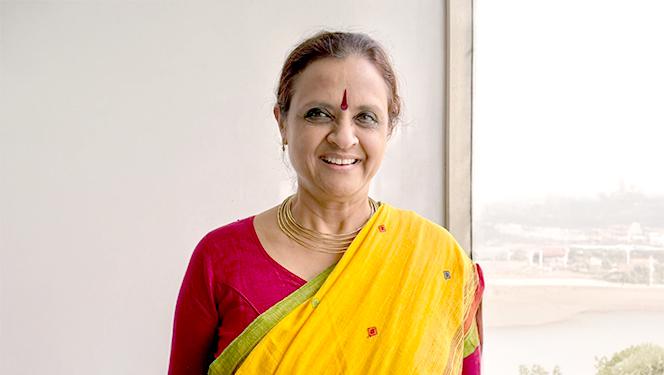
How I chose to become an adoptive parent
Deciding to adopt a child began very early in life — during my teenage years, when I first read about the plight of abandoned children. Each article I came across left questions lingering in my mind, questions I parked away, hoping to find answers someday.
The early thoughts that led me to adopt
Perhaps that explains the short four-year career I had as a chemical engineer. Social issues always drew my attention more strongly. I made a crucial decision early on to experience marriage and motherhood first, so that I could gain both clarity and courage to take up the cause of adoption later in life.
Roots, family values, and emotional grounding
My late father, Vittal Chakravarthy, was from Salem, belonging to an orthodox Tamil Iyengar family and a descendant of one of the branches of the doyen Shri C. Rajagopalachari’s family tree. My mother, Vimala Varma, hailed from the Mavelikara branch of the Travancore Royal family.
Family legacy and the courage to think differently
Though such lineage never defined our daily life of joys and struggles, we often carried within us a quiet reminder that rising above problems, rather than being defeated by them, was the legacy they left us.
My brothers, Vinod (and his wonderful family) and Vikram, have been my pillars of strength through every decision and turning point in my life. Our family matriarch, my mother — now ninety-one — continues to share timeless wisdom on family matters that remain relevant even today. And one day, amid all this, I dared to think: What would it be like to parent a child not born to me?
Bonding and early parenting
Marriage to my college senior, Shankar Subramaniam, opened a new and beautiful chapter in my life. Adoption was one of the conditions I placed before marriage, and he readily agreed.
In 1990, I was blessed with a daughter after a cherished pregnancy. The thought of adoption resurfaced in 1992, and I decided to act upon it. I visited an adoption coordination agency after obtaining their address from the C.R.Y. (Child Rights and You) office in Chennai. Those were pre-Internet days — we searched the yellow pages for information!
On December 30, 1992, we were placed with a five-month-old baby boy, whom we were able to adopt under the Hindu Adoption and Maintenance Act, 1956.
The moment my daughter welcomed her new baby brother with her old favourite blanky, my heart melted. She had accepted him with such pure affection.
I devoted myself to parenting both children, with occasional help from my parents. They often fell ill together and needed full-time care, but we never employed a caretaker. I learned to study their movements, sounds, and moods closely, each one a clue to their needs.
While my daughter disliked her nursery school days, Vishal, on the other hand, loved his friends and playtime, attending school more for the fun than the learning. Their different approaches to education made me reflect deeply on schooling itself, and it gradually shaped my thinking towards a new model of education, something that was neither a school nor a homeschool, but a more organic, child-led form of learning.
Talking about adoption within the family
We never really discussed adoption at home until Vishal was about two and a half. Around that time, we got a children’s book called Your Story, which quickly became his favourite bedtime read.
Soon after, we started the Adoptive Parents Association (APA) first in Tamil Nadu and later in Karnataka, with the help of the Voluntary Coordinating Agency for Adoption in both states. The friendships and support networks that emerged from these associations gave us space to discuss, learn, and grow as adoptive families.
As Vishal grew older, especially through his teenage years, he began to speak selectively about his adoption with understanding and conviction about what it meant to him.
My daughter, who attended our association meetings, would often joke that she wanted to start an “association for non-adoptive families.” We laughed about it, but it also revealed something deeper — the subtle identity questions that can arise in families like ours.
Common misconceptions about adoption and parenting
Parenting is both a joy and a challenge, two inseparable sides of the same coin. I have always believed in confronting important discussions head-on, rather than sidestepping them. Disciplining children often raised eyebrows among relatives or friends, but I never wavered from instilling values that build character. There were times when both my children were upset with me for standing firm on decisions, and yes, adoption occasionally featured in our arguments.
Yet, I’ve learned that parenting in sync with both the heart and the head is what truly holds a family together.
Why sharing the adoption story with children matters
Sharing the story of adoption with a child is vital. Many parents postpone it, but it’s an evolving process — as a child grows, their understanding changes. Each parent must learn to respond to their questions with sensitivity and truth. The Adoptive Parents Associations have been a crucial support system for families like ours, offering shared knowledge and understanding.
Learning from global adoption experts and experiences
Through the association, we had the privilege of learning from experts from around the world, the Netherlands, Australia, Germany, and India, many of whom were adoptive parents turned psychologists or educators.
In those days, when adoption resources were scarce, these interactions became our learning ground. Today, I’m proud that we have an Adoption Resource Library at Mathru Chaya, Bengaluru, filled with materials for families to explore and learn from.
My children, too, benefited from the friendships and exchanges that grew through this community. These experiences shaped their worldviews, education, and careers, planting seeds for a broader understanding of love and belonging.
Parenting styles in families with biological and adopted children
For families with one biological and one adopted child, the challenge often lies in allowing each child to explore their emotions freely and resolve matters in their own ways. This approach has worked well for many, including my elder brother, who has built his family much like mine.
Teen years, roots, and unanswered questions
Connecting with other adoptive families has always been a source of strength, especially for parents of teenagers curious about their roots. The process of searching for biological parents, however, remains long and often inconclusive, due to the closed-records system still prevalent in India.
Motherhood beyond biology
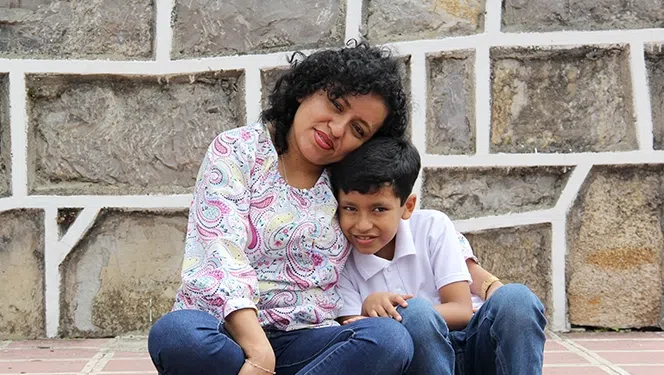
Parenting from the heart — and not merely from biology — is what truly defines motherhood for me. Raising my children through both their bright and challenging times has helped me grow, evolving alongside them at every stage of their lives.
Unconditionally accepting children as “life’s longing for itself,” rather than imposing expectations, makes all the difference. It’s easier said than done, which is why being emotionally and mentally prepared before this journey begins is so important. For me, adoption has never been about giving a child a home. It has been about discovering how large and transformative a mother’s heart can truly be.
Planning for child adoption? Discover the rules and steps you must know.























Comments
Edit
Comment Flag
Cancel Update