
Minimalist Parenting: 10 Ways Kids Can Embrace Minimalism Early On
Sahana Charan
Do you want your child to focus on experiences that truly matter instead of material stuff? Here is how you can help your child adopt minimalism in the life hereafter
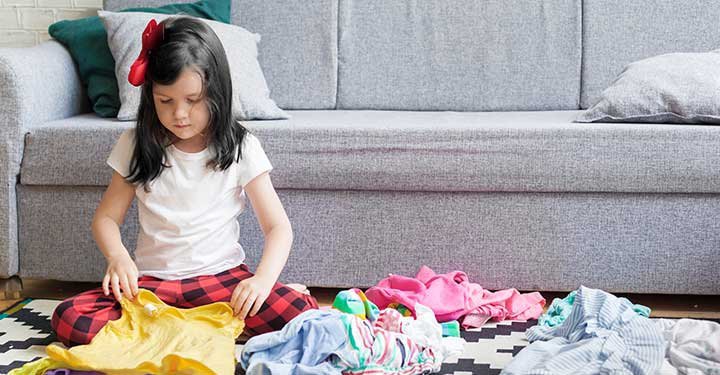
"The ability to simplify means to eliminate the unnecessary so that the necessary may speak." - Hans Hofmann, American-German painter and teacher
Do you want to cut down on unnecessary spending and want your children to realize the value of things? As we live amidst consumerism, many parents are rethinking what is essential for us and our child's life. Read on to know more about the minimalistic way of living and some practical tips towards making your child appreciate minimalism.
In their book Minimalist Parenting: Enjoy Modern Family Life Moreby Doing Less, authors Christine K Koh and Asha Dornfest make a simple but significant observation: when you cut out things from your life that you do not love, there's room for those that you actually love.
Makes sense, doesn't it? So, do you want to know more about the simple joys that add value to your life and that of your children? Do you want to become a minimalist family going forward? You have come to the right place.
First, let's learn what minimalism is all about.
What do you mean by minimalism?
Minimalism is a lifestyle that focuses on doing more with less. So, you strive to de-clutter your life, make everyday living uncomplicated for your family and add value to life through experiences rather than materialistic things.
"Minimalist Parenting is about editing. Your time and attention are too precious to be nibbled away by everything that would thoughtlessly take a bite...when you edit out the unnecessary-whether these are physical items, activities, expectations, or maybe even a few people - you make room for remarkable. The goal is actually quite simple: keep or add the stuff that increases the joy, meaning, and connection in your life, and reduce or get rid of the stuff that doesn't." - Christine Koh.
Is it possible to adopt minimalism with children?
In the increasingly consumerist world that we live in today, the plethora of choices out there leads us to hoard unnecessary things that wreak havoc on our finances and encroach on our time. You, as a parent might want to remove the unnecessary clutter from your life and wish that your children would do the same. If that is the case, then, switching to a minimalist lifestyle might just be the answer.
Yes, it is possible to adopt minimalism, even when you have children. All you need is a change in attitude to embrace a simpler life and to get more out of what you own. When you show children that it is possible to get happiness from enriching experiences rather than from expensive things, and when children see that their parents are not too busy with mundane things and spend more quality time with them, they are more likely to welcome such a lifestyle.
Here are some important points about a minimalist lifestyle -
- It needn't disrupt your life
- It doesn't require a major shift in your lifestyle
- Start making small changes in your household and way of life
- Get rid of things you do not need and keep the stuff that is essential
- Inculcate in your children a sense of gratitude for what they own and not feel entitled
Benefits of minimalism for children
There are tons of benefits for your children. Some of these are:
- They learn to remove clutter and will not be attached to material possessions.
- They learn to be responsible with money.
- They value relationships more than stuff.
- They are able to appreciate experiences such as playing outdoors.
- They will focus on learning new things and gaining new insights.
- They will look forward to quality time with parents such as spending the afternoon baking cookies or playing a musical instrument together.
- They learn mindfulness.
- They will experience more happiness and less stress.
Parent speak:
Ravi Ramaswamy, a Theatre of the Oppressed trainer and father of a two-year-old says that his decision to embrace happiness and to live in the moment instead of going after the big things veered him towards a minimalist lifestyle. Ravi is a trustee of the Centre for Community Dialogue and Change, Bengaluru and conducts workshops and training for diverse communities. When he became a parent, this decision turned into a conviction as he realized that it would help him be a more involved father to his little boy.
"As parents, my wife and I want to give our child the benefit of happy experiences and the simple joys of life. We often take him outdoors, so he can connect with nature. We believe in positive reinforcement so instead of saying you can't do this, and you can't have that, we give him a better choice-like playing the drums together or walking in the park. When you are adopting a minimal lifestyle for the whole family, it is necessary to give children alternative experiences that are enriching. For example, when other kids may go to the mall or play with mobile phones, I will take him to open spaces, visit the bookstore with him or sing with him. We also feel it will hone his creativity. Finally, as he grows up, it is up to him to decide which path to take. Limiting screen time for yourself and your child is also a way of practising minimalism," says Ravi.
Practical ways to teach minimalism to kids
Intrigued about the concept of minimalism? Here are some simple ways to practise minimalism at home with your kids.
1. Be a role model
Children learn a lot from imitating their parents. So, if you want your children to learn about minimalism, show them by example. When your little ones see that you are not spending money on unnecessary things, have only a few prized possessions, regularly clean out your closet, de-clutter your home and often give your things to charity, they will learn to do the same from an early age.
2. Involve children in removing clutter from your home
According to well-known minimalists Ryan Joshua Fields Millburn and Ryan Nicodemus, everything that you own serves a purpose or brings joy and this allows you to focus on the more important things in life such as health, relationships and contributions. They advise using the 90/90 rule for letting go -look around the house and pick some things. If you haven't used certain possessions for the last 90 days and are not likely to use them for the next 90, you can easily discard them. Teach these rules to your children and also involve them when you are giving away their clothes or toys. You can explain to your children that they should be thankful they have enough and there are other children who may not have toys or decent clothes. This will motivate them to give away their possessions to others.
3. Resize your child's wardrobe
You can start by doing this for yourself and then for your children. Keep only those clothes that you feel are essential and relinquish everything else. Create a capsule wardrobe that has all the important clothing items that you will need and mix-and-match them to create different looks to try on a daily basis. When you have fewer clothes to choose from, the faster you decide what to wear and therefore save precious time. One way of doing this is to take up the Project 333 challenge purported by minimalist Courtney Carver, wherein you choose only 33 items in your closet to use for a period of three months. These items include clothes, accessories, jewellery, outerwear and shoes. Encourage your children to do the same.
4. Take them shopping
Take your little ones to the department store and to the vegetable market with you. This will help them understand the value of money and the importance of buying only those things that are necessary. When they watch you not splurging on expensive things or buying only what you need, it will influence their own shopping habits. It will be easier for them to reflect on whether they need a new toy or game, when you take them shopping for themselves.
"I take my son to the big retail store, the neighbourhood grocery store and the government-run vegetable store, so he can see the difference. He may not understand now, but later he will know the importance of money management and that he can get quality goods for lesser price in small stores," adds Ravi.
5. Show them how to reuse and recycle
Encourage your child to get maximum use from their stuff and show them how things can be mended and reused. For example, if a button is missing from a shirt, instead of discarding it, show your child how a replacement button would make it good again. Or if your child's top is torn, guide them to mend it. If that's not possible, show them how to make a bag out of it. Or, how old glass jars or bottles can be up-cycled and decorated to make a flower vase. They will not only learn to use their possessions wisely but also explore their creative skills.
6. Encourage them to share their possessions with others
Involve your child in cleaning up their rooms or your house and convey to them that what they have outgrown or do not need anymore, can be given to the needy as charity. Make it a practice to clean out toys and clothes on a regular basis. Have a 'giveaway' carton and ask your children to put some of their possessions in this carton to gift them to underprivileged children. They would learn the importance of sharing and not being attached to their possessions.
7. Serve simple, nutritious meals and avoid wastage
If you want your child to embrace minimalism, educating them about food wastage and food security is important. Involve children in the process of choosing ingredients and show them how the whole family can enjoy simple yet nutrient-rich meals on a budget. You can explain how they need to be grateful for the food on their plate as many children around the world go to bed hungry every day. Limit wastage by using leftovers creatively to make delicious meals.
8. Guide them to be grateful
Develop a grateful attitude for all that you own including the food that you eat, the clothes you wear and so on. This will help your children build an attitude of gratefulness and resonate positivity (while practising minimalism), rather than focus on the things that they do not possess.
The positive choices that we make when we give up earthy possessions help us lead a meaningful life and also enrich the lives of our children. The path to minimalism will help children go beyond the petty to focus on true happiness.
About the author:
Sahana Charan is an independent writer and journalist with an interest in writing about health and wellness, environment, urban living and child rights.



























Comments
Edit
Comment Flag
Cancel Update