
Help Your Child Socialise
Dr Mini Rao
author parentcircle author parentcircle author parentcircle author parentcircle author parentcircle author parentcircle
Socialisation is important for children to develop many vital life skills. Read on to learn how you can help your child socialise.
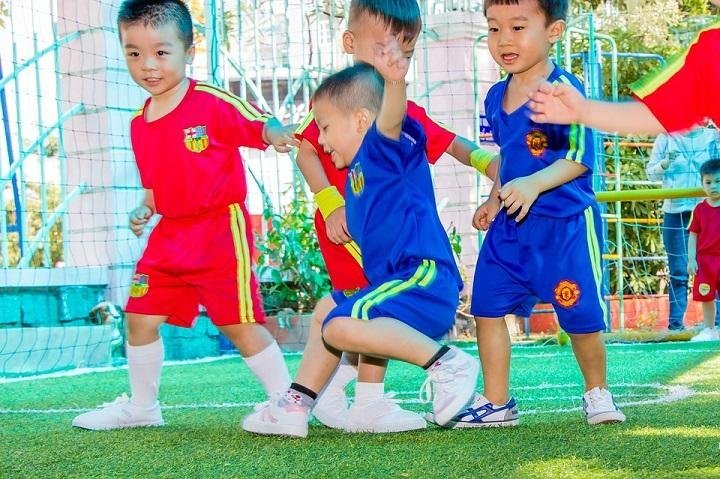
Each year in a child's life is starkly different, and comes with its own set of challenges.Your little one may show characteristics of being dominant at six, anxious at seven, outgoing at eight and independent to a certain extent at nine. A major share of a child's social development starts at the age of six.
Around this period, you will notice a gradual progress in your child's social skills coupled with his increasing need to communicate with the outside world. Your child is likely to feel the need to fit in, blend and be accepted by his peers. This acceptance contributes considerably to his self-worth and self-esteem. At this stage, your role, as a parent, becomes important in moulding your child's sociability.
The right guidance will be a step towards positive personality development. Unless children are guided correctly, they will become socially awkward, secluded, and might grow into adults who lack self-confidence.
Children nearing six years can soak in information and life lessons like a dry sponge. Parents can help by teaching social skills such as how to start a conversation, how to sustain it and how to end one without sounding abrupt. Remember, your child will mirror your social behaviour, so be cordial, friendly, watch your words and be well-mannered at all times.
Be a role model
If your child is being a little reluctant and socially reclusive, this is how you can help him in making friends:
- Sharing and caring: Teach your child to share snacks, toys and other things at home and school.
- Model social behaviour: Call your friends over and display model dynamics of a cordial and friendly relationship.
- Invite friends over: Arrange for a small evening of snacks and games, and call his friends over. This way, he will get to socialise in an environment that he is comfortable in.
- Teach to be helpful: Encourage your child to participate in household chores. Children who identify themselves as a part of a culture that cares are more likely to develop better social skills.
- Appreciate your child's choice: Encourage your child by reinforcing and honouring his decision. Support and appreciate his choice of play group and friends.
- Reduce competition: Encourage fair social behaviour by showing equality. Do not introduce the stress of competition at this early stage. It makes him socially anxious.
- Set a good example: Encourage your child to be respectful and polite to others. Get her to do so by displaying similar behaviour yourself.
- Take him to the playground: Playing in groups is a good place to make friends and socialise.
- Teach how to mend: Encourage your child to repair broken friendships and rifts in relationships. Teach him the goodness of apology. Help him understand that it is human to err. He will then learn to accept mistakes.
- Teach consideration: Encourage your child to always take other's feelings and needs into account. Do not let her disrespect others at any cost.
Keep a tab on emotional balance
As they near 6, children are in the process of deciding the subjects they like, and give preference to one, while being bored of the other. They will begin to develop hobbies, not too seriously though. They will start to read, write, do mathematical calculations (basic), and learn science quite naturally. At this stage, children also go through a wide range of emotions. Hurt, anger, stubbornness and rebellion are a few for starters. Even trivial issues can annoy them, and they will ruminate about it till it is solved. As a parent, you will need to observe this changing aspect of your child's behaviour, and make him understand the outcome of such behaviour. Be patient and supportive. It is also essential to keep a tab on your child's emotional balance. Try to address his confusions, resolve his issues, and keep an eye over the following changes:
- Moodiness
- Aggression
- Introversion
- Lying or cheating
- Crying spells
- Academic backwardness
- Unwillingness to go to school
Other issues to watch out for
- 5 to 6-year-olds will begin to understand tasks and take on responsibilities.
- They can follow instructions and respect elders, but may not have their own insights or opinions.
- They will start becoming competitive and may not like to lose when they compete.
- They may lie or steal. It is a temporary phase as they will not know the difference between good and bad behaviour.
- They will enjoy school and friends, unless there is bullying or abuse involved. Parents need to watch out for that and make sure they sort out issues before they get out of control.
Hard facts about social anxiety in children
- Social anxiety affects one in eight children globally.
- Socially-anxious children are more likely to indulge in substance abuse later in life.
- Untreated children are more susceptible to depression and personality.
- Socially-awkward children are likely to perform poorly at school.
- Children's behaviour in peer groups is an indicator of their social competence.
- On an average, girls find it harder to make friends in early childhood.
Inputs from National Institute of Health (www.ncbi.nlm.nih.gov)
Dr Mini Rao is a renowned psychologist and family therapist
Hope you liked this article. To get expert tips and read interesting articles on a wide variety of parenting topics, subscribe now to our magazine.
Explore The Dot SEL program for kindergarten at The Dot Learning Circle where social-emotional learning for kindergarteners is a priority. LKG and UKG students are guided towards practising pro-social behaviours in their daily interactions.




















Comments
Edit
Comment Flag
Cancel Update