
Uploading your baby's pics on ? Learn why oversharing children's digital identity is not a good idea
Dr Debarati Halder
If you are obsessed with posting your little one's pictures and videos on social media every waking hour, think again. It can have a detrimental effect. Read on to know why
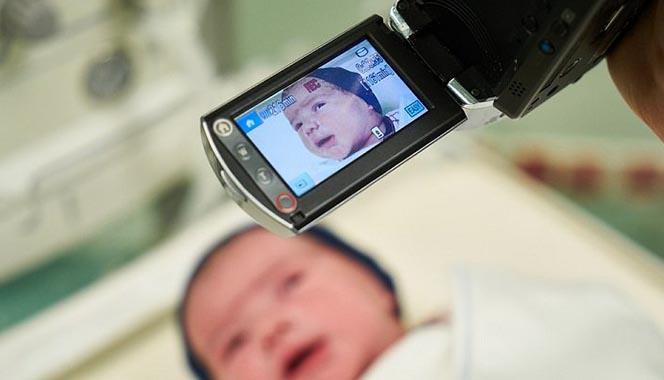
In the olden days, when digital communication was still developing, and social media was mostly non-existent, couples were discreet about even announcing their pregnancy. But, in today's times of new-age parenting, the Internet plays the messenger. The excited parents share the ultrasound scans of the growing baby on various social networks. This is the beginning of something called 'sharenting' (sharing parenting moments) and it is also the beginning of infringement of privacy of one's own child.
How it starts
Indeed, it is a wonderful feeling to have a life inside; it is also natural for any expecting parent to be curious about how the baby is growing, how the organs are being formed and so on. What is a major concern, however, is the habit of oversharing information about the little one before and after delivery. From the time the baby is conceived and comes into this world, to the growing up years, some parents constantly share intimate information.
I have noticed several parents share all details of their baby in public forums —these may include the baby's eating and sleeping habits to even toilet stories. Some may also like to share the breastfeeding schedule and the baby's behavior during breastfeeding.
Ultrasound images in social networks
In western countries, where the law is liberal about detecting the gender of the fetus, expecting parents may provide updates about the new member of the family by publishing the ultrasound images on social media, including videos. Some people use pink or blue backdrops to signify the gender of the baby.
In India, while ultrasound images including videos are given to the expecting parents, the gender of the baby is not revealed to the parents, as it is prohibited under the Pre-conception and Pre-Natal Diagnostic Techniques (Prohibition of Sex Selection) Act, 2003. So, sharing the ultrasound images of the baby on social media in the Indian context is best avoided.
After birth pictures
Almost all of us have seen multiple profiles/profile pictures of just parents in social media or messaging services. The cozy picture generally covers the tired face of the brand-new mother and her bundle of joy (mostly wrapped up in post-delivery clothes). The new-age parents may not stop at sharing a couple of pictures of the fetus or just-born baby.
Here are certain typical moments which have been highly shared by new-age parents:
- Just-born moments of the mom and baby: the baby may be photographed either in clothes or naked.
- Bathing pictures of the baby: the cuddly baby seating naked in a bathtub.
- Diaper changing: the typical potty scenes are no exception in some cases.
- The growing-up period showing the school uniform-clad child.
- The puberty scenes: boys with thin lines of mustache or girls in their puberty function
Dangers of oversharing
What's more concerning is that, in certain cases, sharing such information may attract pedophiles or other perpetrators who may store these widely shared pictures for future victimization. New-age parents may not understand that, over the years, their children will grow up to use the internet themselves and they may be victimized using the pictures that had been shared by their parents without their consent. Not only this, oversharing of the information about first-time school-goers or primary schoolers may also attract the attention of possible abductors, targeting the particular child.
It is astounding to see how easy it is to get extremely personal information about a child, where she lives, about her family and so on from social networking sites. Oversharing makes it even easier to post a picture of a child at school or on the way to school helps troublemakers identify the possible location to abduct the child from the place the child is photographed the most.
Parents should keep in mind that constant sharing of babyhood images of the child or his growing up moments, may become a source of constant embarrassment if the comments in such posts talk about his appearance, complexion, comparison with siblings and family members or suggest he is underweight or overweight. This may even push the child to use an irrational coping mechanism such as reverse bullying or even hacking the parent's profile. It can also lead the child to take extreme steps such as committing suicide.
Some kids may go through mental trauma and suffer depression when the parents are going through a divorce and one parent is constantly sharing the picture of the child who may not be under his custody, to publicize how the child would grow up into a monster if they are left with the other parent.
Legal implications
Sharing certain information about the baby may also attract legal sanctions for whoever shares information under Section 67b of the Information Technology Act and under Sections 13 and 14 of the Protection of Children from Sexual Offences (POCSO) Act. These may be for publishing nude/semi-nude pictures, especially to public forums where possibilities are there that such images may be consumed as sexually- gratifying and thereby violate the child's privacy.
Further, publishing too much information about children by a parent during a messy divorce with the intent of harassing the spouse, can also attract various punishments depending on what sort of information is being published and for what reason.
There is some significance in the old Indian saying that children should be brought up privately without sharing too many details about them. In the olden days, it had more to do with superstitions about the evil eye. While such beliefs do not hold good, the modern-day understanding should not be much different, considering the ill effects of oversharing on social media
We need to be responsible parents first to show the right path to our children. It is only we, the parents, who can set examples for our children by respecting their privacy. This would, in turn, help them learn that sharing information about anyone without consent is unethical.
























Comments
Edit
Comment Flag
Cancel Update