
Anshu Jamsenpa gets candid about her experience in mountaineering and parenting
Jayanthi Madhukar
The Dalai Lama flagged off her expedition and Prime Minister Modi tweeted about her achievement. We spoke to the extraordinary mountaineer and exceptional mother about her feat
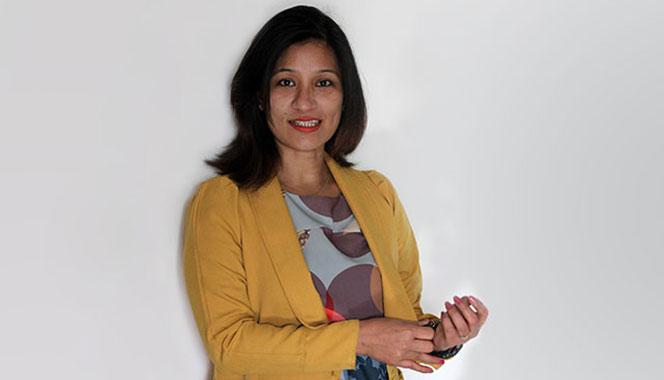
In the year 2017, May 16 and May 21 were two days that Anshu Jamsenpa will never forget. For on these days she stood on the top of the world, on the summit of Mount Everest. This incredible feat of scaling the majestic peak twice within five days by a woman set her on a world record. But when she reached the top, that wasn't on her mind as much. "Standing there, I felt I was close to God who was watching me", says Anshu.
What makes this achievement mind-boggling is that she has done double ascents twice - the first one in 2011, which she did within ten days, and the second expedition in 2013. The total number of times she conquered the summit is an envious five. Mountaineer extraordinaire and loving mother to two girls, Anshu is a picture of grit and determination. She speaks to ParentCircle about her family, achievements, and her daughters. Excerpts from the interview:
Q: What was your childhood like?
A: I was born in the remote town of Dirang in Arunachal Pradesh. When I was 13 years old, my family moved to Bondila, a bigger town. My father was an officer in the Indo-Tibetan Border Police and my mother was a nurse. I was one among four sisters and a brother. My parents were very strict, and we were forbidden to participate in co-curricular activities in school. I wanted to participate in everything (she laughs) but girls were not given that freedom back then. However, I learnt singing and dancing on my own, and performed for my family. My parents loved it! I used to sing sentimental songs in Hindi and English. My curiosity was unabated. When I wanted to learn karate, my brother would teach me at home. Learning to drive was not enough. I had to learn how to change a tyre and do basic repairs. Friends would wonder why but I was genuinely interested in learning. I believe that every day we must learn to grow.
Q: Did you always want to become a mountaineer?
A: No. I had wanted to become so many things - air hostess, pilot, you name it. At one point, I was disheartened by the negativity in society. I also wanted to become a journalist, so that I could report positive stories.
Q: When did you start mountaineering?
A: It was much after marriage and after I had my daughters, Pasang Droma and Tenzin Nyiddon. I married Tsering Wange in 2001 when I was 21. After my second daughter was born, I was eager to do something and told my husband that I wanted to start my own business. My husband didn't take it too seriously as he thought I was still immature. I was very young, but I convinced him about my intent.
I started a gaming parlor with his help while he had his own travel agency which kept him very busy. My business did very well, and people were surprised that it did. Eventually, my husband began asking my opinion about his business, and later, I decided to work for him in 2002. I soon got immersed in it, from marketing to keeping accounts. After a point, I got tired of sitting in the office.
Around that time, my husband was the president of Arunachal Pradesh Mountaineering and Adventure Sports Association, which organized camps. One set of experts had come for a program and I was delivering lunch for them. They were doing a recce of huge rocks and I decided to watch them. They looked unsure and were urging each other to rappel down the rocks. I offered to do so because I was tired by their slow pace. When I rappelled down they were impressed. Later, I joined the batch for a 45-km trek and again, all were impressed with my fitness. The guide told me that if I can't tackle Mt Everest no one else can. It made me want to train in mountaineering.
Q: How did you go about it?
A: I enrolled in one of the best institutions in Uttarkashi. But, I had to wait till September for the course to begin. Meanwhile, I joined a 15-day basic adventure course in Manipur. The drill was grueling from 4:00 am to 9:30 pm, and we had no time to even sit and talk. But I learnt a lot. Then I did the Uttarkashi course, followed by an advanced course of 28 days. Finally, I was up for the pre-Everest training in the mountains. My fitness was not an issue. Earlier, I would jog 10 km but after the training, I could jog for two hours in the morning and evening.
Q: Tell us about the overall experience...
A: I climbed the summit from the South Col, which is on the Nepalese side. South Col base camp is at 17,600 ft and there are five camps along the way to the summit where climbers can acclimatize and refuel. On the first expedition, at camp three my sherpa gave me the idea to scale twice. Due to visa issues, my double ascent got delayed. The record of the first woman climber to scale twice went to a Nepali climber Chhurim Sherpa, who did it in a week. I wanted to break the record and attempted again in 2013 but could not get a visa to scale twice.
The next year there was a deadly avalanche, which killed 16 sherpas. In 2015, there was an earthquake in Nepal. So, my next chance at breaking the record happened last year. But all records are meant to be broken. If the weather is good, it takes only six hours from South Col to the summit.
Q: What was your family's reaction to your first expedition?
A: In 2011, I joined nine climbers to scale the summit. I was so busy arranging for the sponsorship. Then it would cost 11,000 US dollars for an expedition. The equipment is really expensive and one wouldn't want to compromise on it. Except for my husband, I didn't tell the rest of my family until later. I sat down with my daughters and explained it to them. At that time my younger daughter, who thought it was a competition, said, "Mummy, aap first hoke aana (Mummy, you come first)". That motivated me throughout.
Q: What do you advise your girls?
A: I tell them - love yourself first. Believe in yourself no matter what people comment or tell. Do good for others wherever possible. You have a responsibility towards society and give back to it. Sometimes, people will take advantage of it but try to do good for others whenever you can. And listen to your inner voice.
Q: Being the unconventional mother that you are, what is the parenting style you and your husband have adopted?
A: My children call me strict, but that is only when I have to be. I am more like a friend. Both my girls are in a boarding school and they remain my priority. I am there if there is a program at school, and I am at home when they are home. I tell my husband that we can only motivate and guide them. But we cant pressurize them because we don't know how they will take it.
My older daughter was not so good at her studies, unlike the second one. Once, when I visited them at school before exams, I could sense she was disturbed. She wouldn't tell me why but later she asked me, "Mummy, what if I fail?". I told her to give her 100 percent and not worry about the results. I asked her not to focus on negativity before the exams and just do whatever she felt could to improve herself. She studied very hard, even when others were playing.
After I scaled the summit twice last year, I informed her over the phone and asked her about her results. She had scored cent percent. We both were overjoyed for each other. Later, when I visited her school, I touched her feet. She was uncomfortable with it. I told her I touched her feet because I respected the hard work she had put in.
Q: So, what are your future plans?
A: This year I am planning to lead a women's expedition to Kanchenjunga. As usual, I am seeking sponsorship and am hopeful of help from the Government.
Q: What is your message to girls and women all over the country?
A: I feel many women get into a comfort zone and resort to blaming their problems for not achieving what they want. All I can tell women is to not lament about their problems and say I can't do it. There are problems for everyone and you must try to overcome them. Focus on yourself and believe in yourself.





















Comments
Edit
Comment Flag
Cancel Update