
Are Boys And Girls Wired Differently? A Neuroscientist Busts Gender Learning Myths
Chitra Satyavasan
Are boys better at math, and girls more emotional? Neuroscientist Dr Lise Eliot explains how biology, learning, and parenting shape boys’ and girls’ brains, and how parents can challenge gender stereotypes early

Boys are better at Maths while girls are too emotional— assumptions we have all grown up with, never really wondering how true they really are.
Genes and hormones do make boys and girls different, but does that also mean that boys and girls learn differently?
Are boys and girls really wired differently?
Neuroscience research challenges many popular beliefs about how boys’ and girls’ brains develop.
In her book Pink Brain, Blue Brain, Dr Lise Eliot, Associate Professor of Neuroscience, Chicago Medical School, explored such beliefs and misconceptions to find out what exactly is going on in our brains, and how biology and social nurturing make boys and girls what they are.
She believes that it's not easy for parents to challenge gender assumptions. Still, parents need to do it if boys and girls are to reach their full potential.
In this interview, the acclaimed neuroscientist tells us that contrary to popular perception, boys and girls are not really 'wired differently'.
Q. Are there biological differences between boys’ and girls’ brains?
A. Boys' brains are about 8% larger than girls' and finish growing about 1-2 years later during puberty. However, boys' bodies are also larger from birth onwards, and girls' earlier brain maturation matches their earlier entry into puberty. Other differences have been found between the adult male and female brains but none have been verified in children. So the differences coming up later are not innate differences, but more due to what they have learnt.
Why overlap matters more than difference
In other words, male and female brains grow to become different, as children mature, learn, and become more sexually differentiated in their behaviour and activities. Most importantly, the differences found in brain activity and connectivity are small. There is actually much more overlap than difference in brain measures between males and females. You can never look at a brain image and determine if it's from a boy or a girl.
Q. Talking earlier, moving faster. Do milestones really differ?
A. Girls talk about one month earlier than boys. This difference in children is found around the world, and it is not significant. Gender accounts for only 3% of the variance in verbal skill, meaning, once again, that the range of verbal abilities is much wider within gender than between genders. In other words, parents should not wait if their son is talking late. Instead, have the child evaluated for a possible speech delay and therapy.
Reading, writing, spatial skills, and math explained
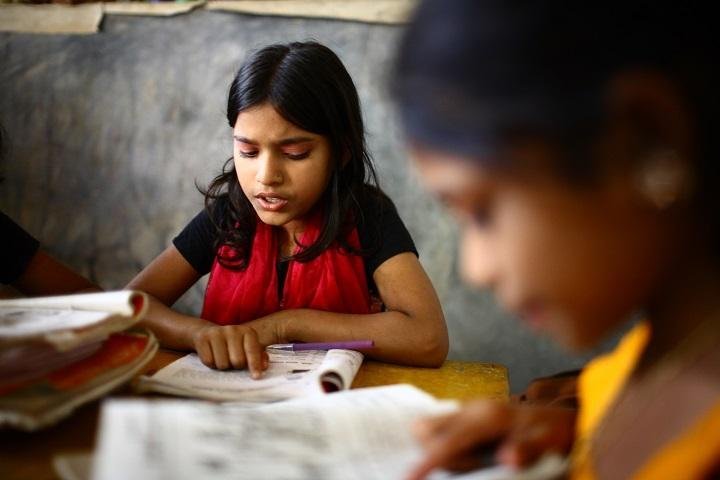
There is no difference in gross motor milestones such as sitting up, standing, walking, or running. Boys and girls achieve all these at the same average age. However, girls perform better on reading and writing tests, while boys do better on spatial skill tests (but not general Math), beginning in elementary school. The academic gaps seen around the world, reflect a mixture of nature and nurture but can be minimized in schools with strong attention to early literacy and spatial skills, and a rejection of gender stereotypes.
Q. Many parents have said that when they offer toys like a car, toy soldier and a doll, their daughters always reach out for the doll. What does that really tell us?
A. Actually, before age one, both boys and girls prefer dolls over other toys, because all infants are born with an innate face preference. Boys gravitate more toward trucks and balls in the second year of life, due to their higher activity level. (The average 3-year-old boy is more active than two-thirds of girls-which also means that the average girl is more active than one-third of boys.) Prenatal testosterone appears to have some role in the preference for such active playthings.
How gender identity shapes toy choices after age two
But at the same time, a lot of the difference in toy preference has to do with gender identification. Once children figure out that they are male or female, they become very adamant about living up to the role, because young children see the world in opposites - black vs. white, big vs. little, up vs. down, and gender, too, they see as 'opposites.' Of course, parents tend to reinforce this, along with toy manufacturers.
Q. Are gender differences hard-wired or socially learned?
A. It is both, but since the important things we do with our brains such as school work, hobbies, social interactions, sports, paid employment are all largely learnt, we can conclude that the sex differences in these abilities are also largely learnt. As we have seen over the past 40 years, girls really CAN do everything boys can do. The same is true in reverse, but boys in most cultures are rarely given the opportunity to be artists, nurturers, or dancers.
Q. Is there a 'correct' way of raising a girl or a boy keeping in her/his biological makeup?
A. Absolutely! The 'correct way' is to treat each child as an individual, not a gender stereotype. Appreciate that any child can be capable of anything, and don't limit a child's exposure to science, nature, books, drama, music, sports, or dance-based solely on whether the child is a boy or a girl.
In fact, I argue that parents should lean the other way, deliberately cross-training our daughters to get dirty and take risks, and our sons to talk about their feelings, read, write and nurture pets and younger children. The earlier children get to exercise non-traditional skills, the better adjusted they will be for life.
Q. What is the one thing parents must keep in mind to ensure their children learn better?
A. All of the points given above. Plus love. A child needs to feel safe and loved before they can learn optimally. Also, children need to follow their own curiosity to learn best.
Q. How can parents help children learn without gender limits
A. Role modelling is important. So, if mom and dad have different responsibilities around the home, children will see that and expect to do the same when they grow up. I also find that I need to constantly correct my children when they spout gender stereotypes. For instance, girls shouldn't be tough or boys shouldn't wear nail polish.
Why asking “why?” works
Ask them 'why' when they spout such claims. It is an interesting exercise that teaches them how gender norms are really just societal, not hard-wired.
What this means for parents
Neuroscience shows that boys and girls are not fundamentally wired differently. Small biological differences exist, but learning, environment, and parental expectations play a far bigger role in shaping abilities, confidence, and success.
- Avoid labelling abilities early (“He’s not academic,” “She’s not technical”)
- Offer equal exposure to sports, science, arts, caregiving, and leadership roles
- Encourage emotional expression in boys and risk-taking and assertiveness in girls
- Question school and family biases that subtly limit children based on gender
- Focus on effort, curiosity, and growth, not gender-based expectations
When parents consciously move away from stereotypes, children are free to explore their strengths. That freedom allows both boys and girls to truly thrive.
The takeaway is simple but powerful. Raising children without gender limits helps both boys and girls reach their full potential—academically, emotionally, and socially. When parents replace stereotypes with curiosity and support, children grow into more confident learners and more compassionate human beings.
Last updated on: December 30, 2025
Enhance your child's early education experiences with the well-rounded Dot pre-primary curriculum with an emphasis on essential skill building for successful learning.




























Comments
Edit
Comment Flag
Cancel Update