
Preparing Your Child For Kindergarten And A List Of Activities You Can Do At Home
Aruna Raghuram
Wondering how you can prepare your child for kindergarten without sending her to preschool? Read on for some valuable tips
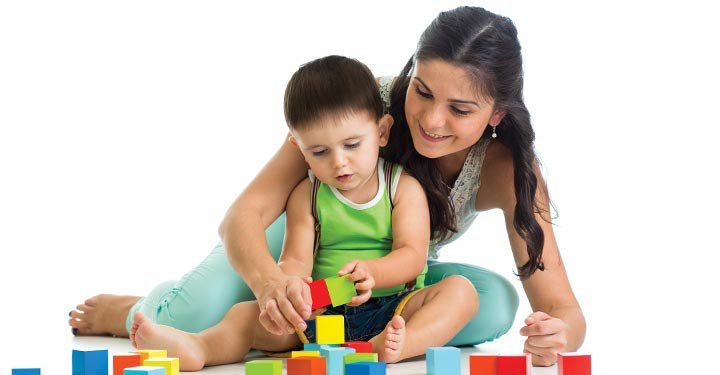
Mamta is a stay-at-home mom to her two-year-old son Rohan. She and her husband decided against sending him to a daycare or preschool. Mamta loves playing and reading to Rohan. She wants him to spend time at home till the inevitable routine of school life begins in a couple of years. But she does get a tad anxious at times and wonders if Rohan will be well equipped to deal with the expectations from his teacher and school when he starts kindergarten at the age of four. Should she be teaching him colors, shapes, the alphabet, and more, at home? Or, can she just let him play? A dilemma she faces every day.
Mamta is not alone. However, many parents prefer to send their child to a preschool even if it is for just a couple of hours. Admission fears, improved affordability, and limited time on hand are the most common reasons. A case in point is Prof. Chitra Singla, a faculty member at the Indian Institute of Management, Ahmedabad. She says "I didn't do anything special to get my child ready for kindergarten. I sent my son Kuvam to a play school and they took the responsibility of teaching him what was required."
But what should parents like Mamta do to prepare their children for kindergarten? The answer lies in integrating learning into your child's daily activities, and making it fun so that they develop an early love for learning. Don't worry, it is easier than it sounds. Here's how to go about it.
TIPS FOR PARENTS
Here is a list of activities you can do with your child at home to support their cognitive, motor, and social development, as you get them ready for kindergarten.
COGNITIVE SKILLS
Cognitive development includes information processing, observation skills, problem-solving and reasoning skills, planning, creativity, and memory skills.
- Pretend play: Whether building a railroad with blocks or pretending to be a doctor or teacher, play is one of the best (and most fun) ways to learn. Foster the habit of independent play by leaving your child alone with their toys and games for a short duration now and then (even as you supervise from a distance).
- Don't shut the door on devices: It's perfectly alright to allow your child to have some screen time. It's best if you co-watch with your child and follow it up with a conversation based on what you have viewed. But remember, not more than half an hour of screen time a day.
- Encourage decision-making: Give your child simple choices (but not too many as this will only confuse them) regarding what to wear, what book they want you to read to them, etc. For example, you could ask them if they want to wear a blue shirt or a green one. On the other hand, if you ask them to wear whatever they want, it could confuse them.
- Teach personal information: Your child should know their name, their parent's names, what work they do, which area they live in (if not the complete address), and the contact number of their parents. Ask your child to show you the way home from the school, the park, or a nearby shop so that they develop a basic sense of direction.
SPEECH AND LANGUAGE SKILLS
It's a great joy to watch your child move from uttering single words to those little sentences! You can play a role in making sure this transition happens with joy.
- Talk, talk, talk: Ask your child about their day and tell them about yours. Describe things around you when you step out, for example, look at the big, blue bus parked on the road. Ask them all kinds of questions like what their favorite color, food, or animal is, and follow up with a 'why' to get them thinking.
- Open the world of books: Reading not only helps in improving your child's concentration and language skills, but it also serves as a great tool for you to bond with your child. As you read aloud to them, follow the words with your finger. Read a variety of books from picture books, storybooks, rhymes, and poetry, to books on animals and nature.
- Sing rhymes: Nursery rhymes and children's songs are fun ways to improve language skills.
- Narrate stories: Storytelling will hone your child's listening and speaking skills and improve their creativity. Make up real-life stories from incidents, while also exposing them to folk tales. Encourage your child to tell you stories as well.
SOCIAL AND EMOTIONAL SKILLS
Key social and emotional skills for children at this age include collaborative play and group work, listening, expressing emotions appropriately, and empathy.
- Ensure social interaction: Visit a park or playground daily and invite other children home so that your child learns to share, take turns, and get along with other children. Limit the number of children you invite home to one or two at a time.
- Help your child deal with separation anxiety: A school will be the first away environment for your child and therefore, you will need to handle the emotions associated with it, with care. You will need to gradually get them adjusted to the change by leaving them for a few hours with friends or relatives. You could also organize a play date with cousins when you won't be around. Another good way to ease separation anxiety is to visit the school with your child, meet the teachers, and get them comfortable with the setting.
- Help your child understand emotions: Children who can name their own emotions and that of others find it easier to get along with other children and are better at resolving conflicts. Ask your child how they feel in different situations and get them to name their emotions. Also, talk to them about your feelings, whether you are tired after a long day's work, upset about what happened on the street, or excited about the upcoming vacation.
SELF-CARE SKILLS
Irrespective of whether you are preparing your child for school or not, self-care skills are very essential during the early stages of a child's growth.
- Encourage independence: Encourage your child to eat and get to bed on their own. Toilet training is also important. But remember, some children take time to achieve these milestones, so be patient. It will happen.
- Teach simple tasks: Being able to button up their pants after a visit to the toilet, tie their shoelaces, or zip up a jacket can give your child an immense feeling of achievement. Familiarise your child with things around the house and let them know what they are used for. Allow them to handle objects like a comb and toothbrush. Sometimes, you may want to do these tasks for your child because it is much quicker. But remember, your child needs opportunities to learn and practice. These practical skills will hold them in good stead when they are at school and away from you. These activities also help them develop eye-hand coordination and fine motor skills.
GROSS MOTOR SKILLS
Gross motor skills involve the movement of the large muscles of the legs and arms. Simple, but meaningful activities can help your child develop these skills.
- Ensure outdoor play: Physical activities such as running, climbing, jumping, swimming, cycling, and playing ball can help your child develop gross motor skills. A visit to a nearby play area is a good way to nurture these skills.
- Get your child involved in chores: When your child helps you with chores such as carrying your grocery bags, setting the tables, or wiping the floor, they are developing gross motor skills.
FINE MOTOR SKILLS
Fine motor skill activities involve the use of the smaller muscles in the hands and fingers, in coordination with the eyes. This is an essential pre-writing skill.
- Encourage art: Get your child involved in activities such as drawing, coloring, Q-tip painting, clay modeling, drawing on the sand, and more. Art enhances your child's imagination, strengthens their finger muscles, and also builds hand-eye coordination.
- Introduce fun activities: Playing with blocks or cards, solving simple jigsaw puzzles, cutting along a line using safety scissors, sliding paper clips on a sheet of paper, and stringing beads. There are endless options where your child has to use their fingers.
It is natural for you and your child to feel anxious about starting kindergarten after nearly four years of being home. But with just a little preparation, your little champ can make a smooth transition from home to school.
Enhance your child's school experience with The Dot kindergarten learning program,a comprehensive early education ecosystem where your child can explore and learn.





























Comments
Edit
Comment Flag
Cancel Update