
5 Easy Eco-Friendly Ganesha Idol Ideas Children Can Make At Home This Ganesh Chaturthi
Sahana Charan
Celebrate Ganesh Chaturthi with your child by making a Ganesha idol from clay, paper and natural materials—and turn creativity into a lesson in caring for nature
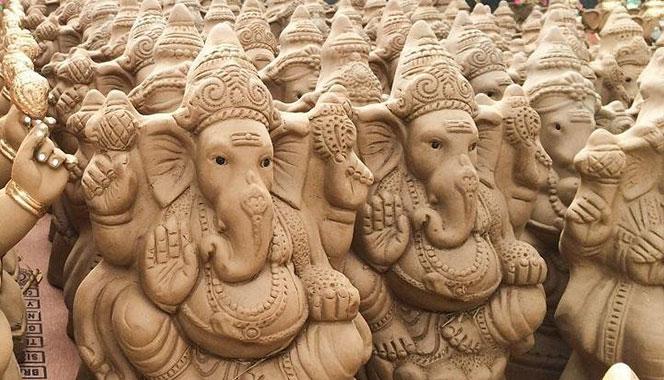
Have you thought about making a Ganesha idol at home this Ganesh Chaturthi? It's a wonderful way to celebrate the festival with your child while encouraging creativity and mindful choices.
Ganesh Chaturthi is a time of colourful celebrations, traditional rituals, delicious sweets, and family togetherness. For children, making their own Ganesha can add to the joy of the festivities. They get to work with their hands, experiment with different materials, and create something they can be proud of.
If you would like to make a more environmentally conscious choice this year, you can create a small Ganesha idol using materials such as natural clay, paper, or leaves.
Here are five simple ideas to try with your child.
1. Make a Ganesha idol with clay

This is the clay potters use and is easy to get. When the festivities are over, you can immerse the idol in a bucket of water, and it will dissolve. Use this water to water plants.
Natural clay is one of the simplest materials to work with when making a Ganesha idol at home. You can use air-dry clay or traditional natural clay that is suitable for crafting.
How to make it
- If needed, mix the clay with a little water to soften it and make it pliable.
- Make three large balls for the base, body, and head. Make smaller pieces for the arms, legs, ears, trunk, and crown.
- Flatten one large ball to make the base. Place another ball on it to form Ganesha's body and shape the front into a rounded tummy.
- Use elongated pieces of clay for the arms and legs.
- Place the third large ball on the body to make the head. Add a smaller piece of clay to form the trunk.
- Shape two pieces of clay into elephant ears and attach them to the head.
- Add a small crown and use a toothpick or blunt tool to make simple details such as the eyes, fingers, and toes.
- Decorate the idol with small clay ornaments.
- If you want to add colour, use natural colourants where appropriate.
Tip: Keep the idol small. A smaller idol uses less material and is easier for children to shape and handle.
2. Ganesh-on-a-leaf clay idol

This is a fun variation on the traditional clay idol. It is small, simple, and can even be displayed as a wall hanging.
How to make it
- Take a large ball of clay and flatten and shape it into a leaf.
- Use a toothpick or blunt tool to make lines resembling the veins of a leaf.
- Make a semicircular piece of clay for Ganesha's body and attach it to the leaf.
- Shape small pieces for the head, trunk, arms, and legs and attach them to the body.
- Flatten a small ball of clay and use a bottle cap to cut out a circle. Cut the circle in half to make the ears.
- Add a small clay crown to the head.
- Make sure all the pieces are firmly attached to the leaf.
- Keep the finished piece small and light if you plan to display it vertically.
Try this: Let your child decide what patterns to make on the clay leaf. It need not look perfect. The fun is in creating it together.
3. Make a papier-mâché Ganesh idol

Papier-mâché is another material that children can enjoy shaping. If you use a ready-made papier-mâché mix, follow the instructions written on the package. You can also make papier-mâché using paper and a suitable paste.
How to make it
- Prepare the papier-mâché mixture until it is soft enough to shape.
- Make a large ball for Ganesha's body and smaller pieces for the head, arms, legs, ears, trunk, and crown.
- Place the body on a smooth surface and shape it into a rounded form.
- Add the head, and gently attach the arms, legs, ears, and trunk.
- Smooth out any visible cracks or joins with a little moisture.
- Add simple details such as the eyes and navel using a blunt tool.
- Decorate your Ganesha with a tilak or simple paper embellishments.
- Let the idol dry completely, according to the material's instructions.
Tip: Papier-mâché can take time to dry. Give it plenty of time before painting or decorating it.
Make a Ganesha with homemade dough
Children who enjoy playdough will love this activity. For a more environmentally conscious option, use simple homemade salt dough rather than commercial modelling dough.
How to make it
- Prepare a simple homemade dough and divide it into balls of different sizes.
- Use one large ball to make the base or seat.
- Shape another ball into Ganesha's body and add a smaller ball for the head.
- Use smaller pieces of dough for the ears, arms, legs, and trunk.
- Add a small piece of dough for the crown.
- Use a blunt tool to add simple details such as the eyes, fingers, and ornaments.
- Let the finished idol dry completely if you are using a dough that needs to harden.
Make it playful: Give your child the freedom to choose the shape and details. The finished Ganesha does not have to look exactly like a store-bought idol.
5. Make a Ganesha with fallen leaves
Use leaves to create a simple Ganesha artwork rather than a traditional three-dimensional idol. This can be a lovely activity for younger children.
Instead of plucking fresh leaves from a tree, collect leaves that have naturally fallen on the ground.
How to make it
- Collect a few clean, dry leaves of different shapes and sizes.
- Use a piece of cardboard as the base.
- Arrange two small leaves as Ganesha's ears.
- Use a larger leaf for the body and another suitable leaf for the head.
- Arrange smaller leaves to represent the arms and legs.
- Add a long, narrow leaf or a small piece of leaf for the trunk.
- Once you are happy with the arrangement, carefully glue the leaves onto the cardboard.
- Add simple details with a pencil or natural materials.
Talk about it: Ask your child why they think certain leaves suit the ears, body, or trunk. It is a simple way to encourage observation and creative thinking.
Here's a video to help you make a Peepal leaf Ganesha
Make the celebration meaningful for your child
Making a Ganesha idol at home is not just a craft activity. It can also open up a conversation about how our everyday choices affect the world around us.
As you work together:
- Talk about why some families choose natural or biodegradable materials for festival decorations and idols.
- Encourage your child to reuse materials wherever possible.
- Avoid unnecessary glitter, plastic decorations, and single-use craft materials.
- Let your child help collect and sort materials for the activity.
- Talk about caring for plants, animals, water, and the spaces around us.
- Focus on enjoying the process rather than making a perfect idol.
A mindful immersion after the festival
If you have made your Ganesha idol from a water-soluble natural material, check that the material and any decorations used are suitable for immersion.
For a small home-made clay idol, some families choose symbolic immersion in a bucket or tub at home and then use the resulting clay water for plants, provided the material contains no paint, glue, glitter, or other substances that could harm the soil.
Always follow local guidance for Ganesh idol immersion and disposal, particularly if your idol contains materials that do not dissolve naturally.
Celebrate with creativity and care
Ganesh Chaturthi offers children many opportunities to learn through doing. Making their own Ganesha can introduce them to art, tradition, creativity, and thoughtful choices about the materials they use.
So this year, set aside some time to make a Ganesha together. Let your child knead the clay, arrange the leaves, shape the trunk, or decorate the idol. The finished creation may not be perfect, and that is perfectly fine.
What's important is the joy of creating something together and helping your child discover that celebrating a festival and caring for nature can go hand in hand.
Ganesh Chaturthi: 6 Values children can learn from Lord Ganesha
Last updated on: September 11, 2026
























Comments
Malini Aug 26, 2017
Edit
Comment Flag
Cancel Update