
How to help children conquer fear: Childhood fears and their management
Mina Dilip
Does your child have any fears? There is a thin line that separates rational, requisite fear from irrational, debilitating one. Read on to know how to help your child overcome her fears in an effective manner
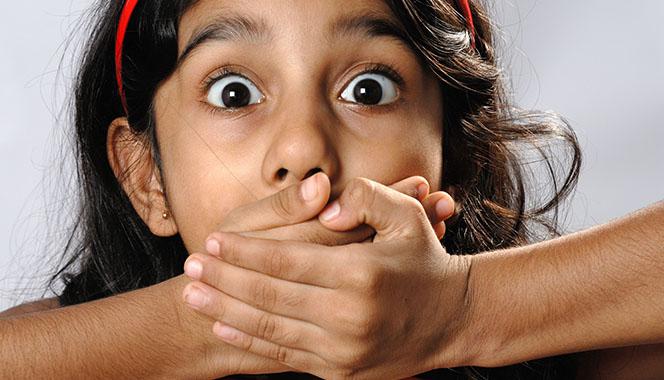
As a psychologist, I have been fascinated by the primal emotion of fear. In my line of work, I have observed how fear takes many different forms, and leads to myriad different scenarios, many of them unpleasant. We all know that fear is an emotion felt by both children and adults. It is a primitive emotion that is coded into our DNA and is necessary for our survival. From prehistoric times, when our ancestors had to be on their guard for vicious attacks by wild predators in the jungle, all the way to the present day, when we need to be alert to the dangers of crossing a busy road, fear is what has kept us alive. Fear, therefore, is an important emotion.
Humans begin experiencing fear from an early age. Right from infancy through early childhood, all the way to adolescence, children feel this strong and sometimes incapacitating emotion, and often come to us, parents, for help.
This article examines how you can assist your children in developing a healthy attitude towards fear and conquering this intimidating feeling to stay on top of it. This is not about eliminating fear, rather, about trying to understand, acknowledge and manage it effectively.
Childhood fears and their management
At every stage of your child's life, there are bound to be fears. However, your child's fears will evolve with age and change as she crosses each developmental milestone. Below is a list of common childhood fears and some simple strategies to handle them. The first letters of the list below join up to form the acronym "FEAR".
Fears of an infant and a toddler
A very young infant is often frightened by sudden movement, loud noises or large objects that loom in his line of sight. As a new parent, your baby's startled reaction may seem overwhelming to you. However, babies normally adapt to common environmental sights, sounds and other sensory inputs as they grow up.
- What you could do: Some parents I have worked with have tried to 'help' by going that extra mile to soundproof the baby's room and protect the baby from unfamiliar experiences and objects. Even though their intentions are noble, these efforts are actually counter-productive. Exposing an infant to normal environmental sights, smells, sounds, etc., helps him adapt, or get desensitized, to his surroundings. A child with zero exposure is worse off than one who has been systematically desensitized through regular daily exposure in a normal home environment.
As your tiny tot grows up into a toddler, he is bound to feel apprehensive of strangers and of being separated from you.
- What you could do: Again, instead of insulating him from his surroundings, expose him gently to new people, perhaps one or two at a time so as to not overwhelm him, and watch how he slowly grows out of his fear of strangers. Similarly, if your toddler has separation anxiety, gently help him learn to be away from you, by talking him through it, rather than sneaking out while he is not looking.
It would help to develop a brief goodbye routine to let him know you will be gone for a while and that you will be back. He may cry for the first few days, but he will soon begin to understand that you will be back. Play games like peek-a-boo with your toddler. It enables your child to establish object permanence. In other words, your child will learn that even if parents go out of sight, they are sure to be back soon.
Early childhood and primary schooler fears
As your toddler grows into a primary schooler, she begins to develop an imagination. Pretend play and fantasising are common at this age. However, this can be a double-edged sword. On the one hand, fantasizing helps your little one gain a semblance of control over a big and overwhelming world through creativity and imagination. But on the other hand, a fertile imagination can transform even benign objects into scary ghosts and monsters.
- What you could do: The preschooler stage is the age where your child begins to express herself through speech. So, it is important that you validate her fears and verbally reassure her. To reassure your preschooler, guide her to verbalize her fears through games like complete-the-story or show-and-tell.
How to play
- Complete-the-story is a free association game in which you begin by saying, "Once upon a time..." and add an element or character that relates to one of your child's known fears. Then invite your child to continue the story. You add on to the story, keeping the theme in mind and gently guiding the narrative towards a positive and desirable ending.
- Show-and-tell is a simple activity where you choose an object, pick it up, show it to your child and describe it. You can choose some articles, objects, pictures or elements that make your child feel scared, and invite her to engage in thinking about them and describing them. This helps the child to process the scary object or situation factually, thereby helping her to overcome her fear.
Adolescence
The preteen and teen years are fraught with worries, anxieties and fears. The most common fears of an adolescent include fear of rejection by peers, of ridicule over body image and of exams.
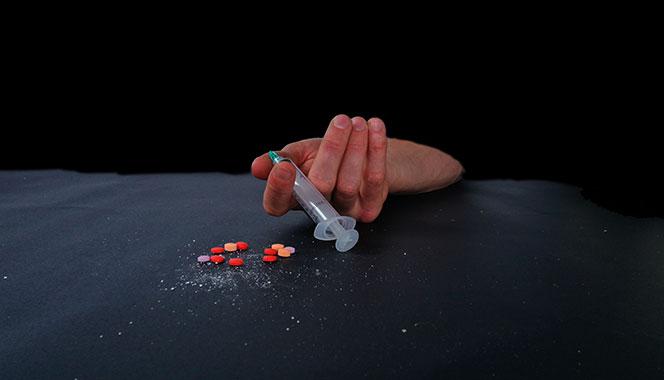
The need to be accepted by peers and to belong to the group of 'popular' children is a natural and normal part of adolescence. However, when there is peer pressure to engage in undesirable activities like drugs or sex, it can be very daunting for youngsters. In order to belong, children often end up doing things that they later regret.
- What you could do: The most important thing you can offer your child is your unconditional support and a listening ear. To help your teen develop a healthy body image, focus on his strengths and encourage him to stay fit and healthy. When it comes to exams, it is important for you to keep things in perspective at all times. Don't push him so hard that his fear of nonperformance or underperformance leads him to take some rash decisions.
Reassure, validate and assist
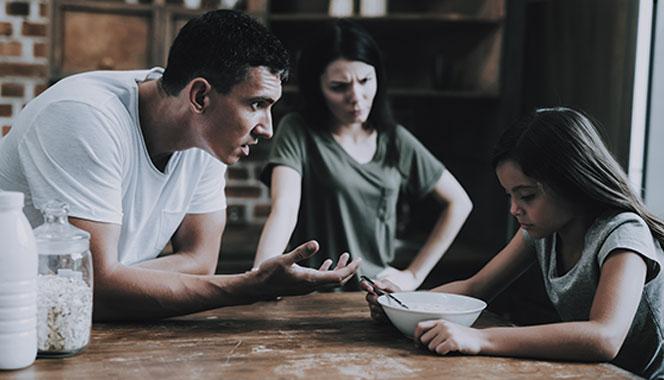
Regardless of your child's age, if she comes to you with her fears, it is important that you first reassure her that you are there to listen, and mean it. Listen without judgment or interruptions. When she has expressed her fear, validate it - don't trash it! The worst thing to do would be to minimize her fears by saying, "Oh, that's nothing to be afraid of." Instead, soothe her by saying that it is natural for her to feel scared, and perhaps add that you would be scared too, had you been in her shoes. Having an empathetic and understanding attitude is so therapeutic and healing that your child may snap out of the fear right then. If not, you can assist her to explore alternatives to cope with the fear by asking her open-ended questions like, "Is there anything I can do to help?"
Fears and anxieties are a normal and natural part of growing up. Rather than trying to insulate your child from them, or invalidating her fears and anxieties, tell her to cope by equipping her with strategies to manage her fears with confidence.

























Comments
Edit
Comment Flag
Cancel Update