
The Most Common Parenting Dilemma: What To Do When Your Children Fight?
Arun Sharma
You feel 'wow' when you see your children cordially playing with each other. A minute later, you see them yelling and throwing things at each other. Gosh! Wondering what to do? Read on
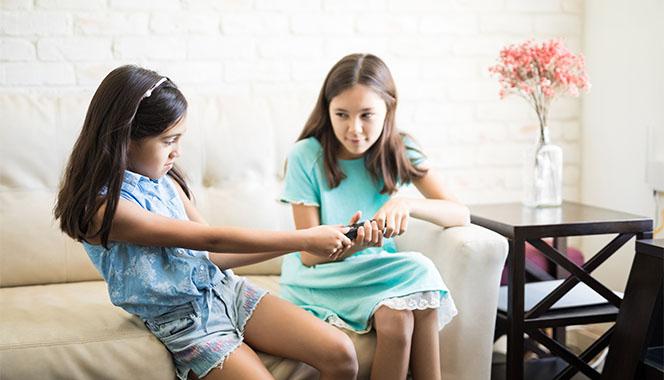
Adults usually assume that being born to the same parents will make siblings naturally love and respect each other. Well, nothing can be further from the truth. Positive and negative emotions are a natural part of every relationship, and the relationship between siblings is no exception. But, the key is to give a positive shape to sibling relationships. Who better than parents to help do that.
Having said that, you may be clueless when it comes to helping your children develop a closer relationship with each other. You are filled with questions in your mind about how to bring your children closer together in their relationship. Should you make your children always share their possessions with each other? Should you make them sleep in the same room? Should your older child carry the responsibility of taking care of the younger ones? Well, you're not alone. There are many parents who struggle when it comes to managing siblings, and also their conflicts.
What triggers sibling rivalry?
|
Impact of sibling rivalry
- leads to poor self-image and self-worth
- increases aggression
- causes emotional stress
- weakens family relationships
What you can do to help resolve sibling conflicts
It is difficult for children to get along, as they do not yet have the skills to resolve conflicts and make things work. But, as a parent, you have the power to influence sibling relationships. You can coach your children on how to resolve conflicts and stop fights. Here's what you could do:
1. Show empathy
a. Stay calm, don't react: The everyday cacophony of fights, tears, and complaints can drive you to the edge. But this is not the time to lose patience. Remember, you have an important task at hand.
b. Don't take sides: Each sibling (up in arms against the other) expects you to play the judge and deliver the judgment in their favor. Be fair and just with both the children.
c. Talk about what you see: When siblings come to you expecting a resolution to the problem, begin by talking about what you observe. For example, "Arjun, I can see that you pinched Tanya, and she pushed you to the ground."
d. Understand their feelings: To diffuse the situation, help your children calm down first. Listen to each one's story to understand what each one is feeling.
2. Encourage communication
a. Coach them to listen: As a first step, begin training your children to listen to each other's point of view without interrupting the person who is speaking.
b. Help them understand feelings: To do this, one by one, ask each of your children what they think their sibling may be feeling at the moment of conflict.
c. Show them how to express feelings: Equip your children with the right vocabulary and technique to express their feelings. For example, Tanya can say, "Arjun, I don't like being hit as it hurts me."
3. Allow problem-solving
Encourage the children to come up with solutions. Handhold them towards finding an amicable solution. With time, your children will learn how to do it on their own.
4. Apply the healing touch
Help siblings understand how to make up with each other after they have been in a fight. Comfort both the children and attend to each one. Genuine apologies work better than forced ones.
What you can do to help siblings bond
When siblings have a good relationship with each other, they:
- Understand each other better
- Act as emotional anchors
- Foster unity in the family
- Learn from each other
- Support and encourage each other
- Comfort each other during times of stress
- Act as a sounding board
- Learn to empathize
- Feel happier, thus, stay healthier
Tips to strengthen the sibling bond
Games and outdoor activities are effective ways to foster close relationships among siblings. Here are a few ideas:
- Going on a scavenger hunt
- Playing water games
- Engaging in messy play
- Reading to each other
- Planting a garden together
- Planning a picnic
- Competing as a team
- Complementing each other's skills
- Dancing to music
When nothing works
While solutions are meant to work, there is no rule that says every solution must work. So, when all your attempts to resolve the conflict fall flat, come up with some wild and creative ideas to distract your children from the situation. For example, get your children to write all the bad names they called each other. You can also infuse humor to help ease the tension or come up with a fun game to play - siblings versus parents always work.
Interesting facts about sibling relationships
- Most parents show a preference for one sibling over another
- Siblings spend more time together than with others
- Having an older sibling makes the younger child smarter
- Younger siblings are likely more extroverted than older siblings
- Older siblings tend to have slightly higher IQs
- Having siblings helps children develop better social skills
- Siblings reduce the likelihood of parental divorce
- Siblings share unhealthy habits with each other
- Middle-born children are the ones who usually compromise
- Fights between siblings are natural and can't be wished away.
Sibling rivalry is absolutely normal. What's important is to help children learn how to respect and understand each other and resolve conflicts between themselves. Don't sweat the inevitable small fights and misunderstandings. Soon, they will be playing together in no time.
























Comments
Edit
Comment Flag
Cancel Update