
Want your child to behave? Here are 10 Rules of thumb of preschooler discipline
Mina Dilip
Wish your preschooler was more disciplined and well-behaved? Here are 10 pointers on what you should do and what you shouldn't to inculcate discipline in your child
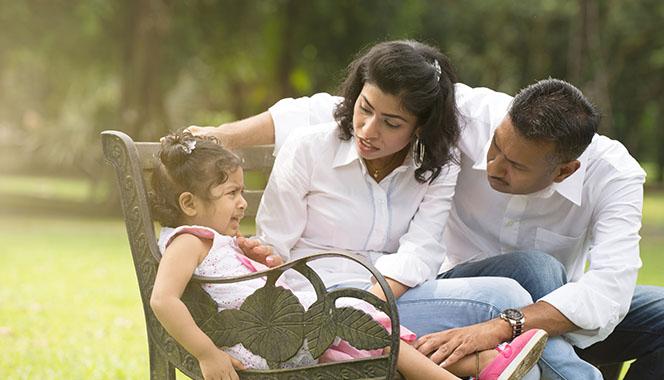
In our culture, discipline is often equated with punishment. However, the fact is that where there is punishment, there can be no discipline. A punitive approach to discipline is counter-productive because disciplining children based on fear only makes them rebellious and undisciplined. As a parent, if you can work on inculcating self-direction and an internal locus of control in your preschooler, you can be assured that he will remain disciplined for life.
10 Rules of thumb for every parent
Here are 10 rules of thumb for every parent of a preschooler to read and mull over.
1. You should never beat or physically hurt your child
Physical punishments instil fear, not discipline. For one thing, beating, spanking or otherwise causing physical pain to your child is unhealthy and destroys the bond of trust and acceptance you are meant to share with her. Moreover, physical punishments usually have an 'expiry date'. For example, what you could achieve by pinching her in the past will not be effective now, because she might become belligerent and dare you to pinch her. In most cases, when pinching or beating with bare hands fails, parents resort to a stick or some other implement. The punishment's intensity and violence keep escalating to the point where the child may suffer serious physical injury and emotional harm.
2. You should never treat your child with disrespect
If you adopt a top-down or authoritarian approach to disciplining, you end up discounting your child's wishes even in simple decisions like what he will wear or what game to play. A child who feels invalidated feels disrespected. As an adult, can you expect your child to respect you when you do not respect him?
3. You should never use abusive language
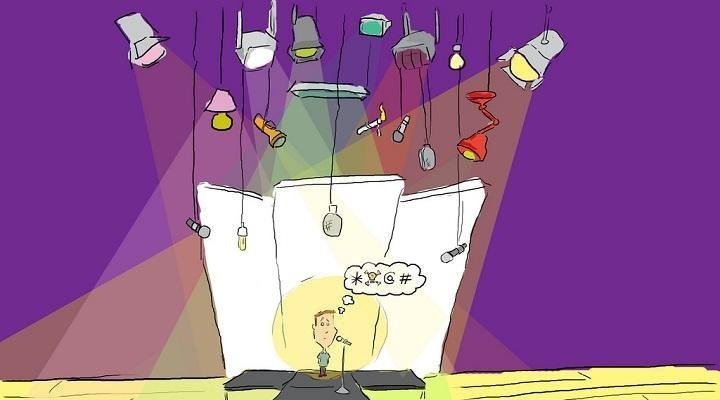
If every second word you utter is a swear word, is it reasonable to expect your child to use polite, respectful language? Verbally abusing your child can cause severe, irreversible damage to her self-esteem. Calling her names or branding her as stupid, dumb or silly can leave permanent scars on her psyche.
4. You should never compare
There is no such thing as a positive comparison. The rationale many parents use when comparing their child with someone else is that he will 'try to improve'. Believe me, nothing could be farther from the truth. When you compare your child to someone else, the message he takes away is, "I am not good enough". This can become his life script, and hold him back from making attempts at even something he is capable of doing.
5. You shall never outsource parenting to devices
One of the biggest contributors to indiscipline and behavior problems today is an addiction to devices. Over-worked parents often outsource parenting to the devices. This ends up wreaking havoc on a child's developing sense of inner-directedness and discipline. Devices are addictive and force children to transcend boundaries and breach limits. This pattern of behavior becomes habitual. The result is a lack of discipline. It is best to limit exposure to devices as much as possible and offer more tactile alternatives to keep your child engaged.
6. You must pre-negotiate and follow through
One of the most effective ways of disciplining children is to have rules and consequences in place, and negotiate them in advance, before the situation deteriorates into a screaming match. The critical point here is that the negotiation must happen when your child is in a good mood and is receptive to disciplining. Explain to her what you expect, why those rules are in place and the consequences of breaking those rules. And if she breaks a rule, ensure you follow through with the consequence you pre-negotiated.
7. You must be consistent in your disciplining approach
It is important that you are consistent in your approach to disciplining your child. For example, if you are feeling benevolent on a particular day and decide to suspend the consequences but on another day you are irritated and choose to enforce them, you are being inconsistent in your approach. Your child will find it difficult to follow the rules when there is no stability and consistency in their implementation.
8. You must model desirable behavior
Children are like mirrors. Most of their behaviors are learnt through observation and acted out through imitation. And, parents are the first set of significant adults who provide a 'behavioral template' of sorts. So, if you are in the habit of banging doors shut or throwing things around when you are angry, you can expect the same behavior from your preschooler.
9. You must communicate with your child
It is necessary to spend some time every day talking and listening to your child. This keeps communication open and tells your child he can approach you whenever he is feeling overwhelmed or needs help, instead of resorting to tantrums.
10. You must use positive reinforcement
Applied Behavior Analysis is a field of psychology that advocates behavior-shaping through positive reinforcement. In simple terms, this means you notice when your child behaves in a desirable manner, and acknowledge it. You can use rewards, but I personally feel genuine appreciation and validation of such behavior is a stronger social reinforcer than tangible material rewards.
Remember, childhood is not only about rules and discipline. Children need to be loved unconditionally and accepted for who they are. When you follow this dictum and remain emotionally available and supportive, you are sure to have a disciplined child in your life.



























Comments
Edit
Comment Flag
Cancel Update