
Want Your Child To Grow Up Into A Happy, Well-Adjusted Adult? Then Encourage Free Play
Aruna Raghuram
While the importance of play in a child’s development is well known, the value of unstructured or free play is often underestimated. Here’s why and how you must encourage your child to engage in free play

Seven-year-old Vinay and his friends love playing in the open field behind his house. They run around, jump over rocks, and take turns catching each other. Sometimes, they stop to pick up an interesting-looking stone or to admire a beautiful butterfly.
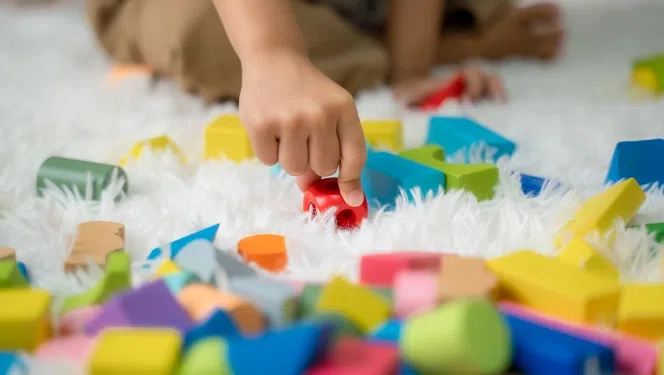
What Vinay and his friends engage in is an example of unstructured or free outdoor play. Children can also engage in free play indoors—stacking up cushions to build a cozy home in the corner of the living room, using blocks to create whatever they want, make-believe games of being a pilot or firefighter or playing with soft toys and Dinky cars.
The term “play” covers a large variety of activities that children (and adults) engage in for the enjoyment they get, without thinking much about the end result. But play is important work for kids, as it’s crucial for their intellectual, emotional, social, and motor development.
What is unstructured play or free play?
Unstructured play is a spontaneous, creative, child-driven, and open-ended activity. If at all there are rules, they are simple and improvised. There’s no strategy or specific learning objective. These days, the play has become more adult-directed and structured. Organized sports, such as cricket or football, and board games or card games are examples of structured play.
Both structured and unstructured play is important for a child’s well-being, learning, and development. However, the value of unstructured play is often underestimated. In his article ‘The decline of unstructured play’ on thegeniusofplay.org, educationist Dr Michael Patte writes that recent research suggests children should experience twice as much unstructured playtime as structured play experiences, as unstructured play promotes holistic child development.
Types of play
In his book, A Playworker’s Taxonomy of Play Types, play expert Bob Hughes identified 16 types of play. Given below are a few of them and how they involve unstructured activities:
- Rough and tumble: Energetic, physical play such as play-fighting, chasing, and even tickling one another.
- Imaginative: In this type of play, a child imagines that he has wings and can fly like a bird, or is a doctor in a make-believe world.
- Socio-dramatic: A child acts out experiences. She may playhouse, or pretend to be in a shop or restaurant.
- Creative: A child uses his imagination. For example, he may make something new out of waste materials like old newspapers or plastic bottles.
- Locomotor: This play involves moving around (e.g., hide-and-seek and climbing trees).
- Exploratory: A child uses her senses to explore. For example, she may feel the texture of the sand while building sandcastles at the beach.
Why your child needs unstructured play
According to an article published by the American Academy of Pediatrics, “Undirected play allows children to learn how to work in groups, to share, negotiate, resolve conflicts, and to learn self-advocacy skills. When play is allowed to be child-driven, children practice decision-making skills, move at their own pace, discover their own areas of interest, and ultimately engage fully in the passions they wish to pursue.”
In contrast, says the article, when play is controlled by adults, children have to follow adult rules and concerns (like winning) and “lose some of the benefits play offers them, particularly in developing creativity, leadership, and group skills.”
The importance of unstructured play for very young children cannot be overemphasized. It’s widely recommended that toddlers and preschoolers engage in some form of unstructured play for at least an hour each day.
Key benefits of unstructured play:
- Promotes health and general well-being: Encouraging unstructured outdoor play is a great way to increase physical activity levels in children, making them healthy and fit. It could be something as simple as climbing the monkey bar in the park, or a game of throwing and catching a ball in the backyard. Children are exposed to sunlight and absorb the much-needed vitamin D. Outdoor play like spending time in a treehouse or camping in the garden also brings a child close to nature.
- Improves cognition: Pretend play or imaginative play is usually unstructured. In the article, ‘The need for pretend play in child development,’ published in Psychology Today (2012), cognitive psychologist Scott Barry Kaufman and colleagues reveal that research has increasingly shown clear benefits of children’s engagement in pretend games from the ages of 2 till 7 years. These include cognitive benefits like increased language usage, the expression of both positive and negative feelings, and better self-regulation, such as reduced aggression, delay of gratification, civility, and empathy.
- Improves executive functioning: In the article ‘Less-structured time in children’s daily lives predicts self-directed executive functioning,’ Jane Barker and colleagues (2014) say unstructured play may be associated with signs of better self-directed (not specified by an adult) executive functioning in young children. Executive function skills help us remember things, plan, reason, and solve problems, and are a critical part of growing up.
- Generates a sense of freedom and control: In the unstructured play, children are free to explore their surroundings and discover things for themselves. They’re also in control, as they can create their own rules and set their own limits.
- Enhances creativity: Unstructured play boosts the imagination and creativity of a child tremendously. While making something (such as a painting or a papier-mâché bowl), children discover the joy of creation. The study ‘Unstructured play and creative development in the classroom’ by Myra Thiessen and colleagues (2013) found that when there was no close supervision by adults, children readily engaged in exploratory and experimental behavior. When adults were present, the behavior of the children took on a more expected and less imaginative direction.
- Helps cope with emotions and stress: The environment in unstructured play is relatively stress-free. There’s no fear of failure. Children are allowed to make mistakes without being pulled up by adults or penalized by peers. In a 2018 article titled ‘Summertime solutions: The benefits of unstructured play,’ psychotherapist Katie Hurley writes, “Have you ever watched a toddler dress up as a doctor and administer check-ups and shots to all of her stuffed animals? You are witnessing the power of play as a coping process.” Thus, the play also helps a child work through difficult emotions, fears, and anxieties in a non-threatening environment.
- Spurs creativity and fosters self-reliance: The next time your child comes to you and says she’s bored, ask her to find a way to occupy herself enjoyably instead of giving suggestions. Free play enables children to create their own happiness and develop self-reliance.
- Develops life skills: Free play and unscheduled time allow for peer interactions, an important component of social and emotional learning. Children work with each other to solve problems and make decisions. While listening to each other and sharing ideas, they pick up vital social skills like communication and teamwork.
- Provides an opportunity for parent-child bonding: Free play offers parents a wonderful opportunity to engage fully with their children. Thereby, they gain insights into what their child is feeling or thinking. This is particularly true if the child is an introvert. And, of course, both parent and child can act goofy and have lots of fun!
Expert take
ParentCircle spoke to Preethi Vickram, educator, parent coach, and founder of LIFE (Leadership Initiatives for Educators), about the unstructured play:
Q. What according to you are the major benefits of unstructured play for a child?
A. I would like to highlight the three major benefits:
- Unstructured play exercises the pre-frontal cortex of the brain, which leads to the development of higher-order thinking skills. This is because free play makes a child choose, decide, think out the steps, and discover the consequences.
- Social interaction is better without adult intervention. Even shy children are able to mingle with more outgoing ones.
- In role-play and fantasy play, children make up their own roles, and this improves their creativity. I have worked on a project where loose parts were left in the environment surrounding children, and the children picked these up to make something. We found that children were much more creative in this situation than in structured activities.
Q. How do we ensure that children get enough time for unstructured play?
A. Children miss out on unstructured play in school. This is because schools sometimes confuse games with play. They feel that as long as they have games and PT periods, they have done their bit. Also, they feel that free play is needed only in early childhood, and after 8 years of age, a child needs more structured activities. I’m very happy that the National Education Policy 2020 emphasizes play-based learning in the foundation stage.
Three quick tips for parents:
- Encourage free play by not enrolling children in summer camps and other structured activities during vacation time.
- For young kids, choose open-ended toys that support unstructured play. The toys should not be battery-operated or come with manuals—children must be able to figure out how to play with them using their imagination.
- Keep kids away from screens and gadgets, as they do not allow kids to think and create on their own.
Parent speak
Free play has had an extremely important role in shaping my daughter Kiara’s personality. I give her the autonomy to decide what she wants to do (besides school, mealtimes, and sleep), thereby ensuring time for free play. Giving her autonomy makes her feel confident and happy. I don’t enroll her in classes she doesn’t enjoy. She only learns karate, which she likes. She has found ways to keep herself happily occupied, playing on her own, and spends sufficient time with her grandparents.
Also, Kiara goes to a school that follows the Montessori system of education. This gives her ample time for free play, such as playing in the mud and gardening. The campus is large and green, with a lot of birds. Kiara is an animal and insect lover, and I let her experience everything—from holding an earthworm to petting cows and dogs on the street.
– Tana Trivedi, a faculty member at a B-school and mother of a 6-year-old
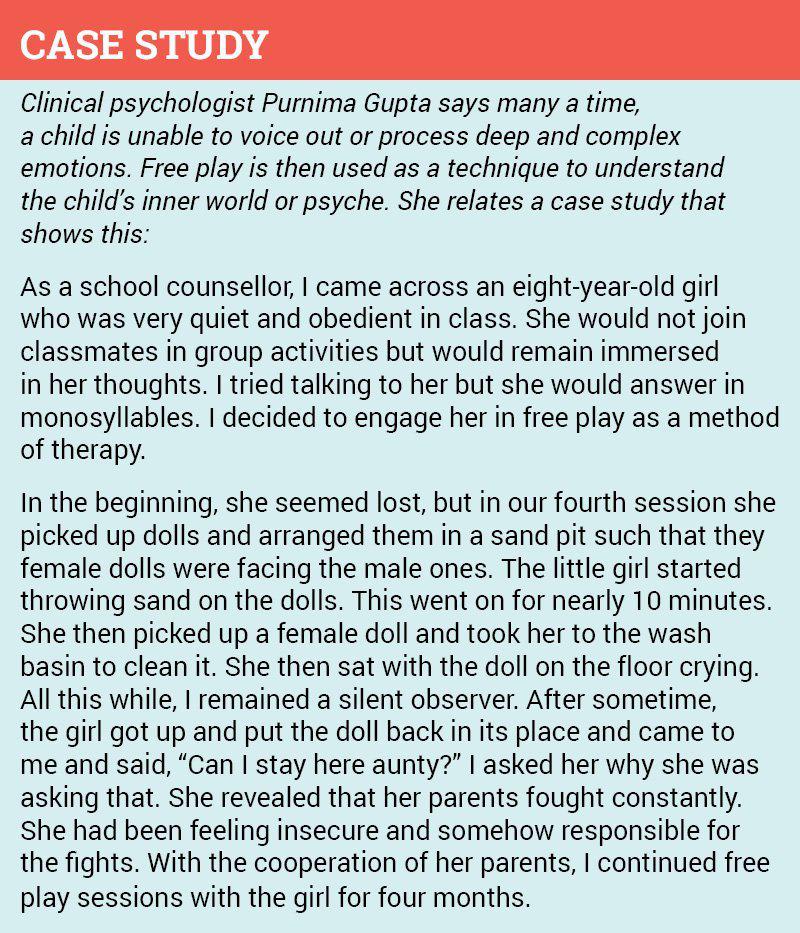
The case study below highlights the use of play therapy. Play therapy utilizes a child’s natural proclivity for free play in the therapeutic setting to uncover the emotions of a child.
Ensuring time for free play
Children do not get sufficient free play these days. The major culprits are the overscheduled lives children lead, lack of access to safe outdoor play spaces, and low play levels in schools.
According to the Real Play Coalitions Value of Play report (2018), 98% of parents believe play helps children reach their full potential. Despite the evidence, play is still undervalued and underprioritized in children's lives. The report brings to light some startling figures:
- 47% of children's time is now focused on structured activities
- One in five children say they are too busy to play
- 20% of children get less than one hour of free play per week
The lack of free play can actually be harmful. Play expert Stuart Brown, after interviewing 6,000 adults about their childhoods, observed that the absence of unstructured, imaginative play can prevent children from growing into happy, well-adjusted adults.
Typical problems and how to fix them so your child enjoys free play
The problem: Academic pressures begin at an early age these days. After homework and tuition classes, where does a child have the time or energy to play?
What you can do: Ensure your child strikes a balance between work and play. Avoid a packed study schedule for him.
The problem: If you are a busy parent in a nuclear family setup you probably manage your child's time by enrolling her in hobby classes and/or sports coaching.
What you can do: You don't need to keep scheduling structured activities. By allowing your child time for free play (and even joining her in it) you're nurturing and supporting her.
The problem: At times, free outdoor play is not safe and with both parents working, there is no adult to supervise such play. Caregivers take the easy way out and allow the child to watch television or urge him to take a nap.
What you can do: Instruct the caregiver to encourage their child to participate in both indoor and outdoor free play.
The problem: The increasing popularity of passive entertainment like television, and other screen-based activities - surfing the internet, playing video games, and interacting with friends on social media, have all reduced the time available for free play.
What you can do: Limit screen time and strictly enforce these limits. Encourage outdoor activities. Go on a walk or ride a cycle with your child. A swing or slide in the backyard will also do the trick of getting her outside the house. Earlier, in less scheduled times, parents would push their children to go play outside with friends each evening.
The problem: Children may need a little help in finding ways to play indoors.
What you can do: For young children, rearrange the furniture to create a play area. Keep art and craft supplies handy. You might want to make that space reader-friendly as well.
The problem: Sometimes, toys and games bought by adults are too structured and have too many instructions.
What you can do: Choose simple toys. Some of the toys you buy for your child should not require him to follow instructions. Your child should be encouraged to use his imagination while playing with them. Such items include blocks, dolls, and art supplies.
Have you seen the exhilaration on the faces of children splashing water on each other on the beach? Or the satisfaction they feel when they build a castle on the dining table by stacking a pack of cards? Ensure your child has enough time to enjoy the sheer joy of free play. Not only will they get to learn about the world around her and build life skills, but she will also grow up to be a happier adult.
In a Nutshell
- Unstructured or free play is important for children's well-being, learning, and development
- It helps in developing creativity, leadership, and group skills
- By allowing children time for free play (and even joining them in it) a parent can be nurturing and supportive
What you can do right away
- Ensure your child's routines is not packed with too many classes and activities
- Choose simple toys for your child that enable free play
- Limit your child's screen time and encourage unstructured outdoor play instead
*Reviewed in 2021




























Comments
Edit
Comment Flag
Cancel Update