
Children With Clean Rooms Get Better Grades And Are Happier. Here's Why.
Leena Ghosh
Are you bothered about the mess in your child's room? Also, does a dip in their academic performance worry you? Well, the two may be more closely related than you think.
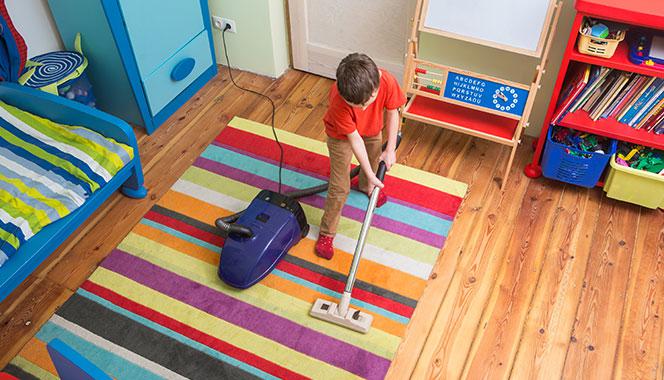
Rohan was always a good student in middle school. He was consistently in the top 10 percent of his class. However, by the time he reached high school, his grades began to drop. Around this time, his mother Lakshmi noticed that he cared less about keeping his room clean. Books were lying everywhere, clothes dumped on the bed, and food items all over his study table.
Rohan's mom decided to take up an issue at a time and encouraged her son to organize his room. She told him to tidy up his room every day at an allotted time. Rohan listened to her and kept his room clutter-free. When the next set of exams came along, he performed well, bringing his grades back to the level they were at previously. Pleasantly surprised, Lakshmi wondered if there was any connection between a cleaner room and better grades.
Why cleaner rooms make for better grades
A study by the Princeton Neuroscience Institute on 'Interactions of top-down and bottom-up mechanisms in human visual cortex' found that cleanliness and good grades are, in fact, related. The study explained that when there's a lot of clutter in your child's room, each object competes for their attention. Thus, it becomes harder for them to fully focus on one particular object, such as their textbook. A clutter-free room will reduce the number of distractions and enhance their focus while studying.
Many parents may think that simply cleaning up their children's rooms would ensure better grades, but it's a little more complex than that. Academic performance depends on several factors including genetic influences, socio-economic background, support from parents, quality of teachers, and inherent motivation to learn. A clean room is just one among many factors.
How clutter harms the family
Clutter is harmful to all family members and simply cleaning your child's room or desk isn't enough. Keeping the rest of the house clutter-free is just as important. Here are just some of the ways clutter hurts you:
- Leads to higher levels of stress
- Encourages taking unhealthy diet and stress-eating
- Triggers respiratory issues, as more stuff, leads to more dust
- Distresses your kids
- Induces anxiety and affects your social life
- Encourages bad spending habits
- Decreases productivity
Children need a certain degree of order and structure, so an overly cluttered house can leave them feeling unsafe and insecure. Having too many things around them all the time can leave them feeling overstimulated. This overstimulation affects their ability to focus and thereby impairs their academic performance. What's more, clutter leaves parents overwhelmed as well. In their bid to clean up the mess, they tend to spend lesser quality time with their kids. The clutter may also leave them feeling emotionally exhausted, so they're unable to focus on their children.
5 ways to raise a clutter-free child
- Be an example: Cleanliness, like charity, begins at home. So, if you want your child to be clean and their room, clutter-free, you must practice what you preach. If they see you cleaning the house and organizing the rooms, they will follow suit.
- Make it a game: For little children, cleaning a room might be a little tedious. So, turn it into a game of 'Who puts all the toys in the basket first?' or 'Who folds all the clothes first?' When not a chore, a basic activity can seem like a lot of fun.
- Give and let go: Teaching your child the importance of donating items to those less fortunate, is an important life skill. Depending on how much you have, organize a donation once every two months. This will also teach your child the importance of valuing their possessions and letting go of things they do not need.
- Assign a place for everything: This will only help you and your child be more organized. When there is a set place for everything, they will know where to put their things once they have stopped using them. Explain to them why it's important to have an assigned place for everything. Also, discuss with them regarding finding a place for new items. This will give them a sense of ownership.
- Own less, be more: Look at all your possessions. How many of these things do you really need? Do you ever buy stuff just for the sake of buying? Give away the things you don't use, reduce the amount of new stuff you buy, and keep your possessions organized to make your home clutter-free. Lesser stuff won't just free up space in your house, but it'll also free up some valuable time in your day.
Growing up in an uncluttered house will also teach your child the importance of staying organized. Children are masters of imitation. So, if your child sees you keeping things neat from a young age, they too will copy this behavior. And ultimately, when they are old enough to have their own room or a small personal space, they will know how to keep it tidy. With minimal clutter, their academic performance will improve. But more importantly, they will be healthier and happier.






















Comments
Simi Ramesh May 17, 2019
Edit
Comment Flag
Cancel Update