
How Parents Can Help Children Finish Homework Without Daily Stress And Arguments
Aarti Arun
author parentcircle author parentcircle author parentcircle author parentcircle author parentcircle author parentcircle
Homework struggles can leave both children and parents exhausted by the end of the day. These practical tips will help your child build better homework habits, become more independent, and approach learning with less stress and more confidence

"Five more minutes," 11-year-old Aarav yells when his mother tries to herd him back home from the playground. It is 6:00 pm sharp. His exasperated mother replies, "Who is going to do all the homework?" Aarav doesn't seem to hear his mother. Five minutes become 10, then 20, and finally, at 6:45 pm, Aarav heads home. He argues with his mother all the way home that he never gets enough time to play and that he hates homework. This happens almost every day. Aarav's mother is not the only parent facing this situation every day.
If our children learn to take some responsibility and do things on their own without repeated reminders, will it not take some weight off our shoulders? There are ways you can encourage your child to tackle homework without the fuss and stress.
Why homework matters for children
Do you often wonder if the everyday battle with the mounds of homework is worth it? You're not alone. But regular homework is, in fact, good for your child. Here's why:
Homework builds learning and life skills
Homework helps your child better understand the concepts learned at school and practise skills at home. It also prepares them for the upcoming lessons.
Homework can encourage responsibility and independence
Regular homework allows your child to work independently and cultivate skills like accountability and self-discipline. Interestingly, a 2017 study by Richard Göllner and colleagues, published in the Journal of Research in Personality, found that children who consistently put effort into their homework tended to become more conscientious over time compared to their peers who did not.
Homework lets your child learn lessons in a relaxed setting without any time constraints. By working on a homework assignment, they can also explore the subject.
Homework helps parents understand their child better
Above all, homework is the best way to know your child's strengths and weaknesses, so that you can guide them accordingly.
So, now that you know the benefits of homework, how can you encourage your champ to finish up homework without complaining?
While homework has its benefits, daily homework battles can still be stressful for many families. Small changes can make homework time much smoother.
Simple ways to make homework easier for your child
Create a calm homework space
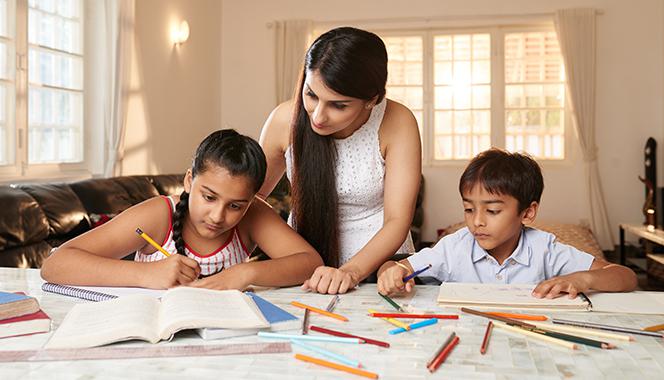
Ask your child to set up a dedicated area with a study table, chair, and stationery. Choose a quiet place away from the distractions of TV or gadgets.
Build a realistic homework routine
Sit down with your child and come up with a plan at the beginning of the school year. Ask questions like:
- When will they do the homework: after playtime or before
- Are early mornings preferable?
- How will the homework schedule fit in with their extracurricular activities?
- What if they trail off the schedule? Is there a backup plan?'
Break homework into smaller steps
When you find that your child is overwhelmed by the quantity of homework, try to break it into smaller portions, with short breaks in between.
Support your child without taking over
If your child is struggling with a concept, try to explain it in simple words. If the concept is too complex, don't hesitate to look it up online. This way, you're also sharing the joy of learning and modelling healthy learning habits.
Encourage effort with appreciation and rewards
Sometimes, all your child needs is some extra motivation to keep going. Appreciate their efforts by rewarding them. For instance, if your child has been consistent with their homework for a month or so, take them out for a day trip or to a restaurant, or do one of their favourite activities.
Work together with teachers when needed
It is the quality of the homework that matters. Ideally, homework should not take more than a couple of hours to finish. More importantly, it should not stress your child out. When in doubt, check with your child's teacher or school, and ask about improving the quality of homework.
What parents should avoid during homework time
In the name of helping our children, we shouldn't take it too far. Here's how to strike that balance:
Guide, instead of rescuing
School assignments are meant for your child to finish, unless the teacher has explicitly asked the parent to contribute. It is not your responsibility to finish their homework so that they can save face in class. Otherwise, they will only get into the habit of waiting for you to rescue them, and it will negatively impact their confidence.
Protect your child’s playtime
You know what all work and no play does to Jack. In the same way, your child needs to play to thrive. Play stretches and exercises their growing limbs, and sharpens their critical thinking and problem-solving skills. So, don't make their entire day about academics; make playtime mandatory.
Stay flexible and calm during setbacks
As with everything, be prepared for hiccups along the way. Don't scold, push, or punish your child for every bump. Homework is just one aspect of your child's academics. Be flexible, stay calm, and gently guide them to try again.
Children are more likely to stay motivated when they feel supported rather than pressured.
Homework habits checklist for parents
- Create a quiet and comfortable homework space for your child
- Build a realistic homework routine with breaks included
- Encourage effort and consistency instead of perfection
- Allow enough time every day for free play and relaxation
- Guide your child without completing work for them
- Stay calm during homework struggles and setbacks
- Reach out to teachers if homework regularly causes stress
- Focus on your child’s confidence and learning, not only marks
Follow these tips and watch your child grow into a responsible and independent person, always keen to learn.
Last updated on: May 27, 2026
























Comments
Edit
Comment Flag
Cancel Update