
Essential life skills: Here is why your child needs to learn the art of waiting
Aruna Raghuram
Waiting is hard, but you can help your child learn to accept the situation and regulate their behavior

“To know how to wait. It is the great secret of success.”
– Joseph de Maistre, French philosopher and writer
Waiting is an integral part of life, whatever our age may be. And it is not easy. Whether it is in a line at school, for their turn while playing, for a treat, or to speak without interrupting, children have to wait in many situations. Generally, young children find it harder to wait than older children or adults. They may get restless and fidgety, whine and cry, or throw tantrums. Some children may keep asking, “How long more?” Others may get into mischief to alleviate boredom. How a child reacts to waiting depends on their age, personality, and how parents handle the situation.
Why children find waiting especially hard
Young children are yet to develop the ability to regulate their behavior when they are expected to wait. As they get older and their cognitive abilities and emotional regulation skills sharpen, they accept the fact that they have to wait in certain situations. Moreover, developing longer attention spans helps them engage in activities that make the wait more interesting.
There are five more reasons why children find it difficult to wait:
- The need for instant gratification is strong
- Young children do not have a well-developed concept of time
- Children tend to be more impulsive
- Very young children, like toddlers, lack an understanding of social norms like queues
- It is boring to wait!
Why is learning to wait important?
Waiting is often unavoidable: “Whether we like it or not, in certain situations waiting is a requirement. Sometimes, waiting is a choice. Whichever the case, it is important for a child to understand that waiting is part of life,” explains Anuradha Kumar, Chennai-based life skills trainer, and educationist.
Waiting involves delayed gratification: Instant gratification leads to short-term rewards that feel good and boost happy hormones like dopamine and endorphins. On the other hand, delayed gratification helps in achieving goals and finding long-term fulfillment.
The benefits of delayed gratification have been demonstrated by the well-known marshmallow experiment. This experiment was conducted in the 1970s by Stanford University on a large number of children, mostly 4- and 5-year-olds. To describe the experiment simply, each child was given a marshmallow and told that if they did not eat it for a while, they would get a second one. There were varied reactions. But some children did succeed in delaying gratification and were rewarded with the second treat.
What is significant are the follow-up studies over 40 years, which have revealed interesting insights. The children who had waited, and were given the second marshmallow, had done better in life. They had performed better academically, responded well to stress, and had better-developed social skills. They were also less likely to have problems of obesity or substance abuse. All this proves that the ability to delay gratification is critical for success in life.
Waiting builds life skills: “One of the important life skills children acquire while waiting is the recognition that they are part of a system and have to follow certain social norms, like waiting in queues or waiting for their turn to speak,” says Ms. Kumar.
STRATEGIES FOR PARENTS
How can waiting be made easier for children? How can the tedium be made fun? The process of learning to wait is related to two basic concepts—an understanding of time and the benefits of delayed gratification.
In general, parents could try planning and schedule carefully so that the wait is reduced. Another tip is to look for practice situations. Your child will become familiar with waiting and be better equipped to deal with real-world waiting situations. Here are some other simple strategies that parents can follow.
TODDLERS
“In the case of toddlers, patience on the part of the parents and preparedness is crucial. Parents have to remain patient and avoid getting irritated with their child. Second, they need to be prepared with distractions in the form of food, rhymes, and toys,” advises Ms. Kumar.
Tailor your own expectations: Expecting your toddler to sit through a two-hour movie is an unreasonable expectation. However, you can ask your child to wait for five minutes to be taken to the park. Begin small. Start with getting your toddler to wait for a couple of minutes and increase the time gradually.
Use reinforcements: Be prepared, and carry your child’s favorite snacks and drinks, books, or toys. Appreciate your child’s good behavior during the waiting period.
Make use of codes: For instance, show them the “wait” sign (using your hand to make a stop sign) conveying the need to wait. You can use some other signal too. Ruffle your child’s hair, or give them a hug explaining that you will listen to them as soon as you have finished with your work call.
Give a choice: Ask your child whether they would like to sing a nursery rhyme or be told a story during a long road trip. Toddlers respond well when they feel they have some sense of control over the situation.
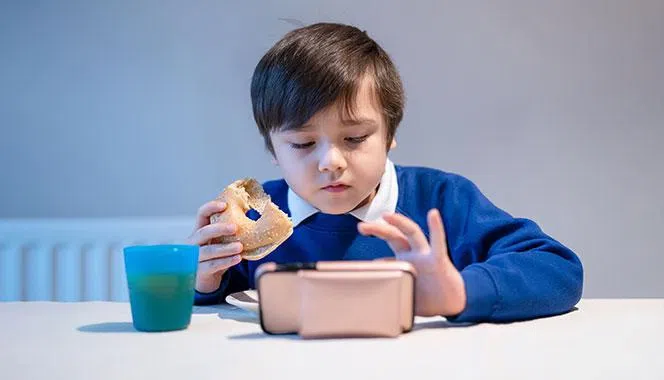
Avoid using technology to distract: Often, parents may give their children a phone or tablet to keep them engaged. This is harmful for the impact it has on their eyesight and cognitive development.
Plan a surprise: Keep a bag of toys, especially for waiting occasions. These toys should be kept hidden from your child so that they excite your child when you bring them out during a waiting situation.
PRESCHOOLERS
This age group may think that when a parent says, “Wait,” they actually mean “No.” That’s why it is important to use a pleasant tone of voice and a smile when you tell your preschooler to wait.
Show understanding: Your child will handle the situation much better if you show them that you understand that waiting is hard. Also, help them become aware of what exactly they are feeling. Is it boredom, restlessness, or frustration? This is the first step toward emotional regulation.
Explain the concept of time: “Because waiting involves uncertainty and time is an abstract concept, children find it hard to deal with waiting. Make waiting for a tangible and concrete experience for children. Instead of telling your child, ‘We’ll get there in some time’ or ‘Ten minutes more,’ show them your watch and explain what 10 minutes is. And how when the minute hand reaches a particular point they will arrive at their destination,” suggests Ms. Kumar.
You could also ask your child to count or sing songs to get a sense of the time they have to wait. Explain that after, say, they count to 100, they can join the conversation. Or that after they have sung two songs, they will get the treatment they have been waiting for eagerly.
Make use of timers: You can use digital timers or a simple stopwatch or hourglass to give your child a sense of time. These will help your child figure out how long a minute or five minutes is, and so on.
Show picture cards: These cards can depict the various activities that will happen in sequence, giving your child an idea of what to expect in a certain situation. This technique could be used for a visit to a supermarket.
Distractions are helpful: For example, if a road trip is getting tedious, storytelling or singing can bring relief. You can also play ‘Simon says’ or tell jokes by turn. If you are stuck in traffic, make a game of counting all the blue cars around you or the number of two-wheelers/buses. This will also help your child learn a valuable lesson—how to entertain themselves on their own and deal with boredom.
Playing games: This is a good way for children to learn to take turns with parents or peers. Whether it is an outdoor game like hide-and-seek or cricket, or an indoor board or card game, picking up turn-taking skills is important for cooperative play and, later in life, for successful collaborations.
PRIMARY SCHOOLCHILDREN
“Children get restless when there is less clarity on why they are waiting,” says Ms. Kumar. It is important to explain the reason why waiting is necessary even for younger children, but particularly so for young primary schoolchildren. They have the capacity to listen and understand. The knowledge of why they are waiting will strongly influence how they behave during the waiting period.
Keep them pleasantly engaged: While they are waiting with you, play games or give them puzzles to solve. Encourage them to take a book along which they can read while waiting. If you are at a restaurant waiting for the food to arrive, you can play ‘Tic-tac-toe’ on a napkin or the ‘Build a story’ game. If you are waiting in a queue, a game of ‘20 Questions’ would make the wait easier. A Rubik’s cube, fidget spinner, or travel-size board games are some things you can carry on a flight when your child is restless, uncomfortable and impatient to get to their destination.
Use calendars and planners: Encourage your child to fill in all routine activities in a daily calendar and important events in a weekly planner. A calendar will tell them how many days they have to wait for their upcoming birthday, for instance.
Get children involved: While your child is waiting for dinner to be ready, you can give them age-appropriate tasks like wiping the table or laying out the plates and glasses. You can even involve them in some cooking.
“How easy or difficult it is for children to wait also depends on how involved they are in the whole process of waiting,” explains Ms. Kumar. For instance, if you are on a road trip with your primary schooler, you could involve them in figuring out the sights worth seeing on the way, the restaurants you could take a break at, and so on.
Be part of the process: First, parents have to be role models. If a parent expresses irritation and frustration while waiting, how can they expect their child not to do the same? Second, parents have to be part of the process of waiting, says Ms. Kumar. If a parent is reading a book, their child is bound to get irritable. The child needs attention from, and engagement with, her parent to make waiting easier.
Practice mindfulness: Calm, relaxed environments make waiting easier. Toward this end, parents could practice mindfulness with their children during the waiting period.
PARENT SPEAK When my children were younger and asked for something, I never immediately gave them what they wanted. I asked them to explain why they wanted it. I wanted them to come up with a good reason and purpose. So, they had to wait to get what they wanted. This practice continues till today. Before exposing my children to a situation where waiting was involved, I would explain to them why we needed to go and what to expect. Also, I would take things along to keep my children engaged. Since my daughter loved reading, I would pack a few books. For my son, I would carry crayons and sheets of paper where he could scribble. One significant point is that parents need to be present and available when they are waiting with their children. They could chat with their children and listen to them. If the parent is busy on their phone checking messages and emails while waiting with their preschooler, who can blame the child for getting restless and cranky? – Aarthi Prabhakaran, Chennai-based consultant and mother of two |
Teaching your young child to wait is an important life skill. Waiting teaches your child another important life skill—that others have needs too and your child’s needs may not be necessarily fulfilled first. Routine activities can help hone children’s waiting skills. All they need is your guidance and lots of encouragement along the way!

























Comments
Edit
Comment Flag
Cancel Update