
What Is Child Sexual Abuse (CSA)? A Basic Guide for Indian Parents to Child Safety - Part 1
Mustafa Attarwala
ParentCircle Author................................................
Every parent wants their child to feel safe and heard. Learn why children may find it hard to speak up about sexual abuse, the changes that may signal distress, and how your care and support can make a difference. Read on to know what to look out for
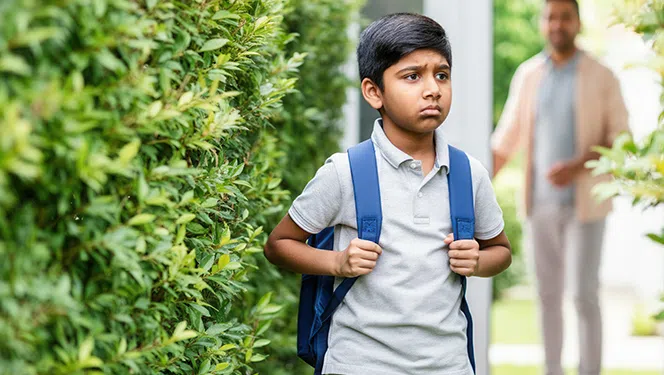
Picture a recent family gathering. The hall was teeming with relatives and friends, filled with a lavish spread of food, music, and laughter. The atmosphere was warm and cheerful.
Your 8-year-old was happily playing with cousins when a relative everyone else adores came up to greet you and reached out to hug your child. Suddenly, your child recoiled and refused to go near them.
It was an awkward moment. You felt embarrassed. You worried that the relative might have felt disrespected.
But pause. Think.
Why did your child refuse the hug? Maybe they were not comfortable with it at that moment. Maybe something happened before that made them wary of this person. Or they just didn't want to, and that's reason enough. There could be many explanations, but as parents, the right thing to do is not to force it.
We often normalize relatives cuddling or kissing our children despite their visible discomfort, without realizing that in doing so, we're disrespecting the child's feelings and boundaries. Allowing your child to take the lead shows them their feelings matter.
Remember, a child’s body belongs to the child. Imagine if someone you know well hugged you without asking. How would that feel? Just as adults have the right to say no to touch, a child's refusal expresses their comfort level and deserves the same respect.
Not every touch is unsafe. But not every touch is safe either, and not every child is comfortable being hugged or kissed, even by people they know.
| Respecting a child's “no” doesn’t mean that every refusal signals danger. It means letting children know that their comfort and boundaries matter. |
So how do we recognize the difference, and how do we protect our children from Child Sexual Abuse (CSA)?
As a parent, the first step toward prevention is understanding what CSA actually is so you know how to respond with confidence when something feels off.
So, what is CSA?
Child Sexual Abuse (CSA) is when a child is involved in sexual activity that they do not fully understand, cannot give informed consent to, or that violates laws protecting children. It can involve physical contact or no physical contact. An adult or another child can perpetrate CSA, particularly where there is a difference in age, power, authority, or understanding.
In simple terms, CSA happens when someone involves a child in sexual activity that the child cannot fully understand or consent to, or uses their age, power, authority, or trust to involve the child in sexual activity.
Let's break this down further:
‘A child is involved in sexual activity.' This includes both contact and non-contact behaviors. It could be showing a child sexual images or videos, sexually talking to them, taking inappropriate photos, or touching them for sexual pleasure.
'Do not fully understand.' The person may use their age, authority, relationship with the child, threats, gifts, tricks, or emotional pressure to involve the child in sexual activity. The child may not even understand that what is happening is inappropriate or abusive.
‘A difference in age, power, authority, or understanding.' This refers to someone bigger, older, stronger, in a position of authority, or someone the child trusts and looks up to. This person doesn't have to be an adult; it could easily be another child, like an older cousin or a senior at school.
'Physical contact or no physical contact.' The pressure may be direct and obvious, such as physically forcing or threatening a child. But it can also be indirect and subtle—tricking, bribing, guilt-tripping, manipulating, or dressing it up as a ‘secret game.’ A relative might coerce a child by saying, "If you really love me, you'll do this." Children may also be groomed or gradually manipulated into situations they do not understand.
It is also important to know that CSA falls into two broad categories:
- Contact abuse: The offender touches the child inappropriately, or makes the child touch them.
- Non-contact abuse: No touch is involved, but it includes showing a child sexual images, exposing private parts, or watching them bathe or undress.
CSA isn't limited to the physical world, either.
Online sexual abuse: This happens through apps, games, social media, or any digital space where children connect with others. It can include grooming, sexual conversations, forcing or blackmailing a child into sharing intimate images or sexual content, or involving a child in other sexual activity online.
How common is sexual abuse?
Child sexual abuse is more common than most people realize, and many incidents may never be reported.
According to National Crime Records Bureau (NCRB) data cited by Arpan, 67,694 cases were registered under the Protection of Children from Sexual Offences (POCSO) Act in 2023. That works out to about 185 registered cases a day.
These figures reflect only cases reported to authorities, but they cannot reveal how many incidents remain unreported.
Experts widely agree the real numbers are much higher, since most incidents go unreported due to stigma, silence, or fear.
Are strangers the only perpetrators of CSA?
Not at all. Both strangers and people we know can sexually abuse children. In fact, National Crime Records Bureau (NCRB) data shows that 97% of offenders in POCSO cases registered in 2023 were known to the victim.
That means CSA is not limited to strangers. The person may be a neighbor, a relative, a domestic help, a family friend, or even someone within the immediate family.
That’s exactly why the ‘stranger danger’ lesson most of us grew up with isn't enough on its own.
So why is it usually someone we trust?
Because that trust can give the offender easy access to the child and help the abuse continue in secrecy, since they're the last person anyone would suspect. Some offenders may deliberately build or misuse a child's trust to gain access or prevent the child from speaking up.
This is precisely why it is so important to believe and respect your child’s feelings and discomfort, even when it involves someone the whole family trusts. When your child doesn't want to hug someone, that refusal isn't bad manners. It's a boundary. And honoring it teaches them that their comfort matters more than anyone else's approval.
Most children stay safer when the adults around them are aware, informed, and paying attention. The goal isn't to raise children in fear, but to equip parents, teachers, and caregivers to recognize the signs, keep communication open, and know exactly what to do if something feels wrong.
Awareness is where it begins
CSA is an uncomfortable subject, but looking away doesn't make it any less real. Awareness can truly make a difference because a parent who understands what CSA looks like can act early, ask the right questions, and create a home where a child feels safe enough to speak up.
| CSA is a reality. But it is also preventable, and that prevention starts with informed, attentive adults. |
What parents can do
Notice changes in your child’s behavior without jumping to conclusions.
Listen calmly if your child shares a worry or experience.
Reassure your child that they are not to blame.
Seek professional support if you are concerned about your child’s safety or well-being.
In Part 2, we'll look at the signs and symptoms that could indicate that a child is experiencing distress or sexual abuse, and how parents can respond without jumping to conclusions.
Meanwhile, you can explore Arpan's free collection of resources for parents and teachers to deepen your understanding and learn practical ways to help keep children safe.
Mustafa Attarwala is part of the Arpan Communications team, where he contributes to communication initiatives and campaigns focused on child sexual abuse prevention and awareness.
Reviewed by Dr. Manjeer Mukherjee, a sociologist with 18+ years in the development sector, specializing in gender, health, violence, and child sexual abuse. She holds a PhD in Sociology from Jawaharlal Nehru University, New Delhi, with research on kinship and reproductive technologies. Her work spans gender, children, sexuality, medicine, technology, and abuse.
Published: October 21, 2026


























Comments
Edit
Comment Flag
Cancel Update