
7 Easy Ways To Make Your Kids Love Learning
Arun Sharma
While teaching helps children learn, does it make kids love learning? Read on to know how to make your child love reading.

Perhaps, no other generation of children has been under as much pressure to learn as the present one. In fact, some parents want their babies to begin learning while they are still in the womb, by reading books to them!
Often, we pressurise our children to make them learn. But the question we should ask ourself is, "Is this the right way? Am I inculcating a love for learning in my child?"
The answers to this question can be found in numerous research studies. A study by Bonawitz and colleagues found that, 'Pedagogy promotes efficient learning but at a cost: children are less likely to perform potentially irrelevant actions but also less likely to discover novel information'.
Similarly, Lorna Collier opines, "Too often, research shows, children lose that spark. Their interest in learning and desire to perform wanes, so that by high school, a significant number have checked out, viewing school as boring and frustrating and the content as irrelevant to their lives - with worrisome implications for their futures."
While teaching helps your child learn, does it foster a love for learning? Read on to know how you can encourage your child to love learning.
So, how can we encourage our kids love learning? How can we mould our children into kids who love learning intact? You may find the answers to these question in these seven tips.
1. Introduce an element of fun: Children feel motivated to do things they find interesting. So, introduce an element of fun or a bit of humour to arouse your child's curiosity and motivate her. This can even encourage her to attempt learning on her own.
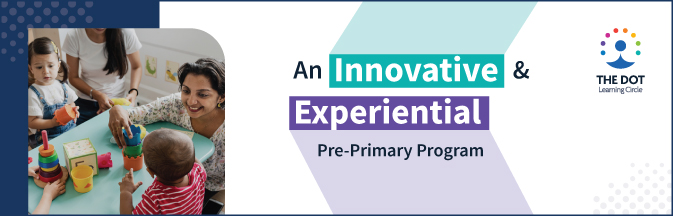
2. Try to provide hands-on experiences: Lack of time and resources force most parents to push their child to learn by reading books or watching videos. And, after a while, the child no longer finds learning interesting. So, as much as possible, provide your child with the opportunity to learn through hands-on experiences. For example, if you want your child to learn about fruits and vegetables, you can take her to the nearby supermarket, or a farmer's market, where she can touch and feel them.
3. Encourage asking questions: Children learn most when they are encouraged to think and ask questions. So, when you give your child an activity to do or discuss something with him, encourage him to think and ask questions. You can model this by asking a few questions yourself, and your child will understand soon.
4. Instil the urge for research: Your child's curiosity can make her ask you an endless number of questions. And, you may not know the answer to quite a few of them. During such situations, admit that you don't know the answer but that both of you can find it out together. Show your child how to search for answers on the Internet or in books so. Later, he can follow your steps and carry out his own research to find answers.
5. Praise the effort and don't criticise: Most children are sincere with putting in effort, without thinking about the result. So, when your child works hard to accomplish a difficult task, praise his efforts, even if the results are not up to the expectations. This will make him more willing to take on a challenge the next time he faces one. Criticising him for failing in his efforts will discourage him from attempting to perform tasks.
6. Point out progress: When you give your child a task to do which is complex for her age, help her break it down into smaller parts. Explain to her why such an approach is useful. And, when she gets down to doing the task, point out the progress she has made after completing each part. Not only will this make her feel happy, but also motivate and encourage her.
7. Instil enthusiasm: Talk with your child and try to find out what his interests are, and speak with him on those topics. This is sure to draw an enthusiastic response from your child. For example, if your child loves space science, tell him about the exciting things that astronauts do or the interesting developments taking place. But, while doing so, use age-appropriate language and simplify the concepts.
While you encourage your kid to love learning and learn more, keep your expectations within reasonable limits. Also, keep in mind that your child's learning ability depends on his age and maturity. So, focus on your child's strength, shower him with love and affection, say a few words of encouragement, and soon you will find how much your little one loves to learn.
Hope you liked this article. To get expert tips and read interesting articles on a wide variety of parenting topics, subscribe now to our magazine.
Looking for fun ways to keep your preschooler engaged at home during the pandemic? Check out Little Learners at Home, a home learning programme specifically designed for 3 to 5 year olds by our team of experts.
































Comments
Edit
Comment Flag
Cancel Update