
Building A Healthy Teacher-Student Relationship To Boost Your Child’s Learning And Success
Saakshi Kapoor Kumar
author parentcircle author parentcircle author parentcircle author parentcircle author parentcircle author parentcircle author parentcircle author parentcircle author parentcircle
A strong teacher-student bond can make a world of difference in your child’s academic progress and personal growth. Discover ways to foster your child's relationship with their teachers and help them not just learn, but thrive
Note: This article draws on child development principles, classroom experiences from The Dot Learning Circle, and educational research highlighting the importance of positive teacher-student relationships in children's learning, emotional wellbeing, and school success.
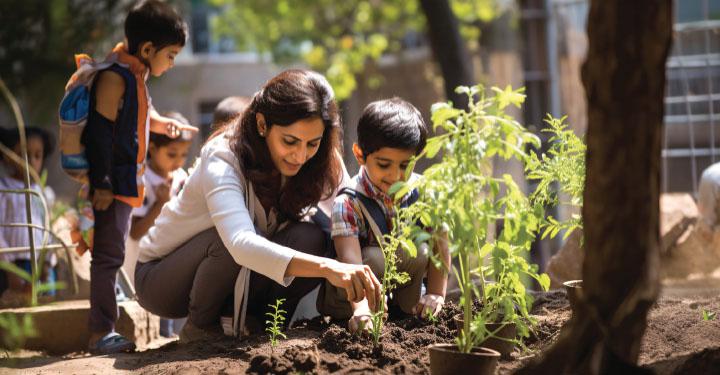
When children enter formal school, they discover a whole new world. And in this new world, they encounter, for the very first time, a very special person—their teacher. If school were a movie, the superhero for the little ones is always their teacher.
School doesn’t just provide a space for children to learn and play; it is also a space where transformational teacher-student relationships are built. The reason these relationships are transformational is that they significantly define the experience of both the children and the teachers.
How a positive classroom environment benefits your child
A real-life example will explain this clearly. Geeta (name changed) was working as a teacher at a school for over 5–6 years. In 2022, her school partnered with The Dot Learning Circle. In June 2022, during the intensive first training workshop with Geeta’s school, she talked about a few challenges she was facing:
- Children were often distracted in the classroom
- She was unsure of how much learning they were assimilating
- Lessons were delayed, and she was struggling to maintain the pace of the curriculum
- As children were not speaking much during lessons, she felt they were bored
- Behavioral issues in some children
At the end of each school day, Geeta would go home, not feeling too well. She wasn’t looking forward to coming back to school the next day either. There were learning gaps and disruptive behaviors in the classroom. Geeta wanted us to help her “control” the children.
How a strong teacher-student relationship helps children
However, we offered her slightly different advice and strategy, encouraging her to look at the situation differently. We urged her to shift her mindset and asked her, “What if you could connect with the children instead?” The entire group of 40 teachers present in that room was visibly confused and taken aback. We went on to talk to the teachers about how they could:
Create a safe space for learning
A healthy teacher-student relationship helps children recognize the school and the classroom as a safe and supportive environment. A child’s mind is only prepared to learn in a physically and emotionally safe space.
Build confidence and resilience
When children find that they can trust their teacher, and as a result, their school environment, they are more likely to try new things, make mistakes and learn from them, and build the confidence to face all kinds of challenges at school.
Make learning joyful
Learning becomes joyful when children know their teacher likes, understands, and believes in them. And when teachers too feel that the children like them. All in all, it is a win-win for both the teacher and the children.
Why teacher-student relationships matter for learning and success
When we went back for a reflection session, the results of our consistent work with the teachers showed up in Geeta’s classroom. Just three months into their first academic year with The Dot Learning Circle, Geeta reported delightful changes. The children were more settled, they were more comfortable in class, and they were also learning at a much faster pace. They were able to understand and remember concepts better and were speaking a lot more in the classroom.
Improves classroom participation
However, the most notable and poignant change Geeta mentioned was how she had developed a special and strong bond with her students. She said, “Every morning is a gift because the children come and hug me, talk to me, and share such a special relationship with me. I feel calmer, less anxious, and I’m having so much fun now!”
The link between trust and academic motivation
As the relationship between Geeta and her students strengthened, the following positive results became evident:
- The learning and engagement levels of the children improved
- Daily lessons went off much more smoothly
- There were almost negligible curriculum delays
- The children were talking, sharing, and asking more questions
But most importantly, both Geeta and her students began to enjoy school every day. The classroom became a warm, vibrant, and welcoming space for everyone.
When parents are choosing their child’s first school, a general tendency is to look for a school that has a good reputation, slick infrastructure, proven results in the higher classes, etc.
However, often overlooked and underestimated is the quality of teachers and how they view the teacher-student relationship. Do they emphasize training the teachers so as to empower and enable them to create a healthy bond with their students? Because we know from Geetha's experience that the warm and trusting connection between teacher and student can be like a secret ingredient that makes a dish flawless!
The changing role of teachers
Encouraging respect and open communication
In our country, the teacher-student relationship has always held a special place. We have all grown up hearing stories about the revered guru-shishya relationship of Dronacharya and Arjun or Chanakya and Chandragupta Maurya. At the heart of this relationship lies a deep sense of respect and trust. The gurus were firm and set clear expectations. They also encouraged their shishyas to ask questions, clarify, and learn from mistakes.
Over the years, there has been a paradigm shift in this relationship. In the not-too-distant past, children were assumed to be passive receivers in their learning journey. But today, we know that’s not the case.
Children, even the little ones, are now considered to be active participants in their academic life. Most parents and teachers will testify that they, too, get to learn a lot from children in the pre-primary years. Hence, there’s a shift in the teacher-student relationship.
Today, the teacher is no more a figure of authority, but rather a catalyst or facilitator in the child’s learning and growth. The child is no more a silent spectator who owes mindless obedience to their teachers. Respect is not commanded; it comes naturally because there is shared trust and warmth.
How parents can support a healthy teacher-student relationship
While the reins of the relationship between your child and their teacher are not in your hands, there are certain simple yet effective strategies you can use to support the relationship from your end.
1. Communicate openly yet mindfully
Work on building an open, collaborative relationship with the teacher. While they have to win your trust, no relationship can work one-sidedly. Introduce yourself to the teacher at the beginning of the year and let them know you intend to build a strong partnership with them to ultimately benefit your child. Remember, your child will only have a healthy relationship with their teacher if you do.
2. Model respect
We all want our children to be respectful toward their teacher, but children don’t do what they’re told. They do what they see and imbibe. Never gossip or make derogatory remarks about your child’s teacher, especially in their presence.
3. Attend workshops and parent-teacher meetings
If your child’s school regularly organizes open houses, workshops, and parent-teacher meetings, make sure you always attend them. This will not just help you stay involved in your child’s learning, but is also a way to show your child’s teacher that you value their time and expertise.
4. Know when to step in
If your child comes home and tells you that their teacher made them upset, avoid reacting immediately. Give it a few days, and if the problem persists, address the issue politely. Fix an appointment to talk to the teacher.
Explain to the teacher what you observe in your child and that you are there to understand what is happening. And that you want to work with the teacher to support your child. Avoid pointing fingers and blaming the teacher. Seek their help and support instead. Allow the teacher and your child to build an organic relationship without meddling at every step.
5. Express gratitude
Together with your child, express gratitude for having a teacher who works tirelessly every day to help your child learn so many things! Teachers’ Day is the perfect day to get your child to make a card or a handmade gift for their teacher. Or help your child write a short and simple poem for their teacher.
It is important to recognize that teachers may feel overwhelmed or unsure of how to manage the changing mindset. They have grown up with a certain understanding, and to navigate in a new environment is not easy. They are superheroes for your children, but we also know that they’re human beings with their challenges and struggles. Let’s humanize our teachers and support them in their noble endeavor.
Pro tip: Encourage your child to thank their teacher regularly—not just on Teachers' Day. A heartfelt note, a handmade card, or a simple "Thank you" can mean far more than an expensive gift.
Parent checklist: Building a strong partnership with your child's teacher
- Introduce yourself early in the school year.
- Communicate respectfully and regularly.
- Attend parent-teacher meetings and workshops.
- Avoid criticising teachers in front of your child.
- Encourage your child to share positive classroom experiences.
- Discuss concerns calmly and privately with the teacher.
- Appreciate your child's teacher throughout the year—not just on Teachers' Day.
Here’s wishing each teacher out there a very Happy Teachers’ Day!
Saakshi Kapoor Kumar is a psychologist, educator, and Head of The Dot Learning Experience, a comprehensive early childhood education ecosystem. She works closely with schools and teachers to create joyful, child-centred learning environments and has extensive experience in teacher training, early childhood education, and social-emotional learning.
Trusted sources:
- National Council of Educational Research and Training – Guidance on joyful, child-centred classrooms and school education.
- National Institute of Mental Health and Neurosciences – Child development and emotional wellbeing resources.
- UNESCO – Research on teacher-student relationships and inclusive learning environments.
This article was featured in the September 7, 2025, edition of The Free Press Journal.
Last updated on: July 10, 2026




























Comments
Edit
Comment Flag
Cancel Update