
4 Types Of Parenting Styles: How Each Style Impacts Child Behavior And Development
 Arundhati Swamy 8 Mins Read
 Arundhati Swamy
Mother, grandmother, family and school counsellor
Discover whether you’re an authoritative, permissive, helicopter, or neglectful parent. Learn how different parenting styles shape a child’s behaviour, confidence, and wellbeing, and find practical insights to build a positive, balanced parenting approach
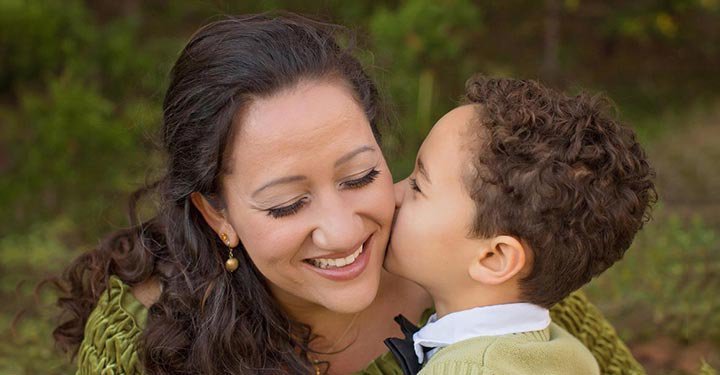
Parenthood is a status anticipated with much excitement and trepidation. When it happens, a mix of instincts, childhood experiences, and ideas acquired from fellow parents, friends, and other sources meld to form a distinctive style of parenting, unique to each parent and family.
As parents, we may respond to our children with affection and encouragement and offer sensitive guidance. Alternatively, we may use commands, negative comments, and threats to ensure that our children meet our expectations. Important influences on our expectations include culture, values, roles, and practices specific to individual family units.
How culture and family shape parenting styles
Parenting through cultures and ages
All societies and cultures expect parents to nurture and protect their children. They prescribe parenting practices appropriate to their contexts. In India, our scriptures and ancient thought leaders set forth parenting precepts and ways to inculcate codes of beliefs and conduct in children.
The nature of the family unit—the joint family or the more recent nuclear family plays an important role in determining how parenting occurs. Although both types of families pursue similar parenting goals, the joint or extended family leans more towards interdependence and cooperative relationships. The nuclear family favors a child-centered style with an emphasis on individuality, character, and uniqueness.
Importantly, the way we raise children changes and evolves over time and as they grow older.
The four main parenting styles recognised by research
Extensive research indicates that parenting styles across cultural contexts fall into four main categories: Authoritarian, Permissive, Neglectful, and Authoritative.
Authoritarian parenting: What it looks like and its outcomes
Authoritarian parenting - Controlled child
The authoritarian or 'do as I say' parent takes complete responsibility for the child, makes all the decisions, and expects the child to be unquestioningly obedient. There is order without freedom. With no scope for reasoning, discussion, or negotiation, rules are made and enforced entirely by the parent.
Probable outcomes
- The child learns to lie to conceal mistakes and avoid punishment.
- Lack of training in making decisions leaves them helpless and vulnerable to peer pressure.
- The ability to appreciate different points of view is compromised. Consequently, the child becomes judgmental, leading to rejection by peers.
- They find it hard to trust their own abilities, as harsh parental criticism lowers self-esteem.
- The frustrations resulting from all this remain suppressed, and the child exhibits passive behavior; alternatively, the frustrations are released through anger outbursts.
- In their teenage years, they become excessively defiant of authority
- The development of critical thinking skills is impaired.
- Other likely fallouts: Lowered academic performance, poor handling of relationships, and long-term personality problems.
Permissive parenting: Signs and impacts on children
Permissive parenting - Indulged child
The permissive parent is over-indulgent, gives in to the child's demands, and protects them from disappointments. They are allowed to bend or break rules without having to face consequences.
Probable outcomes
- Getting their own way all the time leads the child to expect the same treatment from peers, making them unpopular.
- They learn to disrespect and defy rules and have difficulty understanding the seriousness of such offenses.
- Showered with indiscriminate praise, they develop an inflated sense of self.
- Since they are not expected to be responsible for themselves, they learn to blame their parents and others for their lapses.
- They become powerful in manipulating their submissive parents, feel entitled to be waited on, and are excused for shortcomings.
- Deep down, they feel fearful.
Neglectful parenting: How emotional absence affects children
Neglectful parenting - Abandoned child
The neglectful parent ignores responsibility, allowing the child to grow without guidance or care. No rules are established, and no meaningful parent-child relationship exists. The members of the family lead disconnected lives.
Probable outcomes
- The child struggles to survive.
- They become dependent on anyone who shows them some care.
- They become vulnerable to anti-social influences or depression.
- They feel lost and uncared for, leading to feelings of sadness and despair.
- Their weakened emotional health affects their concentration and attentiveness to academics.
Authoritative parenting: A balanced and nurturing approach
Authoritative parenting - Resilient child
The Authoritative Parent appreciates equality rather than hierarchy and promotes mutual respect between parent and child. Rules are explained, and opinions and agreement are obtained through discussion, while the parent retains ultimate authority. There is freedom within limits. The parent uses everyday events as opportunities to teach the child to distinguish between good and bad choices. The child is encouraged to become resilient by reflecting upon and learning from mistakes and to keep trying. The authoritative parent guides and teaches children to survive in the world.
Probable outcomes
- The child learns to be courageous about handling what comes their way.
- They become self-motivated and strive to achieve through interest and effort.
- Their emotional stability is enhanced, enabling better focus on academics and achievement.
- They learn to be assertive, value friendships, and are cooperative, responsible, and caring.
Other parenting styles you may recognise
There are several sub-categories of parenting styles. Here's a bird's-eye view of a few:
Attachment parenting
The parent is highly sensitive to the child's needs. The style includes extended periods of breastfeeding, constant nurturing touches, and letting the child share the parental bed. The concept of attachment has been validated by research studies. However, the practices this style entails remain controversial and have not yet been verified by scientific studies.
Unconditional parenting
The child's needs are met unconditionally. It revolves around 'working with' the child rather than 'doing to' the child. The focus is not on the child's behavior and mistakes, but on loving the child anyway.
Spiritual parenting
It is all about connecting with the innocent spirit of the child and the belief that parents are the only instruments by which a child arrives on the earth. It is about the parent allowing the child to live his life through his intrinsic knowledge about how to be happy. The parents' role is perceived as facilitating that process by understanding the child's simplistic perspective of the world and explaining it to those involved in his growth.
Narcissistic parenting
Parents are obsessively close to their child and feel envious and threatened by the child's growing independence.
Helicopter parenting
The parent is constantly hovering over the child to control, monitor, and protect the child and the child's environment.
Toxic parenting
A parent's negative behavior causes emotional damage and destroys the child's sense of self.
Is one parenting style better than the others?
While studies strongly favor authoritative parenting, those who follow it probably borrow from other styles too, depending upon circumstances, states of mind at given moments, and the issue at hand.
Why positive parenting is the ideal way forward
On the whole, positive parenting is what is to be aimed for. It has its roots in Positive Psychology, pioneered by psychologist Dr. Martin Seligman. It is about bringing out the best in children by helping them use their strengths to master tasks, solve problems, and achieve goals. To practice positive parenting, parents must find their strengths and use these to raise their children.
Choosing the best parenting approach for your child’s future
The wisest way forward is for us, parents, to evaluate our parenting styles in the light of our cultural contexts and choose the approach that best prepares our children for their future.
Discover how parenting styles and academic performance are connected. Read the full article to empower your child’s learning journey today!
Last updated on: November 27, 2025





























Comments
R.Kalaivani Oct 9, 2022
I just loved reading the article.I'm learning new facts about life of parenting.Still long way to go.Thank you for this article.
Arundhati Swamy Oct 12, 2022
@R.Kalaivani
So happy that you are learning and growing as a parent. It took me many years to let go of parenting patterns that did not work for my kids.
Edit
Comment Flag
Cancel Update