
Experts In The Fields Of Cinema, Publishing, Medicine And Education Share Valuable Parenting Tips
Team ParentCircle
Family roles and expectations, loss of a loved one, lifestyle health problems, and children's learning are all scenes that play out in the daily drama of family life. Read what the experts have to say. And if you want more, listen to the complete video interviews.
The kitchen is like a jail!
Jeo Baby, Film Director
After I got married, I decided to share the kitchen work with my wife because I believe in gender equality. Soon I realized that the kitchen grind was grueling. The kitchen is like a jail, an endless job! And a woman's struggle in the kitchen is a universal story. These realizations sparked my imagination and I decided to make a film about the kitchen.
Change has to happen at the grassroots level. We need to include lessons on gender equality in our curriculum. Change also needs to begin at home. Many families believe there are no gender issues in their homes, but there are. They just don't see them. There needs to be a partnership in relationships. Just chipping in to cut veggies or wash vessels won't cut it for there's so much work to be done to get the house running. I know it because I take part in those chores now. To be honest, I haven't had the time to watch our own movie with my wife for there's so much housework to be done with two kids aged 5 and 2. We get time only after 9 p.m. If you're a woman, you have to fight. Your everyday life is like a war and your fight starts at home.
Jeo Baby is an actor, scriptwriter and film director. His film, The Great Indian Kitchen, is a brilliant portrayal of patriarchy and has won rave reviews and appreciation from across the globe. For the complete interview, visit: https://www.youtube.com/watch?v=1dqhQFox3wQ
It's OK to show your vulnerability
Jane De Suza, Author
In my book When the World Went Dark, 9-year-old Swara is dealing with the loss of her grandmother. She has a secret diary. I believe in giving children their privacy, their space. You (parent) can set some guidelines, and then sit back and see where they go with that.
We (parents) have to be vulnerable. They (children) have to see us cry and break down. Children don't have to bury their feelings and emotions. We all deal with grief differently. I think we should not probe. You can say, I miss your grandmother terribly. How do you feel? Many kids just don't express their feelings. They may say, "I'm fine. Can I go down to play?" Let them go. Although the book speaks of death and loss, it has a touch of humor because kids should not be kept in the dark. Bad things happen, but we move on.
We want children to be happy. But we treat them like projects, stuffing them up with knowledge and nonfiction. Give them stories, let them choose. I think we owe that to our kids. Books build character, intelligence, empathy, and an understanding of the world. They give joy to a child.
Jane De Suza is known for her quirky and humorous style of writing. Her 'SuperZero' series for children has been widely appreciated. For the complete interview, visit: https://www.youtube.com/watch?v=TwXrbd7DmrM
Lifestyle changes for better health
Dr. V. Mohan, Diabetes Specialist
Some lifestyle choices may prevent diabetes in children and improve overall health in both adults and children.
First, exercise: Do any physical activity you enjoy. Get up and move after every one hour of sitting.
Second, avoid junk food: Eat lots of fruits and vegetables. Have a glass of milk.
Next, get enough sleep at night: 8 to 10 hours for children and 7 to 9 hours for adults. If you're oversleeping, then there's some underlying health issue that needs to be addressed. It could be because of obesity or breathing difficulties.
Another point to note is bedtime: According to research, adults who go to bed early do best in terms of health, and those who go to bed too late don't fare well. Also, if you're an adult going to bed too early, say by 6 p.m., it could be due to a health issue that needs to be identified and addressed. Lastly, have a good work-life balance. During the pandemic, everything slowed down, and for a year there were fewer heart attacks. There was less pollution. The pandemic taught us what we couldn't learn by ourselves. Going forward, try to adopt some practices our ancestors followed. The world will be a much better place.
Dr. V. Mohan is one of India's leading diabetes specialists. He is the chairman and chief diabetologist at Dr. Mohan's Diabetes Specialities Centre. For the complete interview, visit: https://www.youtube.com/watch?v=8nEdr7YF_A8&t=22s
Building children's confidence, self-identity
Sonali Khan, MD, Sesame Workshop India
Not all children have access to good education. What if you can use television to educate? That's the core idea of the Sesame Street India program. In preschool years, pre-numeracy skills (understanding spatial differences, height, and size) and pre-literacy skills (vocabulary, awareness of sounds and words, storytelling) are important along with creativity, problem-solving, social-emotional learning, and building confidence. And that's what the program focuses on.
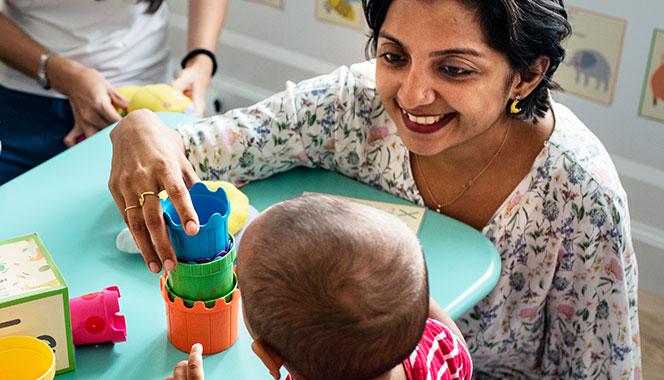
In our outreach program with low-resource families, we show parents how you can take a katori, atta, or whatever is around and have your child learn about shapes, sizes, or colors through play. A parent's role in a child's education has become very important now. Children have not just lost a year of education, but have also forgotten what they had learned the previous year. To fill the gap, the education system will try to push our children. But parents need to be aware of this and manage their aspirations about what success milestones are for a preschooler. Preschool years are not about learning numbers and letters. We need a child who is confident with a strong self-identity, who is able to play.
Because the world we are looking at is very different now. People have to reinvent themselves at 40. So, to be able to quickly adapt and learn new skills later in life, a child's preparation begins now.
Sonali Khan leads the Sesame Workshop's educational mission in India. She is a global advocate for human rights and for ending violence against marginalized communities. For the complete interview, visit: https://www.youtube.com/watch?v=YdIg6e00g4.

















Comments
Edit
Comment Flag
Cancel Update