
How To Prepare For Competitive Entrance Exams: A Look At Some Important Tips
Leena Ghosh
Cracking competitive entrance exams can be tough. But knowledge is power, and we answer all the questions your child may need to know before they appear for one

Competitive exams are an important part of every student's life. The main purpose for conducting most entrance exams is to select the best candidates to fill a limited number of seats or vacancies available at an institution or an organization. During these exams, students are tested for their aptitude, knowledge, and skills required for a particular line of study or work. Performing well in these exams can help students gain admission to prestigious institutions or enable job aspirants to set off on career paths to pursue their dreams. Preparation is the key to acing for these exams. Competitive exam preparation needs a student to focus and have a positive attitude. Here's all your teen needs to know to make a successful preparation strategy to excel in competitive exams.
General tips for competitive entrance exams
1. When should your child start preparing for competitive exams?
The time needed to prepare for a competitive exam depends on the syllabus and the pattern of the exam. Generally, your child should start preparing for a competitive exam at least a year or two before the exam.
2. How should your child prepare for competitive exams?
Your child should start early and follow a study timetable. Make sure they read widely in the initial stages of preparation and make ample notes. Ensure that they familiarise themselves with all the concepts that are included in the syllabus. Let them plan their schedule in such a way that they have enough time to revise the entire syllabus at least twice before the exam. After studying every unit, test their ability to apply theoretical knowledge to practical problems. Most competitive exams focus on three subjects - English, General Knowledge, and Mathematics. So, whether it is general knowledge for competitive exams, English grammar for competitive exams, science for competitive exams, or maths for competitive exams, your child can always test how much they know by taking online tests for competitive exams.
3. How does entrance exam coaching help?
By going for competitive exam coaching, your child will fall into a routine of study. They will get to discuss competitive exam papers and competitive exam materials and familiarise themselves with the patterns of the question papers and the latest trends in the examination. Studying with a peer group helps them stay motivated. Besides covering the syllabus for the exam, the trainers at a coaching center can give your child useful tips for all competitive exams.
4. How can your child prepare for competitive exams without coaching?
Your child can crack these exams with the right approach to self-study. One such method is online preparation for competitive exams. Let them start with knowing the syllabus and collecting all the materials needed for the study. Make them stick to their study schedule and stay focused and motivated throughout the preparation stage. Also, make sure they get sufficient practice in solving questions by enrolling for the mock tests containing competitive exams' questions and answers. This will help build their confidence before they take the actual exam. Let them work on their weaknesses while playing to their strengths.
5. How can your child prepare for the general knowledge questions for competitive exams?
Reading newspapers every day will help your child stay abreast of the latest in current affairs and enhance their knowledge of English for competitive exams. Let them try to cover all sections of the newspaper, such as politics, business, science and technology, and sports, to stay updated on what is happening in each field.
Also, make them refer to magazines and websites like Competition Success Review, General Knowledge Today, Pratiyogita Darpan, and Jaagran Josh, which provide capsules of current affairs for competitive exams, including important dates and abbreviations, news, Indian polity, history, geography, etc. You can also subscribe to Yearbooks released by certain publications to help your child answer competitive exam questions better.
| Get ahead of the curve with our 50 GK questions and answers for your child's learning journey |
Now, let us look at some common competitive exams in India.
After-school competitive exams (to pursue graduate degree programs)
Engineering: JEE Main, JEE Advanced, BITSAT (Birla Institute of Technology and Science Admission Test)
Medical: National Eligibility Cum Entrance Test (NEET), All Indian Institute of Medical Sciences (AIIMS) MBBS
Law: Common Law Admission Test (CLAT), All India Law Entrance Test (AILET)
Humanities and Social Sciences: IIT Madras Humanities and Social Sciences Entrance Examination (HSEE), TISS Bachelors Admission Test (TISS-BAT)
Fashion and Design-related courses: National Institute of Fashion Technology (NIFT) Entrance Test, National Institute of Design Admissions, All India Entrance Examination for Design (AIEED)
Apart from these, various other competitive exams are held in different states of the country.
Special tips
- Preparation for medical entrance exams (NEET)
Your child should give special attention to mastering the concepts of Physics, Chemistry, and Biology while studying for the Class 12 Board exam. For the study material for NEET, let them refer to NCERT textbooks of classes 11 and 12 for a basic understanding of the concepts, and invest in refreshers and question banks from reputed publications for further understanding and practical application.
- Preparation for the hotel management entrance exam
In India, the NCHMCT (National Council for Hotel Management and Catering Technology) JEE is conducted every year to select students for admission to the country's top hotel management colleges. In 2019, the test was begun online. This exam tests the candidates' English language skills, numerical ability, scientific aptitude, reasoning and logical ability, general knowledge, and current affairs awareness. Basic knowledge of physics, chemistry, and maths, as well as health and nutrition, are also essential.
In the GK section of this competitive exam, your child should pay special attention to tourist spots and currencies of different countries.
- Preparation for JEE Advanced and JEE Main
Preparation for JEE can start as early as Class 8. However, two years before the exam should be good enough for your child to start your preparation if they study regularly. Physics, Chemistry, and Mathematics form the core of the syllabus, and equal weightage is given to all three subjects. While referring to NCERT textbooks of Classes 9, 10, 11, and 12 will help your child build a strong theoretical foundation for the subjects, it's important to test their ability to apply these concepts to various higher-level problems. This can be done by referring to various refreshers and question banks.
- Preparation for Common Law Admission Test
Apart from testing logical reasoning, English comprehension skills, Mathematics, and general awareness, the Common Law Admission Test also assesses the candidates' legal aptitude, which is the most significant section of the exam. It is further divided into three parts: Legal Reasoning, Legal Facts, and Legal General Knowledge. To prepare for this section, make your child learn about the history and salient features of the Indian Constitution, Fundamental rights and duties, the Preamble, the Indian Penal Code, the Law of Torts, the functions and hierarchy of the Indian judiciary, terms, and concepts related to courts, etc. Questions in this section will test the ability to derive the correct answer from four choices by reading and understanding the question.
After graduation competitive exams (for higher studies)
- Preparation for MBA entrance exams
There are several MBA entrance exams conducted in India, such as CAT, XAT, GMAT, CMAT, and MAT. Most MBA entrance exams involve three stages - the written test, group discussion, and personal interview. For the Written Test, the focus should be on logical and mathematical reasoning ability, general awareness, verbal ability, data interpretation, and English language skills. For Group Discussion (GD), your child should gather information on the most relevant topics in current affairs as well as common GD topics listed on the Internet. Let them watch a few videos of GD demos online to learn the various positive and negative personality traits that come to the surface during a GD. This will help them form their own strategy. Similarly, let them prepare for the interview by focusing on their strengths, achievements, goals, and weaknesses.
- Preparation for GATE
Preparation for the Graduate Aptitude Test in Engineering (GATE) will require your child to be thorough with the engineering concepts learned at the undergraduate level and be able to apply them to complex problems. The test has been computerized recently and involves both MCQ and non-MCQ-type questions. Your child will need to be thorough with all the formulae and theories in the syllabus to enter the correct answers for the non-MCQ-type questions. Also, let them note that wrong answers in MCQs involve negative markings. Make them practice online English grammar tests for competitive exams, online Maths tests for competitive exams, and online Reasoning tests for competitive exams well ahead of the actual exam. This will help them identify areas where they need practice and how best to get the maximum score.
Job-related exams
- Preparation for bank entrance exams
Common bank job exams in India are the Institute of Banking Personnel Selection (IBPS) exams and the State Bank of India exams. The Bank PO Exam stands for 'Bank Probationary Officer Exam.' Through the Bank PO exam, one can apply for a Managerial Level post offered in several banks in the country. Institute of Banking Personnel Selection or IBPS organises PO exam every year to recruit for managerial posts in 20 Public Sector Banks in India. The syllabus and patterns for the preliminary stages of these exams are similar, while those of the mains may differ. While preparing, one will need to sharpen one's logical reasoning ability, quantitative aptitude, computer awareness, and general awareness and prepare for English grammar questions and answers. Several websites can help one learn Maths tricks for competitive exams to solve numerical problems and mathematical reasoning questions. Regular reading of books, magazines, and newspapers will also help you sail through the English language and GK sections. Also, special attention should be paid to terms and concepts related to banking and finance.
- Preparation for SSC exam
The Staff Selection Commission, set up by the Government of India, holds exams every year to recruit people to Group C and Group B government posts. The SSC exam is primarily divided into two groups - SSC Combined Graduate Level exam (CGL) and Combined Higher Secondary Level Exam (CHSL). They also recruit for Junior Engineer posts (SSC JE) and the Central Police Organisation posts (SSC CPO). The SSC CGL exam has four papers, while SSC CHSL has three. To prepare for SSC CGL and SSC CHSL, candidates must brush up on their reasoning, English language, mathematical, and general knowledge skills. Preparation should begin a year in advance, and one should read newspapers religiously to improve one's English language skills and general knowledge. Candidates can also join SSC maths coaching or go through the competitive exam papers online.
"There are no short cuts to studying for an exam. But, if a student studies with proper planning and discipline, then surely, he can cover the syllabus in time. To study for the exam, students should first analyse the syllabus. Then, they can start preparing by going through standard books. The most important thing is to practice as many sample question papers as possible. If required, they can also join online classes for expert help. Regarding the general awareness section, a student should update his knowledge of current affairs and read newspapers regularly. For the reasoning and aptitude paper, the student must solve sample papers for 1 hour every day."
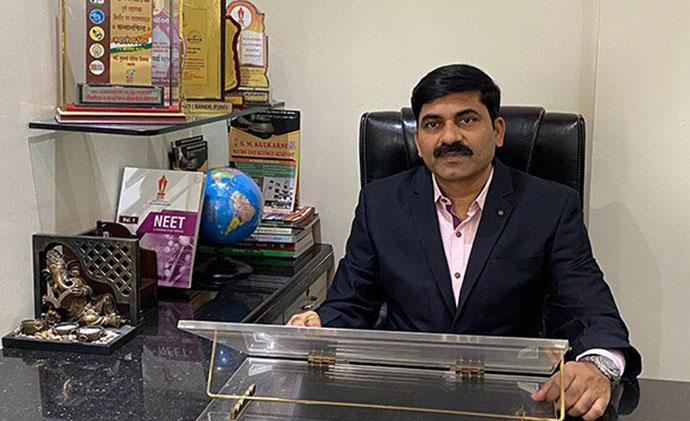
- Akhand Swaroop Pandit, Ex IES Officer,TED Speaker, Educationist and Founder of The catalyst group.
- Preparation for UPSC Mains and UPSC Prelims
Given the huge syllabus and the long period over which the Indian Civil Services Exam (CSE) is held, it is important to have a meticulous and highly focussed approach. Candidates should start preparing at least two years before they take the UPSC Prelims. The Prelims involve objective-type questions and require extensive preparation. UPSC Mains question paper is subjective and requires extensive and intensive reading of the subject material. Preparation for the Mains should start even before the results of the Prelims are out, as there is a gap of only three to four months between the two stages.
Some important exams that are conducted by the UPSC are:
- Civil Services Examination
- Indian Economic Service Examination
- Indian Statistical Service Examination
- National Defence Academy & Naval Academy Examination
- Combined Medical Services Examination
- Engineering Services Examinations
Candidates can visit the UPSC website to get more details.
- Preparation for the Combined Defence Services Exam
The Combined Defence Services Exams (CDSE) organised by the UPSC, has two separate exams. One exam leads to entry to the Indian Military Academy, Naval Academy, or Air Force Academy. To do well in this exam, candidates need to have sound general knowledge, be strong in English grammar, and be good at mathematics (of Class 9 and 10 level). Regular reading of newspapers, referring to good grammar books, and practising all the concepts of school-level mathematics should do the trick. Preparation for the CDS exams can start as early as class 10 and can be taken after completing your graduation or in the final year of your UG degree.
Other job-related exams after graduation
- Exam for different posts through the Reserve Bank of India Services Board
- Exam for Development Officers and others through the National Bank for Agriculture & Rural Development (NABARD)
- Exam for Telecom Officers in the Department of Telecommunications
- Common Entrance Examination for Design (CEED)
- NIFT Entrance Exam
*6 Tips to Help Your Teen Crack Competitive Exams
Cracking competitive exams is mandatory to obtain admission to India's top higher educational institutions. Is your teen getting ready for competitive exams? Worry not; here's how you can help them crack them.
How to prepare for competitive exams
Here are some tips on how you can help your teen prepare for competitive exams.
- Setting a clear goal: Setting definite career goals early in life will help your child reach where they want to go. Help them pick up their goal based on their interest. Do not impose your aspirations on them if they are not interested. Help them explore their strengths and limitations. Once they have set a goal, they will know where to concentrate their efforts. For example, suppose your teen has set for themselves the goal of joining the armed forces, they will focus their efforts towards preparing for those exams meant for a career in defense services. They will not waste their time studying for other exams.
- Devising a study plan: Once your teen has set a goal for themselves, assist them in creating an effective and realistic study plan. Time management is an essential ingredient in the recipe for success. Ensure that your child's study plan outlines the time to be allocated to various aspects of the syllabus and also for regular revision. Get them the study materials on time so they do not waste time waiting for them.
- Working with a daily time table: A clearly laid-out daily plan helps manage time effectively. Encourage your teen to break down their work into time-bound, more straightforward tasks. Demonstrate this skill yourself when carrying out your everyday tasks and inspire them to follow your example. Make sure they have enough breaks in between studies. You can join them in their breaks and do something you both enjoy, such as listening to a song, playing a quick board game, etc.
- Staying motivated: Minor setbacks in your teen's exam plans are normal. Don't let this affect their motivation. Encourage them to go for their best. Give them pep talks when they need it more. Treat them with simple gifts or genuine words of appreciation whenever they achieve their significant target milestones.
- Adopting a healthy lifestyle: A healthy lifestyle and habits go a long way in your child's success. Ensure they have healthy food and proper rest. Keep them away from junk food, late night-outs, and anything that drains their energy and diverts their attention.
- Practising constantly: The adage 'practice makes a man perfect' is quite true. Encourage your child to take as many mock tests as possible before sitting for the exam. This will help them improve their timing, boost their confidence, and enhance their chances of achieving better scores.
While every competitive exam involves a different syllabus and approach, a few common tips for competitive exams include being aware of the question paper pattern, dividing time for each section, sticking to the time limit, and staying positive and motivated throughout the preparation stage as well as during the exam. Invest in relevant books for competitive exams. Systematic preparation, frequent revisions, practice, and self-confidence will ensure the best results.
Finally, as a parent, cheer up your child and let them know that you are proud of their efforts in preparing for the exam. Your support will help them look forward to the future with a lot of hope.
*With inputs from Ram Shankar



























Comments
Edit
Comment Flag
Cancel Update