
How To Bring Up An Autistic Child: We Bring You Some Useful Tips For Parents
Rekha Supriya
author parentcircle author parentcircle author parentcircle author parentcircle author parentcircle author parentcircle
Raising an autistic child is not an easy task. As a mom to an autistic child, am here to share my learning. Also, some tips to ensure quality of life for your autistic child and the entire family
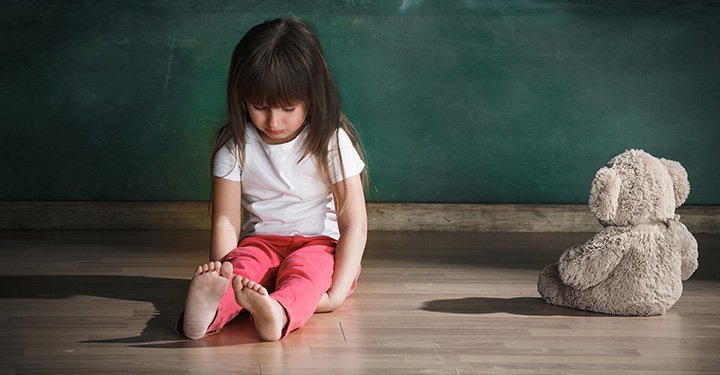
In India, there are approximately 1.4 million people with autism and many are still unidentified or misdiagnosed. Autism affects the person throughout his life, in all aspects of his day-to-day living, and in the way he communicates and relates to other people. It affects each individual differently and in varying degrees. Hence, an accurate diagnosis and an early identification can provide the basis for an effective treatment programme.
The journey of making an autistic child take care of himself is not easy. It begins with the grief and despair of parents when their child is diagnosed as autistic. Autism affects every single member of the family. Simple activities such as visiting places or inviting friends home, turn into nightmares.
Further, siblings of children with autism often bear the brunt; they are often teased by their friends and peers, they lack privacy, their life at home is disrupted and they have a feeling of resentment that the whole focus of the family is always on the autistic child.
Also, parents face grave challenges both in their personal and professional lives. However, many say that seeing the world through the eyes of an autistic person has a very positive and enriching effect on them, making them more tolerant towards others and to life in general.
What is autism?
Autism is a developmental disorder that usually appears during the first three years of a child's life. It has a triad of impairments in the following areas: information processing, communication and socialisation. According to research, a neuronal excess in the prefrontal cortex of the foetal brain results in the development of autism. Autism falls under Pervasive Developmental Disorders which also include Asperger's disorder. It is also four times more prevalent in boys than in girls.
Some similarities and differences between autism and Asperger's disorder are listed below:
The similarities:
In both the disorders, the following is observed: absence of pretend play, intolerance to a change in routine, lack of interest in other people, sensory issues and poor eye contact.
The differences:
In Asperger's disorder, children can have relatively normal early speech. They would, however, tend to interpret language literally, and not understand nuances. The child's motor milestones tend to be normal. Social interactions are slightly better than those with autism. The child can attend mainstream schools, though they may appear odd and talk oddly (in a high-pitched monotonous voice, uttering long monologues, etc.). With age, the child may become more interactive, have little or no common sense and may realize that they are different and be ignored or avoided by their peers and society.
Autistic children may exhibit some of the following traits:
- Resists change
- Have impaired cognitive skills
- Experiences difficulty in expressing needs (pulls adult's hand or points to something, instead of using words)
- Repeats words or phrases instead of normal, responsive language
- Laughs cries and shows distress for reasons not apparent to others
- Prefers to be alone
- Throws tantrums
- Has difficulty mingling with others
- May not want to cuddle or be cuddled
- Is unresponsive to normal teaching methods
- Spins objects randomly
- Has inappropriate attachment to objects
- Is apparently over-sensitive or under-sensitive to pain
- Possesses no real fear of danger
- Shows extreme physical over-activity or under-activity
- Has uneven fine or gross motor skills
- Is not responsive to verbal cues; sometimes appears deaf even though hearing tests are normal
- In some cases, maybe aggressive or shows self-injurious behavior
Also
- Occasionally, shows an efficient performance of functional activities such as learning to operate electronic gadgets, reading logos and balancing skills.
- There is a lot of incidental learning, which is generally not expressed
Bringing up an autistic child
Most autistic children are non-verbal, hence, parents have to provide them with some tools for communication. Parents can either use high-tech devices, computers and the like or low-tech devices like picture charts, letter charts and word charts, to help their children communicate better. The aggression comes down substantially if children are able to communicate their wants and difficulties.
It is crucial to cater for the senses of autistic children for their well-being. For this, occupational therapy needs to be carried out by the parent, and not just by the therapist. When their sensory cravings are satisfied or their needs are met, autistic children become calm and receptive to learning.
The role of the sibling
It is very important for the siblings of autistic children to have normal relationships with friends and peers. It is also important that the sibling help their special brother to be a part of group games that enable the learning of social skills. Autistic children, much like normal children, learn best from their siblings. Further, the autistic child should learn to empathize with the sibling and not look upon the sibling as their ultimate caretaker, like after the parents' demise.
Teaching values
Parents, when faced with the daily challenge of bringing up a special child, forget to teach them certain responsibilities. Autistic children have to be taught the right values and priorities. It may appear that they neither understand nor care, but we must never underestimate their intelligence. From early childhood, irrespective of the level of disability, every child should be taught to face the consequences of their behavior.
Focus on the basic skills
Many autistic children can do puzzles, skate, do mathematical calculations and remember dates better than most. While parents can hone these special skills, they should not lose focus on making the child self-dependent. An all-around development is desirable. It is unfair to make the autistic child dependent on a caretaker for his basic needs.
Tips for parents
- Remain emotionally stable, and educate and seek the co-operation of the extended family and social circle. If you get agitated, you will not be able to help your child.
- Provide a calm and relatively stress-free environment at home where the child is treated as a part, but not the centre of the family.
- Set clear house rules, with one designated 'leader' who enforces them and also modifies them as and when required. This is especially important in a joint family situation.
- Make exercise a part of the daily routine. Regular exercises, ensure that the child gets adequate sleep too.
- Use simple instructions, even as simple as two words.
- Give the child nutritious food to build general immunity. Follow your therapist's advice and avoid food that causes restlessness.
- Convert repetitive behavior patterns into opportunities and make him learn his lessons.
- Understand that no intervention can work in isolation. Parents, teachers, doctors and therapists must work together as a team. Constant 'shopping' for new miraculous cures or remedies for treating autism is doing a grave injustice to the child.
- The effort has to be made every day, in a consistent and committed manner. The change will be gradual but definite.
- Constantly look for new ways to improve the child's situation and use solutions every day based on common sense.
- Minimize drugs used to tackle inappropriate behaviour, as they have long-term health implications. Consider safer alternative therapies.
- Parents are the best teachers. Their time and involvement is a must with the child. Open communication between school staff and parents can lead to better programs and evaluation of a student's progress.
- Pay attention to your savings and financial investments. Special schools and therapies are costly. Even if autistic children can lead independent lives with early and sustained intervention, they may need the assistance of an adult, guardian or sibling in some matters, for which money may be needed.
Finally, as regular people, we have many abilities: the ability to know, to perform simple everyday tasks, to communicate thoughts and feelings, to adapt to situations and circumstances, and to make multiple decisions regarding diet, appearance, education and choice of profession.
We can take care of ourselves and others, and be a part of the community. But to children with autism, these abilities and choices are not available, seriously compromising their quality of life. So, our goal and duty as parents are primarily to improve their quality of life, so that they may lead a full and independent life by having meaningful emotional and social relationships.

























Comments
Edit
Comment Flag
Cancel Update