
Autism Awareness Guide For parents: Early Signs, Diagnosis, And Mindful Parenting Tips
Dr Gita Srikanth
Dr Gita Srikanth is a ParentCircle Author has knowledge about parenting.
The word autism can bring many questions, emotions, and uncertainties. On World Autism Awareness Day, this article by Dr. Gita Srikanth explains the early signs of autism, the diagnostic process, and tips on how to support autistic children with empathy, patience, and mindful parenting
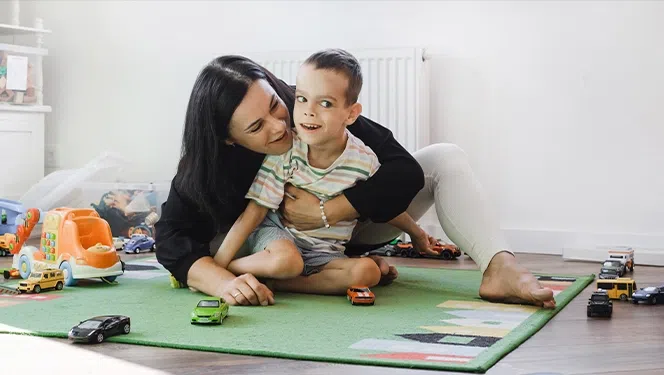
Why autism awareness and support matter for families
April 2 is World Autism Awareness Day, designated so by the United Nations to emphasize the need to work toward improving the quality of life of children and adults with autism. The day focuses on the need to help them lead full lives and be integrated into society. But the reality is this can happen only when there is a concerted effort to support those with autism—a 360-degree support from parents, caregivers, therapists, along with an inclusive mindset among educators and schools, and all of us.
 Dr. Gita Srikanth
What is autism spectrum disorder?
Autism, or autism spectrum disorder (ASD), is a neurodevelopmental condition that “refers to a broad range of conditions characterized by challenges with social skills, repetitive behaviors, speech, and nonverbal communication,” according to Autism Speaks, a US-based autism awareness NGO. A critical finding is that autism manifests in early childhood and can be detected in an infant, which provides ample opportunity for early intervention and the best possible outcomes for the child and family.
Scientific evidence suggests that autism begins in utero, with early signs and indicators beginning to show when a baby is as young as 9 months. It can be diagnosed at 18 months of age. According to the Centers for Disease Control and Prevention (CDC), the prevalence rate of ASD in the US is 1 in 44 children aged 8 years. An extrapolation of this would mean India would have at least 14 million individuals with autism.
Why is autism called a spectrum?
Autism is a spectrum, which means no two children with autism are exactly alike. There can be extremely intelligent, well-articulated, nonverbal, partly verbal individuals with varying degrees of strengths and difficulties in the cognitive, behavioral, and social domains. Then others may have limited verbal abilities and poor communication skills. Yet the common denominator among many autistic children is the comfort they find in sameness, rigidities, and compulsions sometimes.
Early signs of autism parents should watch for
Common early signs seen in toddlers
- Does not turn to look when his/her name is called
- Comes running when a favorite jingle plays on TV
- Does not speak or ask for what they want
- Utters random words while at play
- Absence of joint attention (e.g., not looking at a cat or ball the parent is pointing at)
Why hearing tests are often the first step
Parents may first wonder whether the child can even hear at all. Why does the child not speak, or speak a few words randomly? A hearing test is often the first step in the elimination process.
How autism is diagnosed in young children
Screening tools used for autism diagnosis
A pediatrician can run the M-CHAT-R (Modified Checklist for Autism in Toddlers, Revised) questionnaire to assess a child’s risk for autism at 18 months. It is a screening tool that requires parents to answer questions about their child. If the answers raise red flags, the pediatrician may ask parents to consult a developmental pediatrician or neurologist, and oftentimes a psychiatrist, or an ADOS-2 (Autism Diagnostic Observation Schedule-2) practitioner.
Why parental observations are important
Autism is diagnosed by the absence or presence of certain behaviors, and that makes it hard to pinpoint autism in some cases. Unfortunately, there are no tests or scans that can indicate if a child has autism or not. Parents' observations are critical to a physician's decision-making, along with direct observations, tests, and checklists.
Challenges parents of autistic children often face
Being a parent has its challenges that magnify when you are the parent of a neurodiverse individual. Once a person assumes the role of a parent, then that role takes precedence over every other aspect of life. And at every level, the stressors are different, very much like it is when you are raising a neurotypical child.
Emotional reactions after receiving an autism diagnosis
The conflict begins right from the time of receiving an autism diagnosis. The family struggles to understand what they must do to help their child, the best therapy, how long they need it, what changes to expect from therapy, and, most importantly, how to tell extended family members and friends about it. This is often accompanied by some soul-searching for answers on how their child could get an autism diagnosis when nobody in either family has seen anything like this before, guilt, some blame game, anything that may help them come to terms with the diagnosis. And this cycle of denial, grief, despair, and acceptance is something parents go through over many points in the life of their child.
Some days seem good—the child has eaten, is not crying unreasonably, and is happily playing. On other days, nothing seems to go right. The parents' confidence level also rises and falls through these great and not-so-great days. There is no perfect day nor even a perfect parent.
Concerns about schooling, social life, and the future
As the child grows, other concerns take over:
- There is schooling to consider, and a growing concern for the child's future.
- It is harder to deny the presence of autism from other people; there can be real challenges in going out for social occasions as a family, because the child may have some mannerisms that draw attention, or the parents may not feel confident taking the child out owing to past experiences that may have been unpleasant.
- Then there are other questions parents have to contend with: “What will happen when we are no longer there?” “Where will the young adult live?” “Will my child be capable of caring for themself? “How will they communicate that they are unwell?” The list is endless.
Raising a child with autism can bring unique challenges, but it can also be a deeply meaningful journey. With patience, acceptance, and the right support, parents can help their child thrive.
Mindful parenting tips for parents of autistic children
Parenting a child with autism can feel overwhelming at times. These mindful parenting tips can help you care for your child while also taking care of yourself.
Start with self-care as a parent
As the parent of an autistic child, your first step is self-care, which will help you handle yourself, your child, and the questions of the world. For this, never let go of the fact that there is no perfect day or even a perfect parent. It is possible to be a mindful parent, though!
Walk alongside your child’s unique journey
It begins with walking alongside your child. Mindful parenting comes from an awareness of yourself as a parent and of your child as they are. Oftentimes, you will find yourself under pressure about your child’s development, the lag in school grades, and your child’s inability to mingle with peers. You may end up putting your child and yourself through immense stress to achieve an objective that may not necessarily be what your child wants. It may just be social expectations.
Become your child’s advocate and cheerleader
Be your child’s friend, advocate, and cheerleader. If not you, then who can play that role? As a mindful parent, you will begin to understand that you and your child are two different people, connected by love, not by their ability or inability to do something. You will realize that it is not about normalizing but about empowering your child to lead a fulfilling life.
See the world from your child’s point of view
Stand with your child, and the world will look different. The world looks different from different angles, and it certainly looks different from where you stand and from where your child stands. If you stand by your child and walk with them, there will be so much more happiness, empathy, and peace.
Practice self-compassion as a parent
Be kind to yourself. Every person, including you, the parent of a child on the autism spectrum, deserves self-compassion. Try not to judge yourself, your child, or the people around you. There is always a reason for any behavior, and once you accept that, it becomes easier not to pass judgment on yourself or others.
Try to understand your child’s perspective
When you are stressed, pause and look at your child. Imagine the everyday struggles of your child. They are struggling with communication, with not being able to share their thoughts and feelings, and with living up to social and academic expectations all the time, without a clear understanding of the whys. Your child may often struggle with social rules and demands. Understanding your child’s perspective will help you resolve conflicts in your mind and walk alongside your child.
Take breaks and manage stress calmly
When anger is brewing or there are disagreements with your spouse or other family members, it is best to take a small break from the situation. It literally means leaving the environment physically and letting that moment of anger pass. The 5 p.m. rule is a great rule to follow. If you and your partner agree to review the disagreement at 5 p.m. rather than as it happens, the chances are that the disagreement may actually seem irrelevant to both of you by then.
Remember that both you and your child matter
The idea behind these pointers is that you are an individual too, with your own set of likes and dislikes, wants and needs, dreams and goals. As a parent, you are trying to achieve some of those goals and let go of a few so that you can create a family full of love, bonding, and happiness. So, take the time to be an individual first—an individual who is a parent, compassionate, and aware of the most pressing needs of their child for their future, whether or not dictated by society. The rest will work itself out.
Parenting a child with autism may bring unexpected challenges, but it can also bring deep moments of connection, growth, and understanding. You may sometimes question whether you are doing enough or doing things the right way. On those days, remind yourself that your presence, patience, and love matter more than perfection.
The most important thing to remember: You matter, your child matters.
Parent checklist: Simple ways to support your autistic child and care for yourself
Learn about the early signs of autism and seek professional guidance early
Share detailed observations with doctors during the diagnostic process
Focus on your child’s strengths as well as their challenges
Practice mindful parenting and accept your child as they are
Advocate for inclusive education and supportive environments
Build a support system of therapists, teachers, and caregivers
Take time for your own emotional and physical well-being
Avoid comparing your child with others
Celebrate small milestones and progress
Remember that your love, patience, and understanding make a lasting difference
Dr. Srikanth is the founder and chairperson of WeCAN India, the first Applied Behavior Analysis (ABA) center in Chennai for children with autism.
This article was featured in the March 29, 2026, edition of The Free Press Journal
Last updated on: March 11, 2026

























Comments
Edit
Comment Flag
Cancel Update