
The Cultural And Spiritual Significance Of Water Rituals Across Traditions
Dr Prema Kasturi
Water is such an essential part of our lives and yet we don't realise its importance until it is not available. But why is water inextricably linked to rituals and rites across religions?
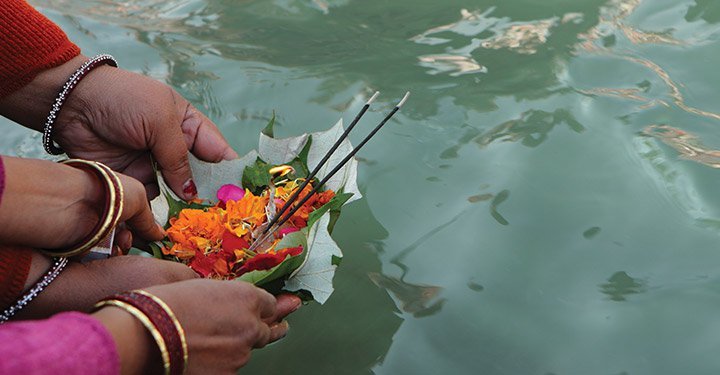
There is no life without water, a fact that societies unanimously acknowledge across the globe. Many ancient civilisations speak of the Great Flood which not only destroyed but also helped humanity to survive. Traditional African religions, Hinduism and Shintoism, (from Japan) continue to venerate water by worshipping water deities. Others accept its intangible purification value beyond the physical. Thus, water is extensively used in ritual purification across cultures.
The heritage of the Hindus
The Rig Veda proclaims:
''These waters are pure and auspicious (which cleanses);
These are the medicines (healers, physical and spiritual) of all; these waters help growth and provide prosperity for all."
Such is the deep significance of water in Bharat.
Hinduism believes that water has spiritual cleansing powers. Water from rivers is considered sacred, but the seven rivers in India namely the Ganga, Yamuna, Saraswathi, Godavari, Narmada, Sindhu, and the Kaveri have been accorded greater sanctity than the others. Holy places located on the banks of rivers (Srirangam), on the coast (Rameswaram, Tiruchendur), and the confluence of rivers (Mukkoodal) carry a special significance where major festivals are celebrated. The waters in these sacred places are considered great equalisers where people of different castes bathe together.
A celebration on the banks of the Kaveri
In Tamil Nadu, on the 18th day of the month of Aadi (July 15 to August 14) fresh water floods the river Kaveri. On this day, known as Aadiperukku, women celebrate a water ritual all along its banks. Mulaipari, the sprouting or germinating of nine grains or navadhanya in a basket or clay pots takes place. From the temple of the local village goddess, a procession begins. Along with the image of the temple deity, women carry the pots with the sprouting grains, to the banks of the river Kaveri. The pots are immersed in the river. The women pray to the goddess for good rains, for the fertility of the soil and for good harvest. This is followed by folk dances (Kummi) and singing.
Gaily dressed women and their families, bring varieties of mixed rice in carts to share with everyone, offer homage to the river and spend the day on its banks.
This festival, in a nutshell, symbolises the belief that water provides fertility to the soil and the human race.
Water deities of mythology
Celtic: Sinaan is the Irish Goddess of the River Shannon. Goddess Sequana is associated with the River Seine in France.
India: Varuna is the God of oceans and aquatic life, the water deity of the seven sacred rivers—the Ganga, Yamuna, Saraswathi, Godavari, Narmada, Sindhu and the Kaveri.
Greek: Poseidon is the God of Seas and Peneus is the God of Rivers.
Africa: The Yoruba River is presided over by Goddess Oshun.
Water rituals in other religions
Buddhism: Water pouring is a must for funerary rites. Water is poured into a bowl placed before a monk and the body. It is allowed to overflow - this signifies water being offered to the departed.
Christianity: All Christian sects have an initiation ritual involving the use of water referred to as Baptism, the symbol of liberation from the Original Sin. Jesus Christ describes himself as the 'Living Water' and that eternal life flows through him.
Islam: Mosque courtyards have a pool of clear water in the centre for ablutions. The faithful are expected to wash before prayers and before touching the Koran, while the dead are also washed before burial.
Judaism: The Torah recommends washing to maintain ritual purity, and water is used for initiation rites in temples.
Shintoism: Shintoism includes veneration of the Kami - the innumerable deities who are a part of natural water sources like springs or geysers. Standing under the waterfalls for ritual washing is considered sacred.
Symbolism of water in daily life
- A dip in the Ganga is believed to wash away sin - it is said the river originates from the feet of Lord Vishnu and flows across the earth through the locks of Lord Siva. Hence the river is considered most sacred. Water from the Ganga is kept in every household for purifying baths on Deepavali, and a sip is given to the dying.
- The poornakumba or kalasa - a brass/ mud/ copper/ silver pot filled with water and decorated on the top with mango leaves surrounding a coconut is a familiar sight in Tamil Nadu. A kalasa is placed after due rituals on all important occasions such as traditional housewarming ceremonies, weddings and special pujas. The seven sacred rivers are invoked and the water inside the kalasa symbolically becomes sacred like nectar. The kalasa represents the blessings of immortality. Revered guests are given an honourable welcome with the kalasa.
- During rituals, along with the chanting of mantras, water is sprinkled over the person to symbolise the purification of the body at the start of religious ceremonies. Likewise, there is a ceremonial sipping of water from the right hand cupped in the shape of a cow's ear, during Sun worship. This signifies the cleansing of the spirit within.
- The holy water we sip in temples is always the abhishekam theertham or water used to bathe the idol.
- When a girl attains puberty, she is given a ceremonial bath with water containing turmeric to bestow auspiciousness.
- Holy baths are given to pregnant women during the Seemantha ritual in the eighth month, with accompanying prayers to ensure a safe delivery and a healthy child.
- Before eating we sprinkle water around our plates or plantain leaves to purify the food. We do the same after eating to prevent insects from coming into the plate left behind.
- After a funeral, head baths are compulsory for attendees. The bath signifies the end of the relationship with the departed. The entire house of the departed soul is washed and sanitised for purity. The underlying reason for the bath is that people should not catch any hidden diseases from the departed one.
- Ashes of the dead are immersed in holy rivers. This is believed to either put an end to rebirth or provide a favourable future birth for the departed.
To conclude, water is a precious gift of nature that creates, nourishes, sustains and regenerates all living things. Symbolically, water relates to the human life span and the crossing over to the realm of eternity. So, to respect and conserve water is our duty.
Dr Prema Kasturi is the co-convener of the Indian National trust for Art and Cultural Heritage (INTACH), Chennai. She has authored several publications on South Indian Heritage.
Connect with us on Facebook | Twitter | Instagram | YouTube



























Comments
Edit
Comment Flag
Cancel Update