
Teach Your Child To Code
Vikas Sharma
Children today are comfortable with digital learning. A knowledge of programming will give them added advantage. We have decoded coding, and suggested ways to equip your child with the skill.

In today's increasingly digital world, coding is coming to be considered the 'new basic' or 'second language.' It is sometimes described as the 21st Century literacy standard, and is increasingly being recognized as a core competency for children and adults alike. Introducing young children to coding not only makes it simpler for them to use technology, but also helps them create technology as they grow and mature. It should be a parental priority to see that children acquire a general understanding of coding, whether or not it is included in the school curriculam.
However, if you do not have an Information Technology background, it could be hard for you to even understand where you must start, to equip your little one with programming skills. But the good news is, coding is not rocket science! Let's begin with an introduction to the basic concepts of this discipline.
What is coding?
Very simply, coding is a way of interacting and communicating with computers in order to build and run apps, websites and video games. It is the 'bridge' that connects billions of people across the globe who use the Internet.
How will coding benefit children?
Coding is a fundamentally creative process. It nurtures originality of expression and demystifies technology. It is a part of almost all industries, and much of our daily life too hinges on its benefits.
Coding hones many life-skills. Here are some of them:
- Logical thinking
- Critical thinking
- Persistence
- Problem-solving skills
- Communication skills
Coding skills will also give your child a competitive advantage while applying for admission to universities, for internships and jobs.
Parental role in helping children learn to code
You don't need to be a great mathematician or a computer geek to teach your child coding. If he can get the hang of gadgets like mobile phones and iPads even before he learns to speak, rest assured he will easily take to coding. All he will need is a gentle push in the right direction. In fact, chances are, your child will start coding even before you yourself begin to understand the subject. So take the plunge right away, learn with your child.
There are a number of apps, books, games, and tools through which parents can build their own knowledge as well as encourage children even as young as three years of age to explore and strengthen skills that allow them to dream and translate their dreams into technology.
To begin with, you could
- Read simple books and articles on coding
- Talk to an expert to understand the fundamental concepts
- Enroll in a basic course in coding
- Install an app that allows you to practice coding, and use your free time to get proficient
- Buy a coding toy that will help you and your child bond and have fun learning together.
Getting a grounding in coding:
Once you have gained a basic understanding of the concepts of coding, you can begin familiarizing your child with them. And the best thing is, you don't need a computer to do this. There are umpteen playthings influenced by the Montessori method which can be used to instill the underlying principles of computational thinking in young minds. The idea of using symbols, the importance of following a step-by-step process in achieving a particular goal, and the practice of establishing patterns in a given scenario can all be taught with simple objects available at home or in the market. Here are some ideas for you to try out:
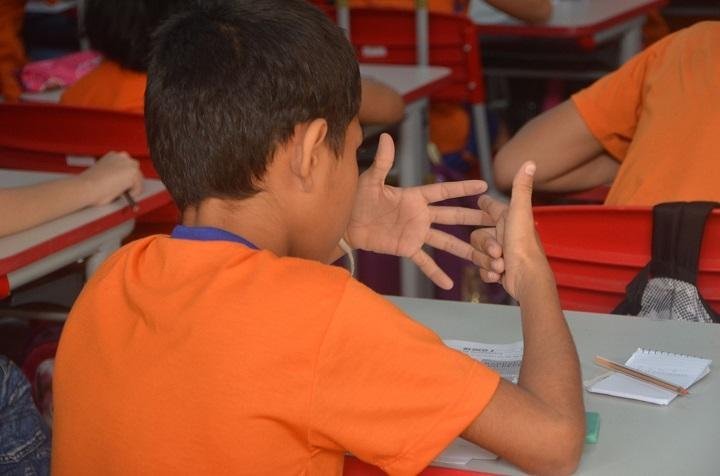
- Use different coloured beads to represent the letters in your primary schooler's name, and make a bracelet 'spelling' out the name in a 'secret' way.
- The class time-table of a preteen can be used as a worksheet. There will usually be patterns in the way various subjects are distributed through the week. Teach her to find the pattern, and then see how many other patterns she can spot in other scenarios.
- An older child can be helped to understand sequential thinking by getting him to play a game of treasure hunt, where one clue leads to another.
There are also board and block games you can buy that teach binary coding fundamentals and other basics.
Taking it to the next level:
Once the child is comfortable with the concepts of coding, you can proceed to on-screen learning. And no, it won't turn her into a computer addict if you handle her correctly.
There are many computer games available which teach programming in a fun way. They are tailored to suit different age-groups, so pick the one best suited to your child.
Exposing your child to STEM (Science, Technology, Engineering and Mathematics) education while he is still young will bolster his coding skills.
Equipping your child with coding skills is like giving him a magic wand to open up new horizons in practically every field of knowledge and also in day-to-day life. With this proficiency, he will have an edge in today's over-competitive world.
Of course, not every child will want to write codes for a living when she grows up, but all children will benefit from a knowledge of the process. They will not end up as passive users of technology.
Vikas Sharma is the Vice President at Eupheus Learning.
Hope you liked this article. To get expert tips and read interesting articles on a wide variety of parenting topics, subscribe now to our magazine.
























Comments
Edit
Comment Flag
Cancel Update