
Top 50 Creative, Fun And Engaging Gadget-Free Activities For Kids Of All Ages
Dr Priscilla J S Selvaraj
Keep kids happily engaged without screens! Discover 50 creative, fun, and easy gadget-free activities that spark imagination and family bonding
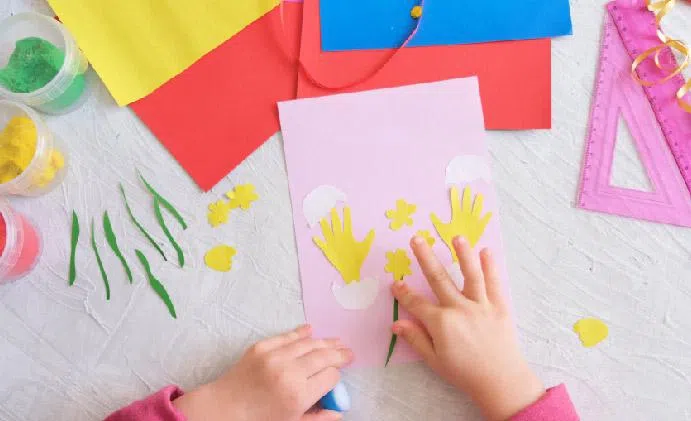
"A child's mind is not a container to be filled but rather a fire to be kindled." - Dorothea Brande
To kindle that fire, parents can encourage their children to engage in creative activities. These hands-on activities can spark children's imagination, keep their creative juices flowing, and help them develop critical thinking skills.
Creative art and craft activities for preschoolers (ages 3 - 5 years)
1. Splashes and blotches
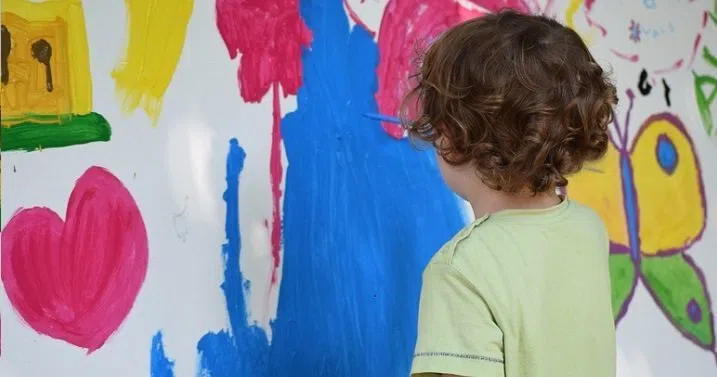
Assign a corner of your home for this activity. It can get messy, so be prepared to clean up. Also, ensure that there aren't too many objects or pieces of furniture in this area. Mix different paint colors in a palette or different bowls. Spread a few sheets of paper on the floor. Let your little one splash paint on the sheets using their hands or tiny bowls. They can even use old toothbrushes to create a spray painting. If you don't mind, you can even let your child splash paint on a section of the wall.
2. Collage
This is a unique, creative art activity for preschoolers. Have your child make a collage using anything they choose: pictures, parts of pictures, photographs, fabric pieces, beads, and so on. Frame their work and display it in your home. Also, as a family, try making a big collage together.
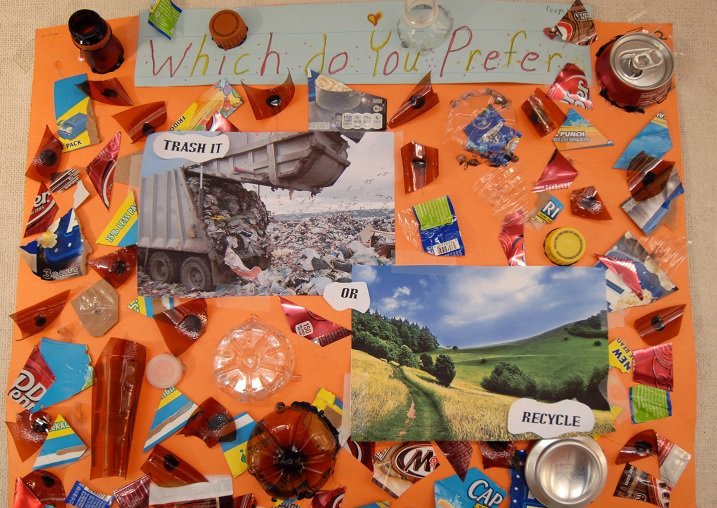
3. Art from waste
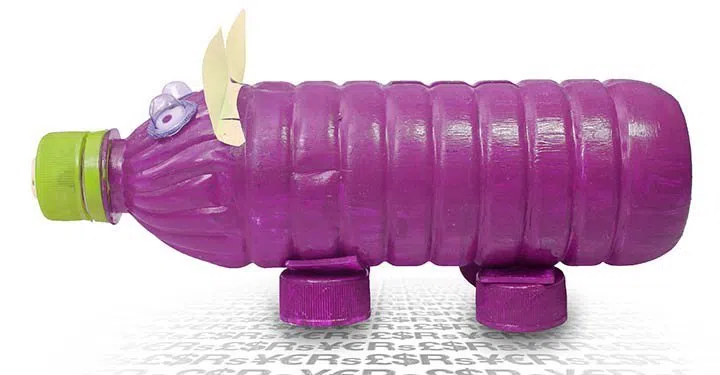
Encourage your child to reuse and recycle to create works of art. Cardboard pieces, empty cartons, plastic bottles, lids, CDs; practically anything can be used for your little one's craftwork.
4. Pebble and shell art
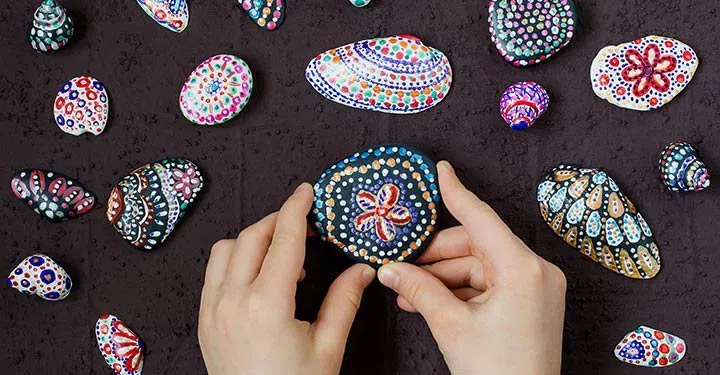
Wondering what to do with all those pebbles and shells your child picked up on beach visits? Let them turn them into pieces of art. They can paint them, dip them in glitter paint, stick them to cardboard to create shapes and patterns, and so on.
5. Mold and sculpt
Using playdough or slightly damp flour, your little one can mold as many shapes and images as they want to. They can even try to sculpt figures from pieces of chalk. Playdough art and craft activities help develop fine motor skills and hand-eye coordination.
6. Marbling and printing
Simple techniques such as these can keep your little one's creativity going. They can add different paint colors to a bowl of water and dip little cards, shells, and pebbles to create the marbling effect. For printing, they can dip cut portions of vegetables, such as ladyfinger or capsicum, in paint and press them onto the chart paper.
7. Doodles and scribbles
Encourage your child to draw freely. Even doodling and scribbling should do. Let them explore their creative ideas on paper, allowing shapes to form from squiggles.
8. Comic strips
Your child could have fun making their own comic strips (a change from watching cartoon shows)! Begin with simple, familiar stories, taking one scene at a time. First, help them draw and color the pictures. Then, they can paste them in sequence in an album or chart. Next, they can draw speech bubbles above the pictures. Finally, they can write the dialogue inside the bubbles.
9. Art and craft
Your child can make many things, such as greeting cards, bookmarks, pencil holders, and stationery pouches. Try using chart paper, cardboard, empty boxes, plastic containers, and waste materials.
10. Jiggety-jig

Creative movement activities for preschoolers help improve body control, coordination, and balance. So, play some music and, together with your little one, do a little jig. Create your own movements and steps as you sway to the music and dance away merrily.
Creative art and craft activities for primary schoolers (ages 6 - 9 years)
11. Shadow play

Play this game with the lights off and candles or tiny lamps lit up. Place candles in proper holders and keep your child safe. Form different shapes with your fists and fingers and let their shadows be cast on the wall. Let your child guess the shape by looking at the shadow. For example, you can form a dog, a cat, a crow, a crocodile. You can even use props for extra effect.
12. Puppetry
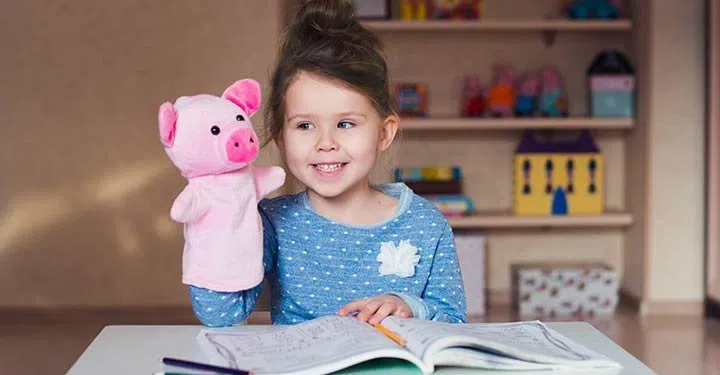
Stick puppets, glove puppets, finger puppets... the list is endless. Arrange a get-together with your child's friends or cousins. Provide the necessary materials and help them create puppets. Work around a theme: a fairy tale, a social message, or a favorite story. Once done, they can stage a puppet show for the family or neighbors.
13. Catwalk
Let your child do a catwalk down the hallway, imitating how animals and birds walk. They can strut like a rooster, leap like a frog, crawl like a turtle, and jump like a monkey. Let them be as imaginative as they can.
14. Twitter chit-chat
This is a great group activity for little ones. They can imitate bird calls and chit-chat in 'bird language.' Be prepared to hear tweets, chirps, and caws! Then ask them to translate the conversations.
15. Cloud kaleidoscope

Ask your child to observe the clouds and describe as many patterns as they can. One cloud may look like a dinosaur, another, a little bunny, and yet another like a funny old man. Let your child's imagination go wandering among the clouds.
16. Keepsakes
Choose a theme and help your child collect pictures from old magazines. Then let them stick the pictures in an album or scrapbook. Not just pictures, but even leaves, shells, and other collectibles can go into the album. Their albums can serve as keepsakes or gifts.
17. Role-play
Creative thinking activities for primary school students help them learn how to innovate. Invite their friends and give them different situations to play: a conversation between an astronaut and an alien, a favorite cartoon character interviewing a sportsperson, an interaction between Batman and Superman. Let the children suggest characters and scenarios.
18. Fancy dress
For birthday parties and other family get-togethers, this can be a good creative outlet for your child. Plan the character they will play and help them get the costume and props ready. Everyone ican dress up to suit a theme or wear masks. Others will have to guess who it is.
19. Music time
This is a very simple, creative idea for kindergarten students. Whether it is kitchen utensils or the writing desk, your child can use anything to belt out a tune. Give them a pair of ladles or spoons; they can tap them rhythmically on an object to create music!
20. Gardening
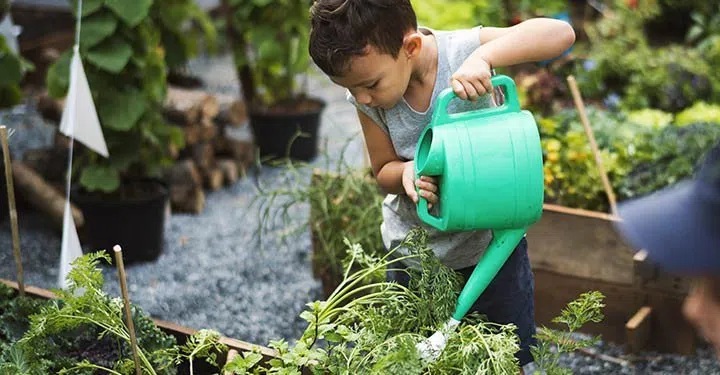
Maintaining a flowerpot on a windowsill, caring for a patch in the backyard, hanging pots on the balcony, growing plants in a bottle, setting up a terrarium, growing bonsai plants; the list of gardening activities can be endless. Let your child enjoy being close to nature while expressing their creativity.
21. Walkie-Talkie
This can be for physical exercise as well as for observing and thinking. When you go on a walk with your child, encourage them to ask you about what they notice. Remember, curiosity is the first step to unleashing creativity.
22. Assembly challenge
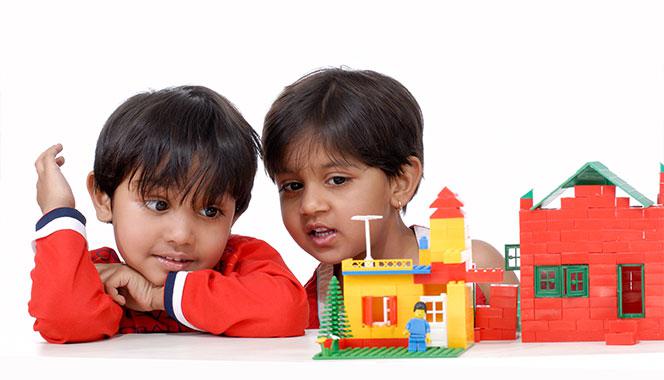
Choose toys that can be dismantled and put together. After dismantling them, encourage your child to find creative ways of putting them back together. Be prepared to see weird and funny-looking toys!
23. Make-believe play
Engage in pretend play with your child by imagining you are out on the beach, on a shopping spree, and so on. Take on roles and enact the scenes. Then swap the roles for more fun.
24. Origami
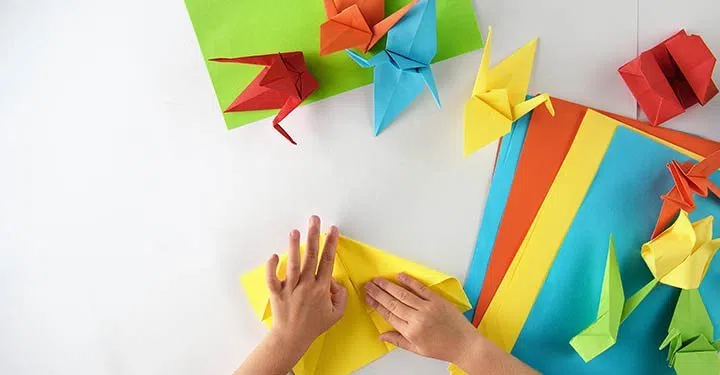
This creative craft idea can turn into a unique hobby for your child. Use origami paper. For variety, use different colors to create birds, animals, and objects. Paper folding can strengthen finger muscles and improve dexterity.
25. Flower arrangement
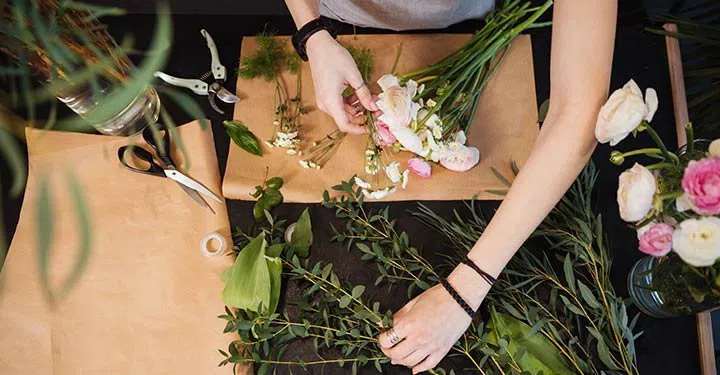
This creative thinking activity encourages imagination and self-expression. With a bunch of flowers and vases, your child can indulge in home decor. If you can get fresh flowers, that'll be wonderful (even more if from your own garden); wildflowers and small fallen branches, or artificial flowers and greenery will also do. Let your child experiment with floral arrangements.
"Imagination is everything. It is the preview of life's coming attractions." - Albert Einstein
Creative activities for preteens and teens (ages 10-18 years)
26. Spin-a-yarn
An ideal group activity for flights of fantasy. Write different words on slips of paper and shuffle them up. Children take turns, pick a slip, and read the word. They must then build a story using that word. For example, if the word is 'alien', the child could weave a story about an alien. A variation could be spinning a story based on a key character, such as 'the White Rabbit' from 'Alice in Wonderland', 'Hermione Granger' from 'The Harry Potter series', or 'Aslan' from 'The Chronicles of Narnia'. Whoever keeps spinning the story non-stop wins.
27. Stunning murals
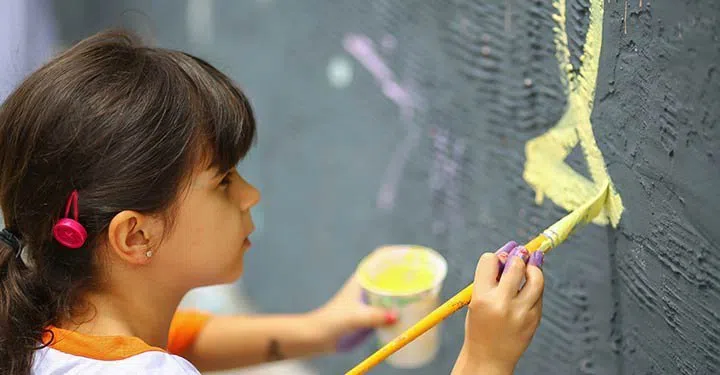
What better way to vent creatively than painting on a wall? Set aside a portion of a wall. Let your teen choose the mural technique they want to use: stenciling, sponging, stippling, glazing, and so on. Get them brushes and paint. Let them show their creativity through a stunning mural. Of course, you may need to help them prep (clean the wall to remove dirt or stains; scrape off paint if required; apply a coat of primer). Remember to seal the mural with varnish or polish once done. This would be an ideal activity when you are painting or renovating your house.
28. Jingle all the way
With television commercials constantly screaming for attention, why not encourage your teen to come up with jingles for different products or even concepts? This can be a group activity when friends or relatives come over.
29. Wordsmith
Let your preteen come up with catchy slogans for important days and weeks such as 'World Environment Day', 'Say No to Plastic Week', etc. Let them create witty and thought-provoking slogans and display them on your residential campus noticeboard.
30. If I were a ...
Ask your teen to imagine being someone or something and write down their thoughts. "If I were a butterfly...," "If I were a smartphone...." These topics can be interesting takeoff points for your child's dreams.
31. Wordsworth
Good old poems can always be a great outlet for creativity. Choose topics from day-to-day happenings, simple household objects, or personal experiences, and ask your preteen to pen poems. Take care not to restrict their style. They can even go for free verse.
32. DIY time
Have your child do innovative DIY projects and let them spend their time creatively. Provide DIY kits such as a terrarium kit, a cell phone case kit, a gift pouch kit, and glass painting.
33. Mimic away
Your teen can get creative with their voice by trying out mimicry. They can attempt to copy the voice of famous personalities, the cries and calls of various animals and birds, or even the sounds of vehicles. By varying rhythm, tone, pitch, and volume, and adopting proper voice modulation and intonation, they can entertain family and friends during get-togethers.
34. Pantomime
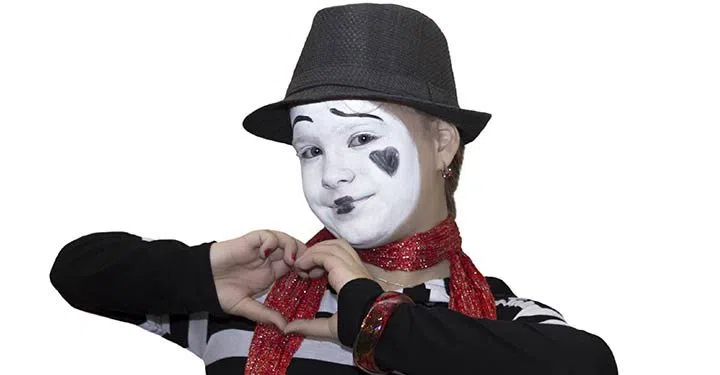
Perfect for school club activities, family parties, and weekends with friends, pantomime can serve as healthy entertainment. With their peers, your preteen can put on a pantomime act on a theme of their choice: Shakespeare's plays, social and civic awareness skits, funny scenes, and so on. Because this form of presentation uses facial expressions and gestures to express emotions, it can help develop your child's expressive abilities.
35. Super chef
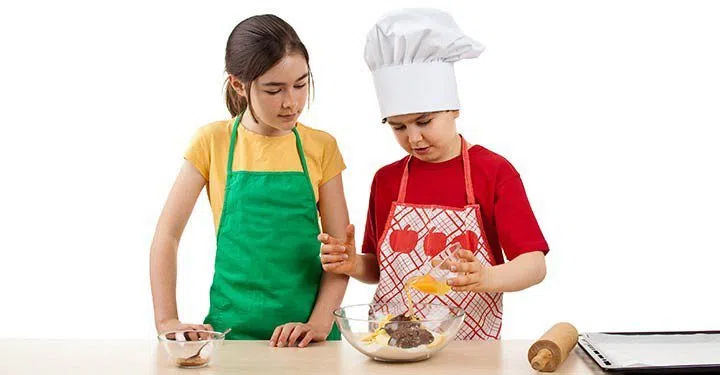
Where else can creativity be more evident than in the kitchen? Let your teen choose what they want to try: cooking, baking, grilling. They can either invent their own recipes or follow a recipe with a twist (for example, peanut butter and coconut noodles, fruit, and nut dosa). Not just in cooking, but even in presenting the food and laying the table, your teen can display their creative skills.
36. Ooh...la...la
Is your child good at singing? Why not ask them to try writing lyrics and set them to a tune too? For added fun, they can write songs about the family, the neighbourhood, their school. Remind them to be respectful
37. Dear diary
Encourage your teen to jot down their thoughts in a journal. Teach them to observe everyday happenings around them and record their thoughts and emotions. Apart from being cathartic, diary writing can get their creative juices flowing.
38. The orator
Writing and practicing speeches and debating help your child hone their oral communication skills. Start with speech and debating sessions at home and gradually expand the audience to extended family, neighbours, and finally, school. Enroll them in literary clubs, elocution and oratorical competitions, moot courts, and other engaging activities where they can fine-tune their speaking skills.
39. Gardening
Gardening can be a relaxing and fulfilling hobby. A tiny patch in your backyard, a few pots on the balcony or terrace, or even a few indoor plants are enough. Allow them to arrange the plants in hanging pots, step gardens, clusters, or in different parts of the house.
40. Read and be merry
So, your child is a bookworm? And you're wondering how to satiate their hunger for books, books, and even more books. School and public libraries, reading circles, and clubs can all prove helpful. Of course, you can also gift them books on special days so they can build their own little library, a comforting place to go to.
41. Through the lens
If Alice went through the looking-glass to Wonderland, your child can work magic through a camera lens. A proper camera (not the phone camera) would be ideal. They can photograph anything that interests them and design their own album. You can even enroll them in a photography course or a photographers' club.
42. Storyboarding
Encourage them to arrange photographs to create serious or fun stories. Photos they take at family parties, community activities, and on nature walks can provide enough scope for creative stories.
43. Short storytelling
Challenge your teen to make up stories using just 6 words. The stories must make sense and can be humorous, factual, or mysterious. It teaches how high-impact words and conciseness let the listener imagine what is unsaid.
44. Sketch and shade
A simple pencil can help self-expression. Get them to do simple pencil sketches and shade them. They can also try thematic sketches to create an album.
45. Wield a brush
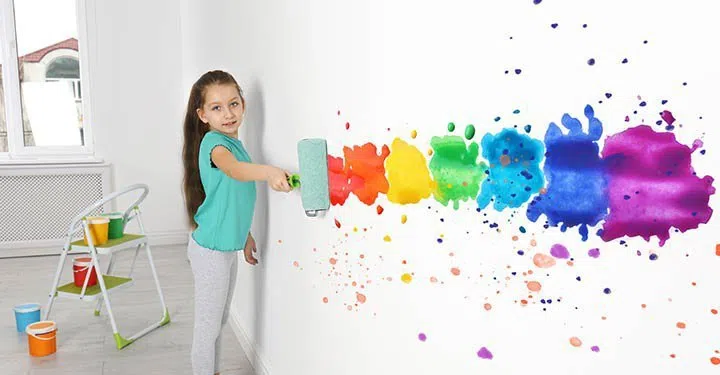
Set up an easel, lay out a palette, open paint bottles, and get your young artist to play with colors. Painting can keep them engaged for hours. Whether on paper, chart, glass, or fabric, or using water, poster, or oil colors, painting can be a healthy pastime. This creative activity can also be a family affair, with each family member painting a portion of the scenery or an event.
46. Fruit and veg art
Art isn’t just for an easel; it can be created on a platter too. Get your preteen to carve and sculpt fruits and vegetables into various shapes and figurines. They can serve as decorative salads and fruit dishes.
47. Community newsletter
Let your teen and their friends in the neighborhood get together to produce a pictorial newsletter using physical photographs, sketches, and their imagination. This can be done once a month, with the young reporters filing news, events, and happenings in their locality, along with other interesting snippets.
48. Mel-o-drama:
Get your child to put on the director's hat and write the script, direct a family play. This can be a fun, creative task to engage in with siblings, cousins, and young aunts and uncles involved in acting, set design, and lighting.
49. Event management
Allow your teen to plan and manage family or community events such as birthday bashes, moonlight dinners, farewell parties, or musical evenings. Involve them in every aspect of the event: the guest list, menu, program flow, compering. A fun way to build interpersonal and organizing skills.
50. Order...Order
Setting their desk or room in order can, in itself, be a creative exercise for your teen. They can even rearrange the furniture in creative ways. And, once done, they can go about fitting out their room aesthetically by recycling waste products.
Last updated on: October 22, 2026
The Dot art and creative program for kindergarten encourages children to use their five senses to explore and discover art in nature. The sensory activities stimulate the cognitive and creative areas of the brain used for art exploration and art appreciation exercises.
























Comments
Edit
Comment Flag
Cancel Update