
#RaisingBoys: 3 different men, 3 unique experiences of growing up as a boy in India
Ashwin Dewan
What does it mean to grow up as a boy?
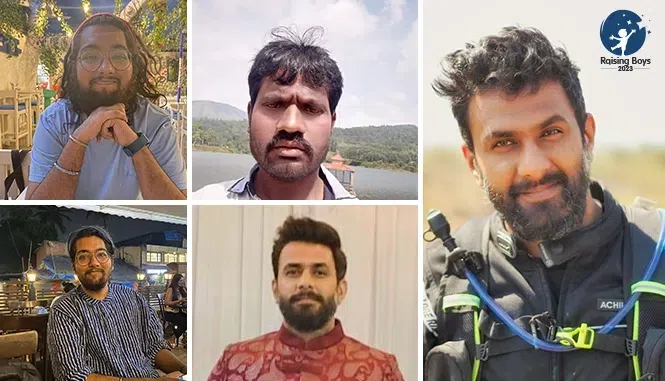
Life for a boy is no bed of roses! On the one hand it may seem growing up as a boy in a country like India has multiple advantages, but on the other hand it comes with many disadvantages. A boy is mocked for showing emotions that are considered “unmanly,” has to take up the mantle of the breadwinner of the house from a certain age, and from time to time has to deal with age-old statements like ‘mard ko dard nahi hota (men don’t feel pain).’
As part of our #RaisingBoys campaign, we bring you three different stories of men sharing their experiences of what it meant growing up as a boy in our country. From having to work at a call center to support one’s education to working at a garage at the tender age of 12 years to growing up hearing toxic masculinity phrases, these stories reveal the truth about growing up as a boy.
Hiraj Laljani, 27, lives in Mumbai, and works at PETA India as a PR professional. Read about his experiences of growing up as a boy.
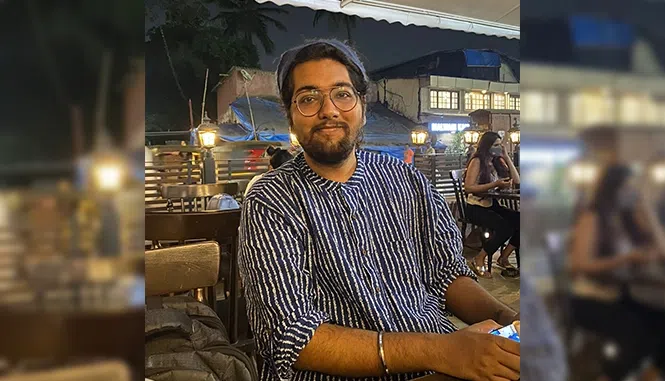
As the youngest of three siblings, tell us about your journey growing up as a boy in a household that included a girl as well.
Having an elder sister helped me understand the issues that women go through. I was closer in age to my elder sister than to my elder brother. We were the best of friends and shared many things between us. The insights that I gained by being her friend helped me learn more about feminism and made me more conscious about how I treat women. My parents never discriminated between us, and that was always a plus. I heard from my friends over time that at their homes the daughters had lesser freedom than the sons, but in my family, we three were treated equally.
Do you feel that boys are expected to follow certain rules set by family or society while growing up?
Yes, and many kids follow them blindly because of peer influence. You’ll see boys playing sports like cricket, basketball, or football, but they’ll police the one who wants to learn ballet. When boys smoke, drink, or use swear words, it’s taken lightly, because the ‘boys are just being boys,’ and such statements often encourage these behaviors among young boys. Peers and society play a very important role in shaping young minds.
Do you feel that boys are taught to become their family’s breadwinners early on? Is this fair?
Due to poor financial conditions, my elder brother had to leave his education midway and start working to support our father. If my brother had the opportunity to study further and pursue his dream, he would have had a better career. My father followed a similar path when he was young—he left his education midway to support his father and the entire family.
This was apparently the norm in our family, which, thankfully, I broke. I wouldn’t have been where I am today if I hadn’t fought tooth and nail for my education. I worked in a call center to support my education, like many people my age did. I am glad I chose that path, but this is not the story of all men, as many men like my brother had to give up their studies and dreams early on, because it was expected of them to go out and start earning.
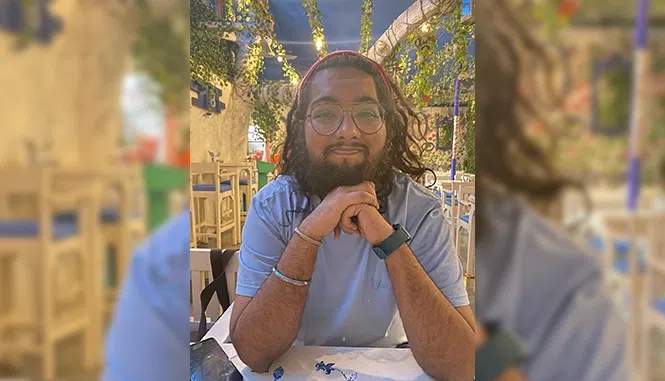
‘Pushpa, I hate tears …’ Friendly journalists would quote this famous movie dialogue to me when I was on the verge of crying for my story. And we came across this line from a list that you have created on your LinkedIn profile, and we loved it! This leads us to the next important question. How do you feel when you come across stereotypes like boys don’t cry or when you are asked to ‘man up’?
These societal stereotypes are what mess up a child—they dictate how one should live and lead their life. Crying is always seen as an act of cowardice and not something that a guy would do, so most boys wouldn’t cry. They often bottle up their emotions and try to become emotionally numb. And when these bottled-up emotions can’t be contained anymore, they burst out, hitting the boys like a train. We should teach our boys that it’s okay to cry, it’s okay to reach out for help, and that crying is not a weakness, but a part of being human.
Recently, you found out that you had ADHD when you were in school. Do you think that people overlook this aspect in boys, because it’s a conception that boys are supposed to be tough no matter what?
A common conception in my family was ‘boys are always having fun and do not want to focus on their studies.’ It wasn’t only my family though, even my schoolteachers thought I didn’t complete my work or focus on lectures, all on purpose. Many a time my teachers would berate me. During my school years, I went through a phase of depression, trying to figure out what was wrong with me, this was at a time (almost 15 years ago) when there was no awareness about mental health or ADHD. When I visited a therapist regarding my depression, she happened to notice some of the traits of ADHD in me, and three or four sessions later, she concluded that I had ADHD.
From my end, I wasn’t even aware that the things I did or my lack of attention had anything to do with ADHD. I always thought that I was just born this way. Even if there would have been more awareness, I am sure it would have been expected of me to sweep my emotions under the carpet like a boy.
What is your perception of being a boy in the country today? Has this perception undergone a change, positive or negative, over the years?
Pop culture and new-age heroes are showing that it’s okay to cry. It’s okay to seek out help. We still have some heroes who often try to show that being macho is great, but I am glad that there are many people out there trying to break these perceptions of what a mard (man) is or should be.
In the following video, a part of the #RaisingBoys campaign, celebrated chef Ranveer Brar gives his perspective on raising boys without biases.
What is your message to boys who struggled or are struggling with societal norms?
Do not be afraid to be your own self. Do what makes you happy. I always liked applying nail polish, but I avoided doing that for a long time because log kya kahenge (What will people say?)? It took a lot of growing up for me to realize that I can do whatever I want to, and if we don’t push to change these stereotypes, then who will? You are not what society dictates you to be, you can be unique. And when the going gets tough, do not bottle up your emotions—reach out for help. Let’s break these norms together. Let’s be more human together.
Your thoughts on the #RaisingBoys campaign. Is it the need of the hour?
For a long time, boys were left to fend for themselves. It was expected that a boy child would survive the harshness of the world, because they are supposed to. Just like their fathers did. This is not the scenario anymore.
The boys that we raise need to understand what is right and what is wrong, they should be taught to cry freely and express their emotions, and that there’s nothing wrong in this. We have many boys out there who are facing barriers at school, at their homes, with their friends, with their studies. The world is very competitive than it used to be, and it’s getting tougher by the day. It’s time parents realized that their involvement with their boy child will shape the boys and will help the next generation be better and that they need to raise them right.
Lastly, can you list five stereotypical dialogues from Bollywood relating to men that portray men as people who are not supposed to cry, who must have nerves of steel, etc., that you absolutely hate?
The very first on my list is ‘ladke rotey nahi hai (boys don’t cry).’ This always reminds me of the alternative: ‘Ladke rulate nahi hai (Boys don’t make anyone cry).’ The second one is ‘mard ko dard nahi hota.’ We are humans, too. We feel pain, too, and it’s normal. The most clichéd one is, ‘chudiyan pehen rakhi hai kya?’ meaning ‘Are you wearing bangles?’ This is always said in a demeaning way to highlight that people who wear bangles are weak, which according to the dialogue are females, and you are equal to them, so you are weak, too. This dialogue offends men and women at one go. ‘Mard bann, mard (be a man).’ Many movies say that, but ultimately fail to define a “true mard.” Definitely the opposite of whatever is being shown after those dialogues are uttered! The last one on my list is ‘ladki jab roti hai na, uske bahut reasons hotey hai, lekin jab ladka rota hai, uska reason ladki hoti hai (a girl cries for many reasons, but when a boy cries, it’s always over a girl).’ Two bonuses: Mumma’s boy and ‘joru ka gulaam (a henpecked man).’
Sami Sayyed is a Communications Professional and a motorcyclist from Mumbai. Here are his experiences of growing up as a boy.
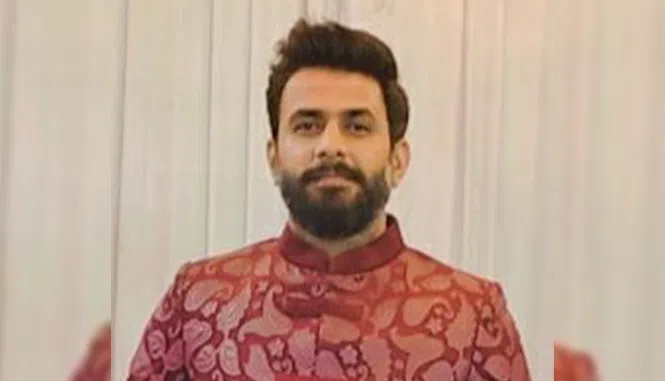
Tell us about your journey growing up as a “boy” in a South Mumbai neighborhood.
While growing up as a boy in a neighbourhood like Dongri, I experienced the ground realities of life early. Bullying was common among boys growing up in the alleys of the locality. We were forced to fight back or submit to bullying. Later on, I had to fight other prejudices, as people used to look down upon or be suspicious of boys coming from the then crime-prone neighbourhood like Dongri.
Overall, I would say I still have had an incredible journey, from growing up in the conservative suburbs to working as a professional in an environment where equality between the sexes is a given.
What, in your opinion, are some of the “set” rules that boys are expected to follow growing up?
We all grew up with the same set of expectations that our parents had faced from their parents while growing up. Over the years, those set rules or behaviors have not changed.
For boys, there’s always that pressure to be the macho man, to be the protector and provider in the family. There’s nothing wrong with it if it doesn’t become a burden on the boy.
Do you feel that boys are taught to become the breadwinner for the family early on? Is this fair on them?
Yes, that expectation is always naturally there. Once, I returned home from school with a torn football shoe and asked my dad for a new pair. He told me, maybe in jest, to start earning early and buy those shoes on my own. He of course got me the shoes. But to instil the thought to start earning was very well laid in front of me.
When I was attending college, my parents used to talk about cousins and other relatives who had already started earning. Every middle-class family expects their son to start earning as soon as they finish their education.
Of course, it’s not fair on boys, who might have other dreams or want to pursue their passion. Back in my college days, it took me 3–4 months to convince my parents that I wanted to study mass communication, as they felt that the course wouldn’t help me get a well-paying job. Later, they understood my interest in the subject and relented.
In the following video, a part of the #RaisingBoys campaign, Tosha Schore, parent coach, author, educator, and speaker, talks to Nalina Ramalakshmi, founder and managing director, ParentCircle, on why it is important to stop telling boys to man up.
How do you feel when you hear stereotypical comments like ‘boys don’t cry’?
I grew up hearing all sorts of toxic masculinity phrases, like ‘don’t act like a girl,’ ‘don’t be afraid like girls,’ ‘prove that you are a boy by doing this,’ and, the worst of all, ‘chudiyan pehen rakha hai kya?’
At that time, it so common and natural to use these phrases that we didn’t realize that we were being fed toxic masculinity with these commonly used phrases. Later, when I started mingling with diverse people, I realized how wrong it was to bring up boys like that.
I hope that our society evolves to realize that even boys need a safe place to express their emotions.
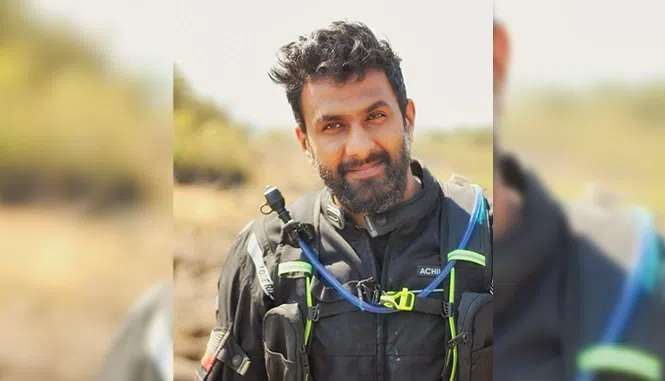
What is your perception of being a boy in the country today?
There’s still a big gap between how an educated girl thinks and how an educated boy thinks. Due to their pampered upbringing, many boys are still stuck in the Stone Age and want to treat girls just as an object of desire or something they can control and tell how to dress up and behave.
In our society, when a boy is of marriageable age, the entire family looks for a “homely” girl who can take care of the home and is, at the same time, working. Later, they brag that they have allowed their daughter-in-law to work outside or wear western clothes. These attitudes need to change—parents of boys need to realize that they do not own the girl and cannot control her.
What needs to change?
Boys need to evolve more. Of course, there has been a sea change when it comes to women’s empowerment, parents are close to their daughters and proud of their achievements.
What is your message to boys who struggled or are struggling with societal norms?
Being the only child of my parents, I was pampered from childhood. Even then, I was exposed to different types of stereotypes all around me. Boys need to break those stereotypes prevalent in our homes. Once you have evolved, you can even help your parents to know right from wrong. Schools are the best place to educate young boys about the need to question stereotypes; once they are aware, they can spread the message in their homes.
Your thoughts on the #RaisingBoys campaign. Is it the need of the hour?
We definitely need campaigns like #RaisingBoys to bridge the gender gap and to raise boys with empathy so that our next generation of boys becomes more sensitive toward women and more aware of their own needs as well.
Lingaraju M, 46, is a cab driver from Bengaluru. Let’s find out about his experiences growing up as a boy.

Lingaraju M earns his livelihood by driving a cab to and from the airport and ferrying tourists and locals to tourist spots in and out of Bengaluru. Born into a family of five, comprising his parents, two sisters and himself, Raju, as he is fondly called, has faced a lot of struggles since childhood. Here’s his story:
“I have had a difficult life. My father used to work as a mechanic, and it was a struggle to find the next meal. A large family meant multiple mouths to feed, and being the only male child in the family meant being the breadwinner at an early age. I went to a primary school for a few years and was quite interested in my studies. I used to love wearing the school uniform and sitting in class.
However, my father used to drink a lot, and one day, he stopped going to work. As a result, we started to suffer a lot. It became a monumental task to provide for the entire family, so my mother requested the owner of the garage where my father worked to employ me in his place. I dropped out of school and started working at the garage when I was around 12 years old. It was an alien environment for me, and I had a hard time during the first few days. After a week, I even asked my mother why my sisters could not help out but got a reply that they have to assist with household chores. She added that in our family we don’t let a girl work to provide for the family.
At an early age, it was imprinted on my mind that men are supposed to provide for the family, no matter what. After working for years as a mechanic where I picked up the basics of the trade through experience, I had saved some money to purchase a thirdhand Maruti van worth a princely sum of ₹45,000. I started a side job delivering milk in my village and the neighboring areas.
Gradually, as my financial condition improved, I purchased a secondhand Maruti Swift Dzire and began to operate as a private cab driver. I was able to shift my family to a bigger house on rent. Soon, I took a loan and got both my sisters married—one to an employee of a milk company and the other to a garage owner. Presently, one lives in Mysuru while the other lives in Hyderabad. We make it a point to visit one another occasionally, during birthdays and festivals.
Today, by God’s grace, I have a family of my own—a wife, a son and a daughter. My wife is an employee of a major dairy corporation, and my parents live with me. I want to provide equal opportunities to my son and daughter. I will neither behave differently with my son because he is a boy nor will I force the idea upon him that he has to provide for the family when he grows up. It’s a feeling that should come naturally to him.”
| About ParentCircle's Raising Boys campaign What does it take to raise a boy? One question, many answers. Let us begin by understanding our boys, their needs, their wants, their fears, and their desires. On January 24, 2023, National Girl Child Day, we kick-started the third edition of the #RaisingBoys Campaign. |



























Comments
Edit
Comment Flag
Cancel Update