
You Did Win After All! How Parents Can Build Resilience In Children, Especially Boys
Nalina Ramalakshmi
How a simple act of empathy and kindness helped the boy become a resilient winner

He lay in his crib, the baby boy, staring at the toy dangling above his face. He reached out to grab it but completely missed. He kept trying again and again. No luck. Then all of a sudden, one day, he caught hold of the toy. He heard screams of excitement, "He did it. He's able to reach out and grab the toy!" The baby boy was thrilled. His mother saw him and approved.
Why children need encouragement, not criticism, to build confidence
As the months went by, the baby boy learnt to crawl and move around. He saw others around him stand up on their two legs and walk around. He too wanted to walk like them. He held on to a chair and stood up. Then he tried to let go of the chair. PLOP! He landed on the floor. He kept trying to stand up for many days. Then one day, he let go of the chair and took a couple of steps before landing on the floor again. All around him, he heard claps, cheers, and shouts of joy. "Look, he took his first step. What a special moment!" his father said. His parents had appreciated his efforts. The baby boy was so happy and motivated. He kept trying harder and harder till he could stand up and run on his own.
Fast-forward a couple of years. He was now a little boy. His mother told him to sit at his desk, and she gave him a pencil and paper. She asked him to write some strange shape she kept calling "A." He was having a hard time holding on to the pencil, and when he tried to write, the pencil kept slipping from his fingers. He managed to draw something on the paper.
But all he heard now was, "Why can't you hold the pencil as I showed you? Can't you write neatly? I told you to write the letter A, and all you have managed to do is scribble on the paper. When will you ever learn to write?"
The boy was sad. He could not understand why his parents, once so excited when he tried to walk, talk or do things on his own, were now so upset at his first attempts at holding a pencil and writing.
He thought, "But I'm trying my best. Why are they so angry with me? I'm no good. I'm bad. I don't ever want to write again."
How negative reactions can affect a child’s motivation and self-belief
Thereon, every time his mother asked him to write, he would throw a tantrum and start to cry. And it took him many years to learn to write, but even today, he doesn't like to write.

A few years went by. The boy, now 8 years old, liked playing football, and he joined his school football team. One day, they played a match against a rival school team. There were just a few minutes left in the game, and the score was tied 1-1. He was near the goal. His teammate kicked the ball to him. But before he could run to the ball and kick it, an opponent took the ball away from him and drove it toward the other goal. The other team scored, and the boy's team lost 1-2! His teammates were mad.
When failure hurts: How children experience mistakes and rejection
They surrounded the boy and started yelling, "We lost because of you. Loser! You are so clumsy. You don't even know how to kick the ball!"
They went on and on.
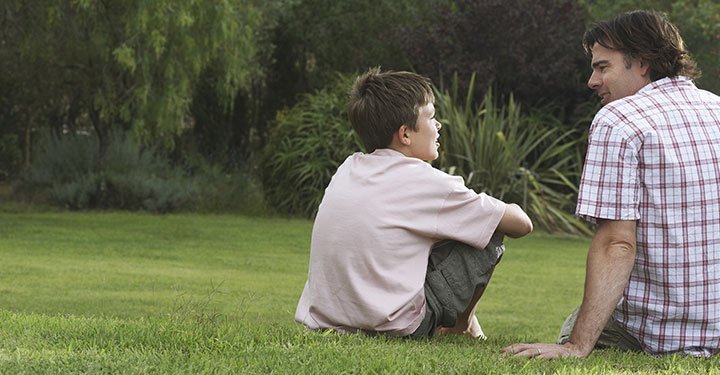
Even after his teammates left, as he sat alone on the bench at the corner of the football field, completely dejected, these words kept echoing in his ears - because of you, loser, clumsy...As he sat there with tears running down his cheeks, he felt a gentle soothing hand on his shoulder. He turned to look. It was his coach.
The role of empathy in helping children bounce back from failure
He came and sat next to the boy and said, "I saw what happened. You must be feeling terrible." The boy nodded. The coach continued, "I know you missed the ball, and now everyone is blaming you for the loss. That must be so hard. You know, everyone makes mistakes, and that's okay. We are all still learning. I noticed how you blocked the ball and stopped the other team from scoring a goal on the previous attempt. That was spectacular play. I have complete confidence in you, and you will be a skilful contributor to your team. All you need to do is practice some more. Would you like to watch the match video? It will help you understand what you did wrong and what you need to do to improve your skills."
The boy's face lit up as he nodded, "Yes!"
He went home with uplifted spirits. As he walked in, his dad said, "Son, you look so happy. You must have won! Give me a high five."
The boy replied, "No, Dad, we lost because I missed a kick. But my coach told me that I played well in the rest of the game. He said he was confident I would be a good football player if I practiced hard."
His dad responded, "Come here, son, hug me. You have learnt a valuable lesson today. It isn't about winning or losing. It's about trying hard and improving every day."
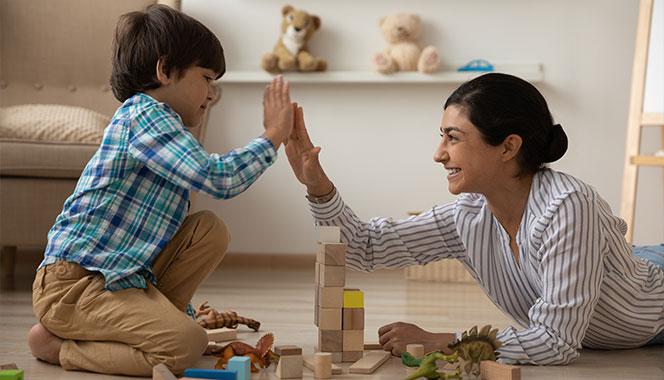
His mother, who was listening, piped in, "Love you, son. Give me a high five! You did win today after all."
How supportive adults help children build resilience and confidence
Thereafter, every day the boy would stay back after school to practice playing football. And he got better and better at the game. He went on to help his team win many games and became a role model and mentor for other young football players. He even won a college football scholarship.
A simple act of empathy and compassion from his coach and encouragement from his parents helped the boy bounce back. The confidence he gained in football spilled over to his academics and other areas of his life. His performance in school improved.
Why resilience helps children succeed in school and life
He was willing to take on challenges and try new things without letting the fear of failure bother him. He knew that the only way to learn and grow was by making mistakes and failing occasionally. He just needed someone to trust and believe in him, someone to listen to him and comfort him in times of trouble. Knowing that his coach and his parents cared helped the boy build resilience and gave him the confidence to keep trying, even in the face of failure. He felt secure, and he thrived knowing he had people around him who cared.
Practical ways parents can build resilience in children
Resilience is the ability to learn from mistakes and bounce back from failures. It gives your child the confidence to take risks, face challenges, and try something new without the fear of failure. This boosts your child's self-esteem and self-confidence, and builds key skills to thrive and achieve success in school, career, and life.
Encouraging effort over outcomes
- Acknowledge and appreciate your child's efforts.
- Remind yourself and your child that more than the outcome or result, it is the effort that goes into any activity or task that is important.
Encouraging effort over outcomes
Don't expect perfection. Allow your child to make mistakes or even fail. Instead of putting them down, encourage them to take responsibility and learn from these mistakes or failures. Motivate them to keep trying and practicing, as this will help them improve and grow.
Avoiding comparisons and pressure
- Avoid comparing your child to others, as this will hurt your child's self-esteem.
- Show them how to compete against themself, and keep improving.
Building courage through new challenges
- Gradually, your child needs to get out of their comfort zone and take on challenges or try something new. Encourage them to explore and experiment. Appreciate their patience, persistence, and courage. There will be many ups and downs on the way. Don't worry about the missteps and failures. View them as a stepping-stone to growth and success.
Listening with empathy during failure
- Listen with empathy. When your child is upset or dejected, showing that you understand how they feel and assuring them you are there to support them will make them feel accepted, even in the face of failure.
Discover how sports can help build resilience in children—from handling failure to developing confidence. Read the full article and empower your child for life’s challenges.
Nalina Ramalakshmi is the Founder-Director of ParentCircle and The Dot Learning Experience, with extensive experience in parenting education and early childhood learning. She pioneered the P.E.A.C.E. process, a five-step parenting framework that helps parents turn challenging moments into opportunities for connection, learning, and growth.
Last updated on: December 22, 2025
The Dot social emotional learning program is designed to help each child feel emotionally safe and ready to learn. The program also helps children learn how to manage their emotions and behaviours in different situations. The SEL program builds self-acceptance, confidence, resilience, and a growth mindset in young children.





























Comments
R.Kalaivani Sep 21, 2024
Loved the writing voice as it's relatable and approachable.
-

1Monali Bordoloi Jan 28, 2022
Ashwin Dewan Jan 25, 2022
Jyothi Prabhakar Jan 25, 2022
Shradha Raja Feb 16, 2021
Jayanthan Feb 9, 2021
Edit
Comment Flag
Cancel Update