
Stars Of A Different Kind: Celebrating Two Remarkable Women Sparking Social Change And Spreading Light
Aruna Raghuram
We look at two remarkable women who have made a social impact through their individual initiatives and have plans to light up more lives this Diwali.
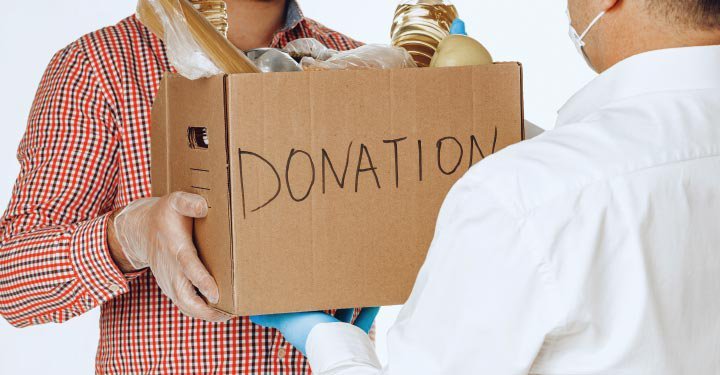
Millions go hungry every day. And for millions of children in our country, education remains an inaccessible right. Meet Manju Latha Kalanidhi and Jeyamary, two champions of change, who are transforming the lives of the underprivileged in their way.
Manju Latha Kalanidhi
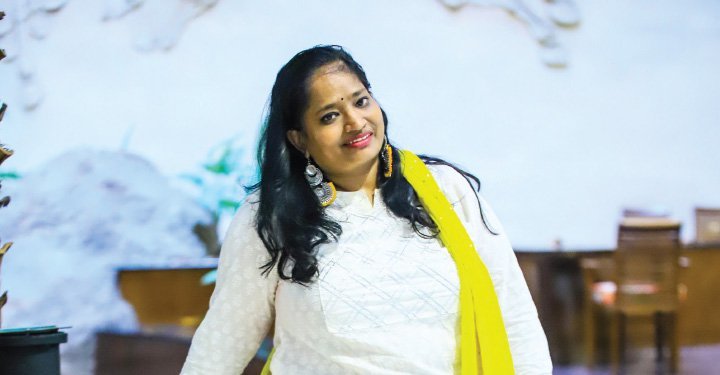
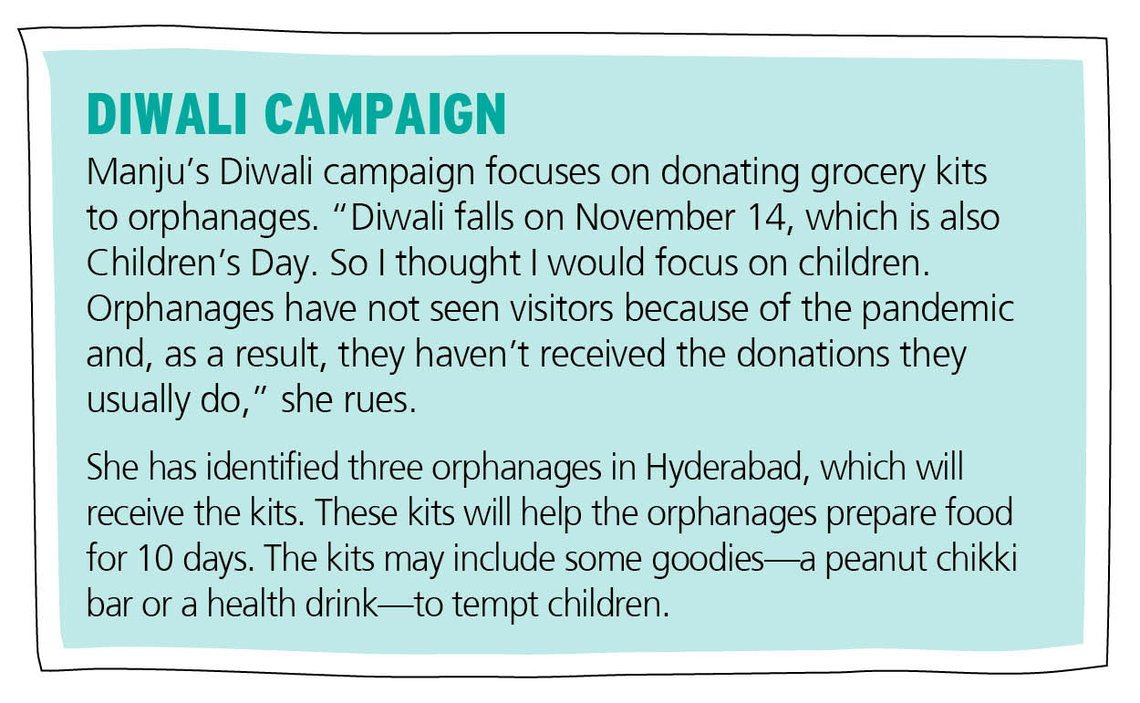
The Rice Bucket Challenge, initiated by Manju Latha Kalanidhi, has saved thousands of people from starvation during the lockdown. This Diwali, she has plans to continue the good work by focusing on orphanages.
How it all began
Six years ago, the Ice Bucket Challenge began creating ripples globally. The challenge was for a noble cause to raise awareness and donations for amyotrophic lateral sclerosis (ALS), a motor neuron disease. Manju was inspired by the initiative but wanted to do something suited to the Indian context, without wasting any precious resources.
An idea came to mind: Why not tackle hunger and poverty with a Rice Bucket Challenge (RBC)? That's how her initiative was born in 2014. And it soon went viral. It was a simple challenge, all you had to do was give a bowl or bag of rice to a needy person. The participants in the challenge could then post pictures of their charitable acts on social media. Interestingly, the donors both from India and abroad were from all age groups and all walks of life, including celebrities.
Her mother, her inspiration
Manju is a full-time journalist based in Hyderabad. Yet, she finds the time to contribute to the community in this unique way. Is there anyone from her childhood who inspired her to take up social service? My mother, Varalakshmi, was always someone who used to help out her siblings in times of need. I don't ever remember her buying much gold, silver, or silks. She would always save up so she could help others. Perhaps, that affected me, says Manju.
Growth of RBC
Initially, the focus was on rice, but she soon realized that more ingredients were needed to make a nourishing meal. Now, along with rice, the initiative includes donating pulses, oil, tamarind, salt and spices.
Over the years, we have reached out to cab drivers, temple priests, teachers, weavers, furniture-makers, the transgender community, and many more sections of society. I have sent groceries to 78 locations in Hyderabad and even to Indore and Bengaluru during the pandemic. Next on the agenda is coming to the aid of the dabbawalas (people who deliver home-cooked meals to office workers) of Mumbai, who haven't been paid for a long time, says Manju.
Going online
Initially, most of the activities were done offline. Manju would help people physically donate rice and other groceries. But over the past three years, she has been raising funds online. An online link takes a potential donor to a page that lists the quantities and prices of groceries (www.facebook.com/ricebucketchallenge). A person has to decide what and how much to give and pay accordingly. Donors are kept updated about who has been helped, and photos and videos are also put up on social media.
The donations range from INR 45 (individual) to buy one kilo of rice to INR 3 lakh (corporate). Manju has been able to buy and donate 2.25 lakh kg of groceries in six years!
Service during lockdown
During the lockdown, there was a surge in demand for food from migrant laborers and people who had lost their livelihoods. Between April and September this year, 27,000 kg of groceries worth INR 18 lakh were donated.
Jeyamary
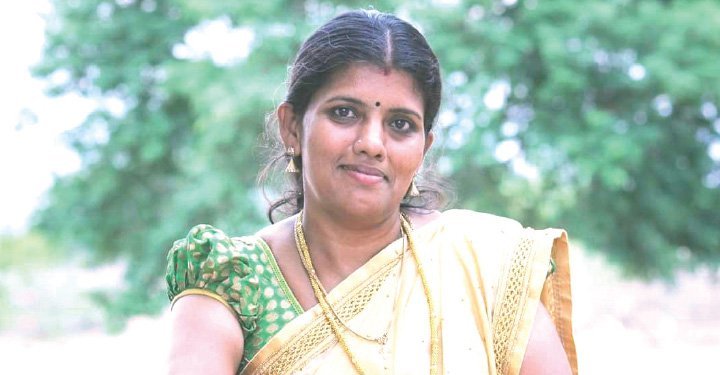
Jeyamary's stories bring a sparkle to the eyes of little children, whose parents work at cracker units in Sivakasi.
How it all began
Four months ago, a school teacher living at Thayilpatty in Tamil Nadu, saw that workers employed at the cracker and matchstick units in Sivakasi, 8 km away from Thayilpatty mostly left their children alone at home. Moved by the plight of the children, the teacher, Jeyamary, decided to make a difference in their lives.
There's no school for the children now. As their parents have resumed work at the factories, there is no one to care for them. The parents can't take them to their workplace, as it's even more risky because of the COVID-19 situation. So I decided to do my bit and start a school, she explains.
Storytelling, drawings, and more
Jeyamary organizes a storytelling session every Friday, using books donated to her school. Friends have helped her arrange a room near her house. Her sessions have become very popular, both with the parents and the children. The children are taught songs and drawing and can take home books if they wish to.
Her sessions are interactive, the children are asked to express their thoughts and feelings about the stories through paintings, poetry, or speech. This promotes creative expression among the children. There's no formal teaching at her school. "That's because subject-oriented books are not available at present," says Jeyamary.
Around 10 to 15 children (ages 5 to 13) come at a time, as too many cannot gather in one place as we have to maintain social distancing. I tell them stories from the Panchatantra and other books with moral values. They are with me from 10 a.m. till noon.
Jeyamary conducts temperature checks on the children and keeps sanitizers on the premises. The children wear masks and are taught about the importance of washing hands. She also gives the children snacks, fruits (apples, pomegranates, and oranges), bread, and eggs.
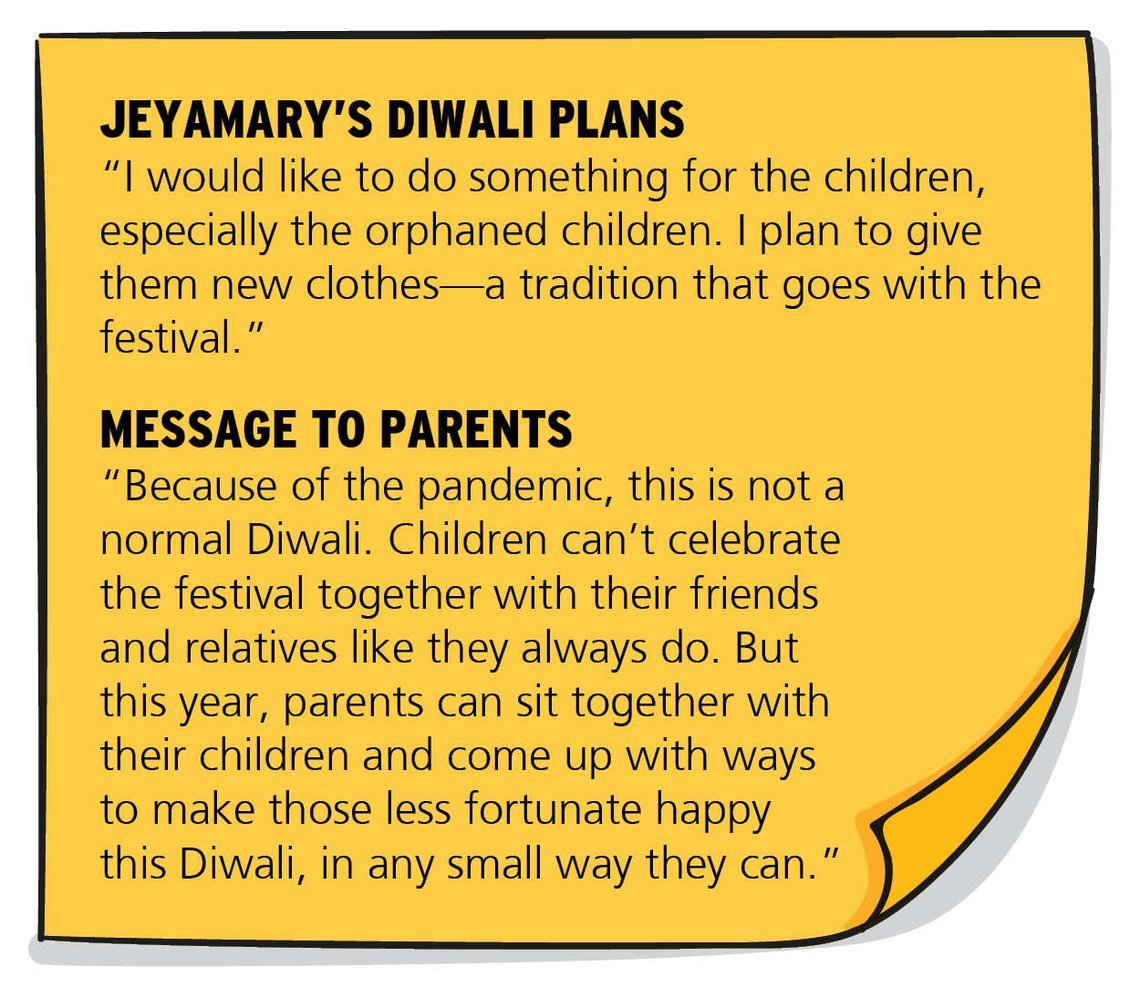
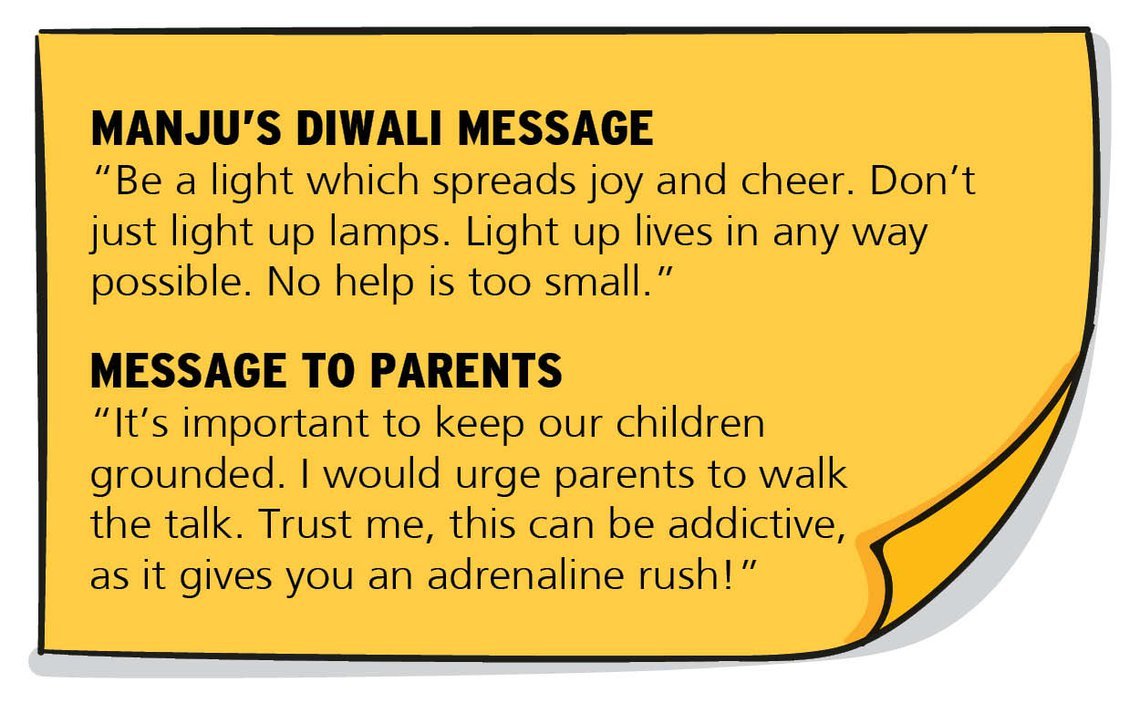
Inspiring stories, right? This Diwali (and after), let's do what little we can to put a smile on someone's face. As Manju said, "No help is too small."






















Comments
Edit
Comment Flag
Cancel Update