
Understanding Slow Learners And Giving Them The Right Support For Growth And Development
Surabhi Verma
author parentcircle author parentcircle author parentcircle author parentcircle author parentcircle author parentcircle author parentcircle author parentcircle author parentcircle
Every child learns at their own pace, but some may need extra time and support. This article helps parents and teachers understand slow learners, the challenges they face, and how simple changes can make a big difference. With patience and the right strategies, slow learners can thrive both in school and in life
Who are slow learners? Understanding the meaning beyond the label
Ravi is in Class 1. He wears thick glasses and has unclear speech. He is social and enjoys interacting with other children, loves his music lessons, and can draw as well. But, in academics, he requires the help of the school counselor.
Ravi has been diagnosed as a 'slow learner' and needs extra help in school. But, a 'slow learner' is not a diagnostic category; it is a term that is used to describe a student who learns necessary academic skills at a rate and depth that is below average when compared to same-age peers. This is because, on a standardized IQ test, the score of the child is in the 70-80 range, which is below average intelligence. Thus, as in Ravi's case, a child who is a slow learner needs more time, more repetition, and extra help to grasp new concepts.
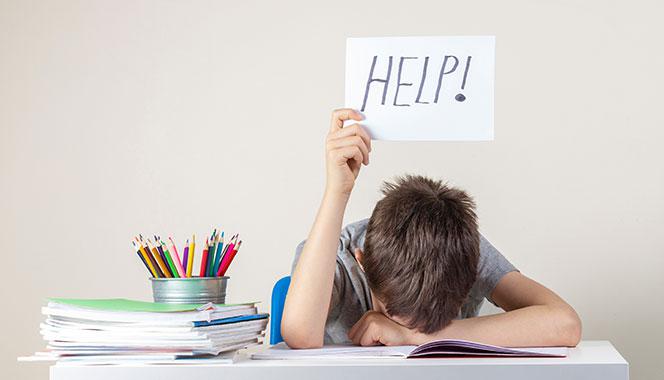
Pinky is another 10-year-old 'slow learner' studying in class 3. Although she tries to interact with other children, most of the time she sits alone in the class and struggles to complete her work during the extracurricular activities period. She gets easily distracted and tends to move around in the class, disturbing other children. The class teacher finds it difficult to handle Pinky since, instead of completing her work, Pinky puts her head down and pretends to sleep. Sometimes, she lies down on the floor or runs out of the classroom.
Social challenges faced by slow learner children
Why slow learners struggle with friendships
Most slow learners enjoy making friends but have difficulty maintaining social interaction and lack social skills. Most slow learners face difficulties because of their lower IQ levels, which prevent them from understanding the rules of social engagement.
The role of self-esteem in social skills
This immaturity may be due not only to limited mental abilities but also to a lack of experience, poor health, or poor speech development that further retard growth. These children like talking to people but are not able to take the initiative. Their low self-esteem makes them withdraw from social interactions.
They sometimes appear immature in interpersonal relationships. They may find it difficult to keep friends, as they do not understand some simple skills like taking turns. There may be very few children who are willing to play with them. Many normal children are not patient enough to explain the rules and help such children understand.
In Ravi's case, he can manage with the help of the school counselor. However, Pinky's teacher is all alone and without any guidance, finds it very difficult to manage Pinky in a class of 35 children.
Learning difficulties common among slow learners
Ravi and Pinky both struggle to keep up with the class syllabus. They both require assistance and continuous support from the school counselor and the class teacher.
Struggles with attention and task completion
Many slow learners have difficulty planning for long-term goals. Completing a task within the given time frame is a major issue. This happens because the children get easily distracted and do not have internal strategies that can equip them to work on the task at hand.
Delayed reasoning and conceptual understanding
Due to this, they sometimes work very slowly and have difficulty taking multiple instructions. Reasoning skills are typically delayed, which makes it difficult for them to understand new concepts, and they require a lot of support.
The impact of negative feedback from teachers
Take the case of Mary, who is also a slow learner. She faces criticism from her class teacher, who once told her parents, "Mary is not interested, no matter how hard I try to involve her in the classroom, I have 39 more children in the class. I think it will be better if she is sent to a special school."
Such negative feedback has led to poor self-esteem and low confidence in Mary. To hide these problems, Mary throws many tantrums in class, thus confusing her teacher. The teacher, who does not understand Mary's fundamental problem as a slow learner and what it implies, becomes less and less inclined to do so with each progressive tantrum. She finally gives up altogether.
How parents and teachers can support slow learners
We have been working with slow learners in our organization, and it is a long process. There is no cure, and intervention is a continual process. The children can make progress and cope with their studies through the support provided. The experience is very rewarding, especially when a child has been written off by the teachers and is then able to perform well. Then the happiness on the child's face is the biggest reward that the parents and the therapists can get.
Building confidence and self-esteem
Creating awareness among teachers as well as parents about this problem is a major step in the intervention program designed to deal with the problem. The teachers and the parents must modify their expectations according to the capabilities of the child.
Encouraging peer interaction and role models
They must motivate the child so that they also develop the confidence to try hard to do the best they are capable of. Teachers and caregivers must encourage other children to interact with the child so that the child gets positive role models and also gains skills through peer learning.
Setting realistic expectations at home and school
When parents and teachers align on goals, the child gets consistent support both at home and in the classroom. This helps slow learners stay motivated and reduces stress.
Creating awareness and long-term support strategies for slow learners
Supporting a slow learner is not a quick fix but a long journey. With the right encouragement, patience, and strategies, these children can progress and find joy in learning.
Quick takeaways: Supporting slow learner children
- Understand the term: A slow learner is not a diagnosis but describes children who need more time and support.
- Spot the signs early: Difficulties with attention, reasoning, task completion, and social skills may point to slow learning needs.
- Encourage social interaction: Help your child make friends and practice simple skills like sharing and taking turns.
- Boost confidence: Avoid negative labels and praise their effort, not just results.
- Partner with teachers and counselors: Communicate regularly with the school to ensure your child gets the right academic and emotional support.
- Set realistic expectations: Focus on progress, not perfection. Celebrate small achievements along the way.
- Promote peer learning: Encourage classmates or siblings to be positive role models for your child.
- Stay patient and consistent: Long-term support and encouragement make the biggest difference in helping a slow learner thrive.
Last updated on: September 26, 2025
























Comments
Edit
Comment Flag
Cancel Update