
7 Common Problems Preschoolers Face In School
Leena Ghosh
We take an expert's help to address some of the most common problems a preschooler might face in school. Read on to know more.
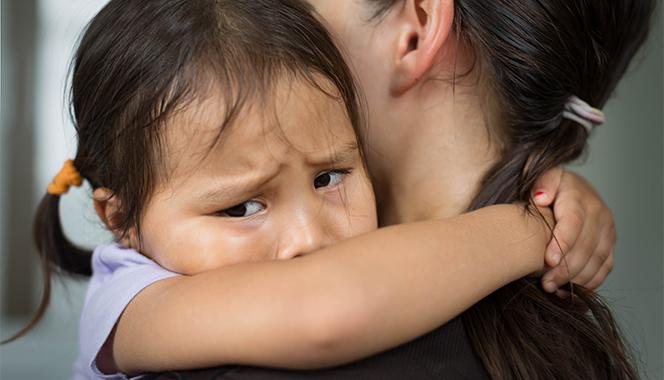
As your child takes his first steps through the gates of his playschool, a million thoughts may run through your head. “Will he like school?”, “Will he make friends?”, “Will he be OK without me?” are just some of the questions you may ask yourself repeatedly.
Most playschool coordinators and teachers understand these worries and help allay the fears and doubts of both parent and the child. But, there are still some problems your child may face during his preschool years, which you will need to address.
Arundhati Swamy, counselor and Head of Parent Engagement Programs at ParentCircle, explains the common problems preschoolers face in school and how parents can help overcome them.
Common problems your child may face in school
1. Separation anxiety
It’s normal for a child to have separation anxiety when he enters school for the first time. It’s a big step that the toddler takes when he leaves the familiar, safe, and comfortable environs of his home and family, and steps into an entirely new and unfamiliar space, that is school. Quite naturally, he will feel quite intimidated by the new building, classroom, teachers, and classmates. He may feel anxious about being all alone without your protective presence, the familiar toys and spaces, and the freedom and confidence to do what he likes; while you, as a parent, in your own anxiety to see your child settle down quickly at school, may try to convince him about how nice the school is, and how he should be brave and not cry.
What parents can do: You could first show empathy by saying to the child, “I know you are afraid. It's alright to feel that way". Fear is a big feeling for a preschooler to manage on his own. That's why he needs you to help diffuse the fear. Ask your child to tell you all the things he is afraid about. Take his fears seriously because they are real for him. When you hand him over to the teacher at school, reassure your child that you will be back to pick him up and take him home. It could help to let him take one of your belongings to school, something that reminds him of you and comforts him. Most importantly, give him enough time to settle down in the school and do not compare him with other children. Remember, anxiety is a combination of fear, worry, and nervousness. Make sure that you, as parents, first deal with your own anxiety. It's equally hard for parents to separate from their children. Else, you will pass it on to the child.
2. Making friends
Preschoolers are curious about other children. Some children may start out by being watchful, while others may approach peers without inhibitions. Children need time to settle down in the new environment. The reluctant, hesitant or scared children need their parent's support at home, to help them socialize comfortably at school.
What parents can do: A child’s confidence grows in a home where parents are loving and caring, where she is allowed to do simple things for herself, explore her world safely and be curious. This is how her confidence begins to develop. The home is also where children learn about building relationships. The positive and encouraging ways in which parents and family members communicate with each other helps build safe relationships based on trust and respect. Make sure your child experiences respectful and loving interactions at home. It gives her a template for how she could relate to teachers and peers in the school. Also, allow her to play and interact with children in the neighborhood or at the local park to build her social skills. At school, your child will come across to peers as being friendly and nice to play with.
3. Relating to the teacher
No matter how much you prepare your child for the transition to school, he can still have normal fears and worries about going to school and relating to a new adult. It's vital to help your child learn to become comfortable with his class teacher and other helping adults in the school.
What parents can do: To help your child relate well to his teacher, build the context of the school in your child's mind. Take him for outings where he gets to see more people and school buildings. If possible, a visit to his school prior to the opening day will be helpful. Once he starts school, talk to him about his teachers and caregivers – what he likes about them and what he does not. Be a good listener and tell him you understand and accept his thoughts and feelings. If your child needs special care for health reasons, be sure to tell his teachers about it. Describe your child to the teacher so that she begins to understand her new student.
4. Difficulty in communicating
Most children are quite fluent in their mother tongue by the time they are ready for preschool. English is a new language they will begin to learn at school and it will take time for them to converse in the language. But they must be able to communicate their needs to the adults, for them to feel safe and secure in the school.
What parents can do: Ensure that the school and teachers allow your child to speak in her mother tongue, till she learns to express herself in English. You could also talk to her in English at home to help her become familiar with the language. Translate the sentences into your mother tongue if required, to help her understand the meaning of the English words. Most importantly, have fair expectations of your child. And, every time she learns a new word or attempts to speak the language, appreciates her efforts. Do not criticize or make fun of her attempts. Show her how to greet adults and classmates as it will help her start conversations.
5. Adjusting to the school environment
Your child's home is his safe haven, while the new school environment is alien to him. So, he will naturally feel strange, unsure and uncomfortable during the first few days at school. Singing the praises of the school campus to reassure him may not be enough to help him overcome the discomfort.
What parents can do: Be understanding of his feelings and suggest how different school is from his home. Encourage him to talk about what he misses about home when at school. Be patient with his whining and give him time to adjust to the new school environment. What seems simple and easy for you, is in fact, a huge challenge for him. Reassure him as much as he needs it. The way he adapts to this change will lay the foundation for how he adjusts to change as he grows up.
6. Working in a group
Children are introduced to group play in unstructured and unstructured settings and both are equally important in building their social skills. Difficulties in joining group activities lead to children feeling lonely and isolated, brooding and feeling sad. And they miss out on the learning and fun.
What parents can do: An overprotected child or an overindulged child mostly develops into a demanding, entitled and selfish individual. Being used to getting their way always, and never having to face discomfort or disappointments makes them self-centered. Such children are not welcomed by peers during play and activity time because they tend to be bossy and disruptive. Parents must draw firm boundaries for their children, set clear rules and expectations. It's alright for a child to feel disappointed, to wait for something, and to feel unhappy when they don't get their way. These experiences actually help a child to regulate emotions, to stay safe within the boundaries of acceptable and cooperative behavior, and to be able to enjoy working and playing in groups. group
7. Eating difficulties
Preschoolers are at different stages of readiness in taking care of themselves. A child who is used to being fed his food regularly at home may lack the skills to feed herself in school. A prolonged inability to eat by herself could cause her to feel incapable amidst children who can take care of themselves. This could be a starting point for harboring thoughts such as, "I don't know how to do things. Others are better than me." A child who has other people doing everything for her feels helpless and becomes more dependent on others.
What parents can do: Encourage your child to learn to eat on her own at home, messy as it may be. Though feeding your child is easier and takes less time, it does not teach her how to take care of herself. Teach her how to open her snack box and water bottle. Doing these simple tasks helps her feel capable. Pack healthy finger foods that are easy and quick to eat. Do not pack more than what she usually eats, so that she has the satisfaction of completing her snack. Your child begins to think, "I am learning to do many things and my parents help me learn. I can do some things on my own, just like my friends at school." This is the beginning of her growing self-confidence.
Preschool is just the beginning of your child’s academic life. As he grows, he may face more complex challenges. As a parent, you can help by being involved and interested in his school life. When your child knows that he can always come to you when he needs to be comforted or to share his joys, he will look forward to the many experiences school has to offer.


























Comments
Edit
Comment Flag
Cancel Update