
Why do children lie? Here is an age-by-age analysis to help you understand
Ashwin Dewan
Are you concerned about your child lying? This article discusses the reasons why your child might lie and ways to help her overcome it
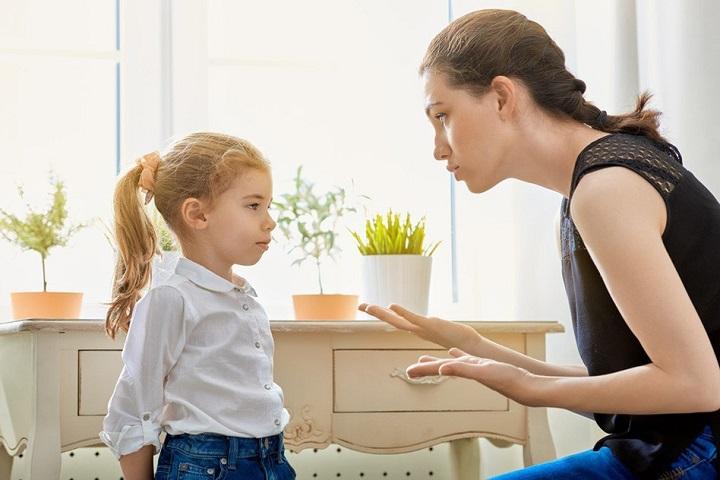
All parents like to think that their children are special and innocent. So, it often comes as a rude shock when they find out that their children have learnt to lie. It fills them with a sense of dismay, anger, and incredulity. They feel like they can never trust their children again.
Although children know that lying is forbidden, they do not understand that it can hurt and have negative consequences.
Reasons why children lie
- Young children are not able to comprehend the difference between truth and lies. This is particularly true of pre-schoolers who often engage in wishful thinking.
- In most cases, children resort to lying to cover up their actions (in these cases, they know they have done wrong). They do this to avoid the shame, disapproval, and negative consequences caused by their actions.
- Sometimes, children lie to escape the rules set by adults. For example, they lie about completing homework to their parents so that they can go out and play.
- Children with low self-esteem also tell lies in a bid to impress others or fit in with their peers.
Now that we know the common reasons why children lie, let us look at age-appropriate ways of responding to children when they're caught telling a lie.
Toddlers and preschoolers (ages 2-5)
As toddlers' language skills are still emerging, they only have a faint idea of the concept of truth. Strong emotions can cause a toddler to accuse others around him of doing something that they may not have done. For example, a toddler may accuse his sibling of eating his cookie or snatching his toy when no such thing may have happened. Parents should realize that toddlers often try to exhibit their independence. So, they should respond to such behavior in toddlers without acting strict or giving out punishment. Remember, toddlers are too young to be punished for lying but parents can subtly begin to encourage truthfulness.
Around the age of 4, children become more verbal and start responding with a direct yes or no. When children of this age are caught telling a lie, parents should deal with them in a firm but gentle manner and try to correct their habit.
Primary schoolers (ages 5-8)
It has been found that children between the ages of 5-8 years start telling lies with increasing frequency to test what they can get away with. This is especially so regarding the school - classes, homework, teachers, and friends. Often, the regulations and responsibilities imposed prove too much for children of this age to handle. As a result, children resort to lying to appease such people who force them to perform at a level beyond their capacity.
Parents should address the issue directly with children of this age and provide honest and positive feedback when the children are honest about their lying.
Tweens (ages 9-12)
Although, most children belonging to this category work towards establishing a certain identity - one that can be associated with hard work and trust - yet they become more adept at lying. At the same time, children of this age group are also more sensitive to the repercussions of their actions.
Parents should be straightforward with tweens and make them see the differences between a white lie and a normal lie, and the motive behind both.
Children of this age pass through more feelings of insecurity and may even invent false scenarios to grab the attention and interest of adults.
As our children grow older and realize the value of speaking the truth, we can also teach them how to understand situations where they can tell the truth and where they can resort to a white lie. Remember, children cannot avoid lying. However, it is the duty of parents to make them realize the negative effects of lying before it lands them in trouble.
As the main role models for children, parents have an important part to play in showcasing honesty and must take it upon themselves to help children differentiate between white lies and lies.























Comments
Edit
Comment Flag
Cancel Update