
Homeschooling Advantages And Disadvantages That Parents Should Be Aware Of
Aarthi Arun
Homeschooling is on the rage nowadays, but do you wonder if a homeschooled child can thrive in the competitive world? Read on to find out the truth
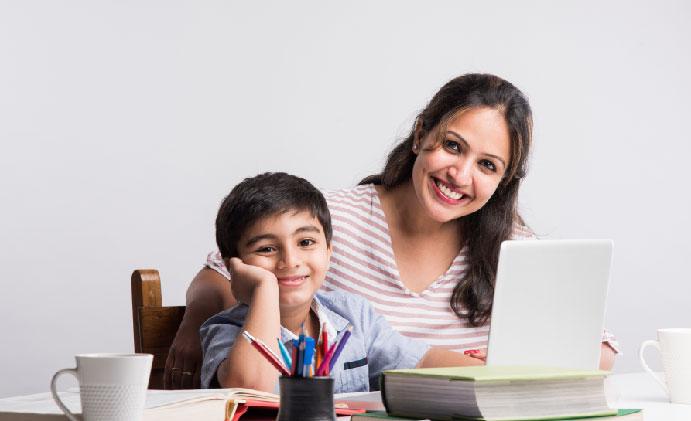
8:00 am Monday: 8-year-old Vishal is stuffing dosa into his mouth while his mother shoves his legs into his shoes and his father combs his hair hurriedly. They can hear the school bus honking. He quickly gulps down a glass of milk and rushes to catch the bus. Two minutes later, his father runs after the bus carrying the school assignment that Vishal had left behind. Vishal is exhausted and overwhelmed by the time he reaches school. When he remembers about his badminton class in the evening, he closes his eyes and takes a deep breath. Vishal can't wait for the day to be over.
Most of us can relate to Vishal's feelings. With mounting academic pressure and rigorous schedules for extra-curricular activities, today's children are herded from one place to another without any time to pause and think. Is there a way to change all this? Yes, here's an example of another child.
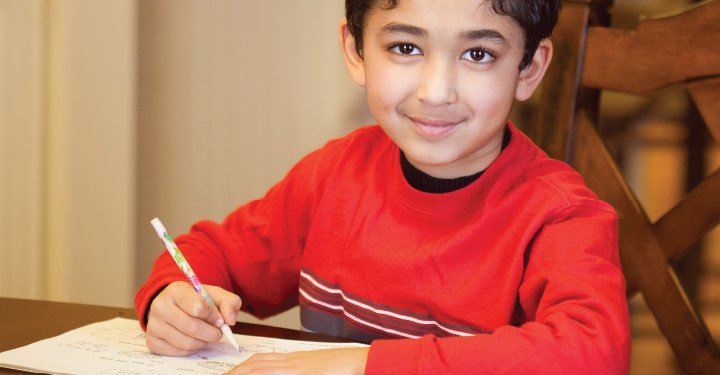
On the same day, at the same time, Iniya, another 8-year-old is getting ready for her school. Conveniently, her school happens to be right at her home. Her parents have arranged a set of subjects for her to work on during the week. She sips a glass of milk and looks forward to learning new things. Iniya is particularly interested to learn about Mars exploration and her parents have got new books and Internet resources for her. She also remembers to ask her parents about the possibility of going to a dance class to learn Kathak.
Worlds apart, isn't it? Homeschooling seems like the knight in shining armor that can make the lives of our children easier. But be mindful of the fine print: homeschooling is a lot of responsibility and is not for the faint-hearted. Still interested to know more? Here's all you should know about homeschooling.
Homeschooling - the lowdown
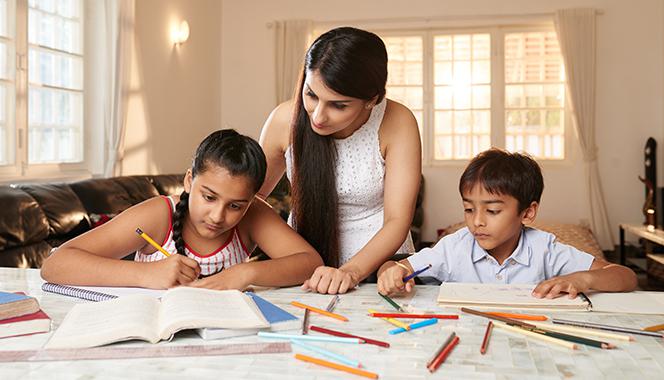
Homeschooling is where you decide to take your child's education into your own hands rather than depending on a school. To the uninitiated, homeschooling can be intimidating. Luckily, we are in a technologically advanced time where we have all the information at our fingertips. You don't need a PhD or even a teaching degree to homeschool -- all you need is the willingness to learn along with your child. And, lots of patience!
In India, homeschooling is legal as an alternative education. Homeschooling is a popular option for parents who are constantly traveling or those who live in remote locations like villages or farms. Parents of children with special needs and behavioral problems may also choose to homeschool. A vast number of parents opt for homeschooling due to their dissatisfaction with the assembly line method used in the current education system. They believe that traditional schooling does not nurture the love for learning among children. Others homeschool so that their children can have the flexibility of pursuing extracurricular activities like sports or music.
The key commonality between most of these parents opting to homeschool is that they all are deeply involved in their children's education. The Montessori method is one of the popular methods used by parents of young children, followed by the Waldorf method. There are also many types of curriculums following the traditional K12 method. The homeschooled children can take various higher secondary exams from various institutes like NIOS or Cambridge if they wish to pursue a college education.
Pros and cons of homeschooling |
Advantages of homeschooling
|
Disadvantages of homeschooling
|
Why homeschooled children can have an edge
With more emphasis on grades, tests, and memorizing facts, added with strict schedules, children may not find the necessary time to pause, critically think, or solve problems in the traditional schooling system. Also, the burden of tests and memorizing quells the children's curiosity and love for learning. On the other hand, home-schooled children use their time to develop skills they are passionate about. They don't have a 9 am-3 pm schedule like school-going children. They are out and about every day, visiting museums, parks, and shows. They travel often. They participate in sports. They take art, dance, drama, and music classes, to name a few. Fuelled by a willingness to learn, they develop 21st-century skills like responsibility, problem-solving, and creativity.
How would a homeschooled child fare in competitive exams?
"Homeschooled children can write public state examinations as private students. Being able to write as a private student has existed for decades now even in India," says Faithlina Ponniah from LifeHub, a homeschooling cooperative based in Chennai. She adds, "To ace competitive exams, a homeschooled child is already on par with a regular school-going child as they have followed a similar syllabus but in a more relaxed, focused environment. In addition to that, the flexibility of homeschooling allows the child to spend more time on exactly what is important for their future, in this case, this particular exam in this period in time." According to a 2010 American study published in the online journal Academic Leadership homeschooled children score up to 30% more than public school children in academic tests.
Thinking about homeschooling your child but concerned about their socialization? |
Dr David Elkind, Professor Emeritus at Tufts University and author of The Hurried Child states that children don't respond well in large groups, because they become fatigued and stressed by too much noise and unreasonable expectations, rigid scheduling, and peer pressure. Dr. Elkind analyzed over 8,000 studies of child behavior and determined that children are best socialized by parents and not by other children. A study published in 2013 in the Peabody Journal of Education points out that homeschooled children have a better relationship with their parents and adults. The study further states that homeschooled adolescents have fewer behavioral problems and are more responsible than their public school counterparts. The adults who were homeschooled are also found to be more involved in their community. |
So, there you have it. Homeschooled children will do perfectly fine, if not better, in their adulthood.
Are you ready to dive headfirst into this grand adventure? Before you do, read this first:
Research, research, and research
Read and find all the information you need about homeschooling. Know about the local laws about homeschooling, talk to people who homeschool, and learn about their issues and struggles. Explore various curriculum options and list their pros and cons. Other parents who homeschool can guide you on suitable programs based on your child's personality and learning style. Remember, homeschooling is uncharted territory for you, so there may be hiccups along the way. If you have done all your homework, you will know where to find answers.
Get ready to commit
Homeschooling is a major lifestyle change. It requires a lot of time and resources. Are you ready to give your 100%? You're taking responsibility for your child's future, so anything less is not acceptable. If you're in doubt, hold on to the homeschooling plan for now, and revisit it at a later point in time.
Know your child in and out
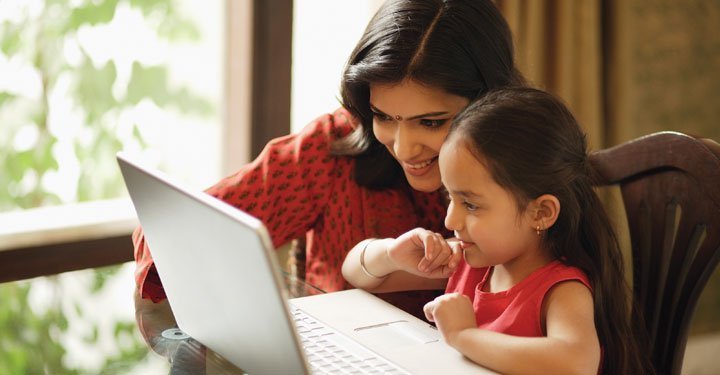
When you want to teach your child, start by understanding them first. You must know their interests, strengths, and learning style to find an appropriate method to teach. One of the greatest perks of homeschooling is developing a strong connection with your child. So, create a loving bond with your child as you learn more about them.
Find a method that works for you
It is enticing to sleep in late every day and have a carefree life but we all thrive with some structure and routine. Some parents choose to follow a curriculum or syllabus, such as NCERT, CBSE, or IGCSE. Some choose only those subjects in which the child shows more interest. Some others focus on basic reading, writing, and arithmetic and some extracurricular activity and leave the child free to make their own curriculum. Some do not adhere to any structure at all.
Observe your child closely and tweak the method. Your child should be aptly challenged-they shouldn't be too bored or too stressed out. At the same time, resist the urge to compare your child with children going to regular schools. If you're concerned, check child development websites for a list of age-wise skills.
Opt for free resources
You can't equip your home with the latest gadgets and gizmos similar to a school, but you can take your child to inexpensive activities or find free classes for them to enjoy. Your city or town will usually have many programs going on, so check your local newspaper often. You can consider tutoring to teach your child specific skills. You can also take your child to libraries, zoological parks, museums, planetariums, and community playgrounds.
Say no to negative comments
Conformity is good and it helps you fit in with society. When you deviate even slightly away from the norm, you're bound to attract attention, especially the negative ones. That means facing all the criticism, stigma, stereotyping, and unwanted comments from your family and friends. You know your child and your family situation best, so be comfortable with your choices and pay no heed to irrelevant comments.
Trust your child (and yourself)
Your child learned many things on their own from walking to talking, have patience and trust that they can learn that complex algebra too. All they need is your loving support and guidance. Be confident in your choices -- your trust and confidence will help your child thrive.
Be open
Homeschooling need not be a long and lonely journey. You can seek support groups or connect with other homeschooling parents. If your child has a specialized area of interest or struggles in a particular subject, you should be ready for working with a tutor or sending them to a class. At any point, if you find that homeschooling is not working for you, consider exploring other options like alternative schooling.
Join a homeschooling community
Joining a group of parents (in-person or online) who homeschool their children will help obtain information and support. Your child may get to socialize with other homeschooled children through group meetings, field trips, and enrolling in common classes.
Parents speak
"Until last year, my daughter went to a traditional school. Every morning, it was a battle to urge and drag her to school. I also felt that the school was all about academics with no room for other pursuits. Some of my other friends were already homeschooled at that time, so I was interested. But the socializing part always worried me. I didn't want her to grow up in a closed environment. Also, it was a lot of responsibility. Even though there was no rigid structure with homeschooling, I wasn't sure how to channel all the learning. Then, I came across the homeschool co-operative. It has been a year since Sharon started going there, and we are more than happy. All the parents support each other, and we have formed a great community. In normal schools, learning is all about grades and competition, but I am raising a passionate child by homeschooling."
- Ramya Authappan, mother of 5-year-old Sharon at LifeHub, Chennai
In a nutshell
- Homeschooling can help your family slow down and concentrate on the values that are important to you
- Homeschooling is a lot of responsibility, and you need the patience to let your child learn in their own terms
- Homeschooled children can be as successful as children who go to traditional schools
- Homeschooling requires commitment and confidence
What you can do right away
- List three main reasons why you are considering homeschooling your child
- Find a homeschooling community in your area and talk to the parents about the pros and cons
- During your child's next school vacation, pick a sample curriculum and try to implement it for a week. This will give you a basic idea of what to expect and check if you're up for it























Comments
Edit
Comment Flag
Cancel Update